Custodial Interrogation Deemed Essential: Mohali Sessions Court Denies Pre-Arrest Bail in ₹90 Lakh Flat Sale Fraud
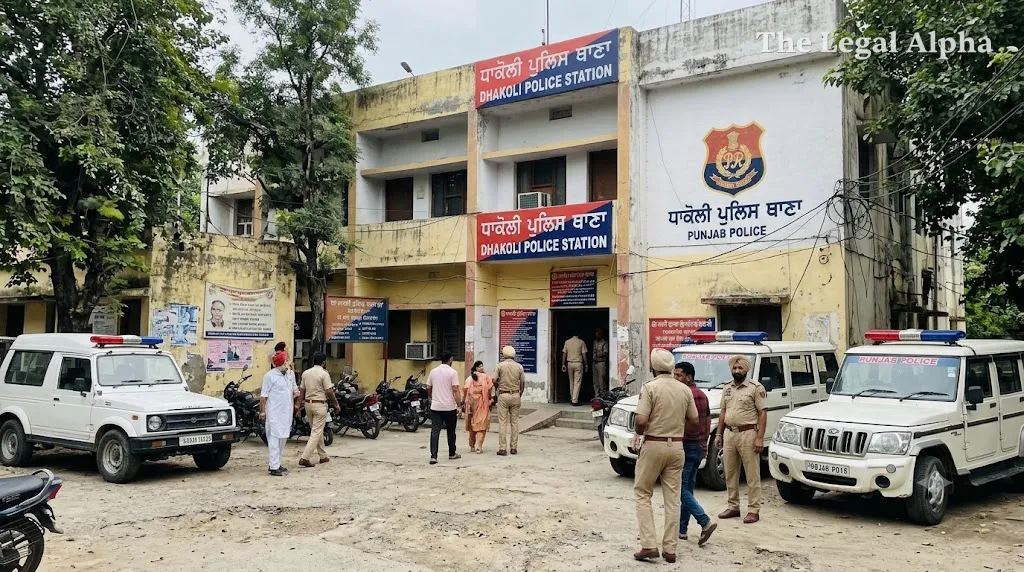
A Mohali Sessions Court has rejected the anticipatory bail plea of a 26-year-old woman, Chahna Pangotra, who stands accused of defrauding property buyers of ₹90 lakh by concealing encumbrances on residential flats in Zirakpur.
The dispute originated from an FIR registered on October 2 at Dhakoli police station following a complaint lodged by buyer Mukesh Kumar Goyal. According to the complainant, negotiations initially collapsed over four flats in Peer Muchhalla due to existing bank encumbrances. Subsequently, the applicant's father offered two alternative residential units, including one purportedly owned by the applicant. Although the buyers paid substantial sums through banking channels and cash, and registered sale deeds were executed, possession was never transferred. The buyers subsequently discovered that these properties were also subject to undisclosed, outstanding bank loans. When the applicant sought protection from arrest, the court intervened to deny pre-arrest relief.
Legal Topic
Area of Law: Criminal Law / Real Estate Law
Sub-topic: Pre-Arrest Bail / Property Fraud and Concealment of Encumbrances
Core Legal Issue
The legal issue before the court was whether an accused facing allegations of property cheating and financial deception can secure pre-arrest bail under criminal procedure when substantial transaction amounts flowed through their bank account and the investigation remains at an early stage.
Specifically, the court had to evaluate whether the dispute was merely a civil or family commercial disagreement, or whether the gravity of the accusations necessitated custodial interrogation to uncover the paper trail and money flow.
What Did the Court Decide?
Additional Sessions Judge TPS Randhawa dismissed the anticipatory bail application.
The court observed that the allegations against the applicant involve significant sums and serious criminal deception. Emphasizing the nature and stage of the inquiry, the court ruled that police require custodial interrogation to effectively investigate the transaction trail and examine the circumstances under which encumbered properties were transferred. Consequently, the prayer for pre-arrest protection was rejected, leaving the investigating agency free to proceed in accordance with criminal procedure.
Key Legal Points
-
Necessity of Custodial Interrogation: Pre-arrest bail is not an automatic remedy; it can be denied when effective unraveling of financial trails requires uninhibited police interrogation in custody.
-
Title and Encumbrance Disclosures: Executing sale instruments while deliberately suppressing existing bank mortgages or charges prima facie constitutes criminal deception rather than a simple contractual breach.
-
Accountability for Account Inflows: An applicant cannot easily divorce themselves from criminal culpability at the preliminary stage if substantial sale proceeds were credited directly into their personal bank account.
Relevant Law
-
Section 438, Code of Criminal Procedure, 1973 (CrPC) / Section 482, Bharatiya Nagarik Suraksha Sanhita, 2023 (BNSS): Provisions governing the grant of anticipatory bail.
-
Indian Penal Code / Bharatiya Nyaya Sanhita provisions on Cheating and Dishonest Inducement: Governing criminal fraud, misrepresentation of clear title, and concealment of prior bank charges.
Arguments of the Parties
Applicant's Submissions:
-
Counsel for the applicant argued that she had been falsely implicated as a byproduct of a business and monetary dispute between her father and the complainant.
-
It was submitted that a sum of ₹25 lakh credited into her account was deposited under duress and moved out on the very same day.
-
The defense further contended that the dispute is fundamentally rooted in documentary evidence, obviating the need for custodial arrest, and stated she was ready to cooperate with the investigation.
State / Complainant's Submissions:
-
The prosecution highlighted that buyers paid ₹90 lakh through bank transfers and cash based on deliberate representations that clear title would be conveyed.
-
It was urged that despite the execution of registered conveyances, physical possession was withheld and prior bank liabilities were deliberately concealed.
-
Given the quantum of money and the applicant’s direct involvement as a registered co-owner and recipient of funds, custodial interrogation was argued to be indispensable.
Why Does It Matter?
This ruling underscores judicial scrutiny over property transactions where encumbrances are suppressed from bona fide buyers. In real estate transactions, sellers frequently attempt to frame title defects or non-delivery of possession as purely civil contractual disputes.
By denying anticipatory bail, the Sessions Court reaffirmed that where elements of dishonest concealment and direct monetary enrichment are prima facie established, courts will not shield titleholders behind civil remedies, ensuring investigating authorities retain full leeway to trace diverted funds and uncover organized real estate fraud.
Legal Takeaway
Anticipatory bail will generally be refused in real estate fraud cases where substantial funds pass through the accused's accounts and title encumbrances are intentionally concealed. Courts will prioritize effective custodial investigation over individual liberty when a prima facie case of dishonest inducement is established.
Sources
-
Primary Source: Order of the Court of Additional Sessions Judge TPS Randhawa, Mohali District Courts (decided late October 2026).
-
Additional Sources: Police FIR records, Dhakoli Police Station; Case Proceedings Report, Hindustan Times (October 28, 2026).