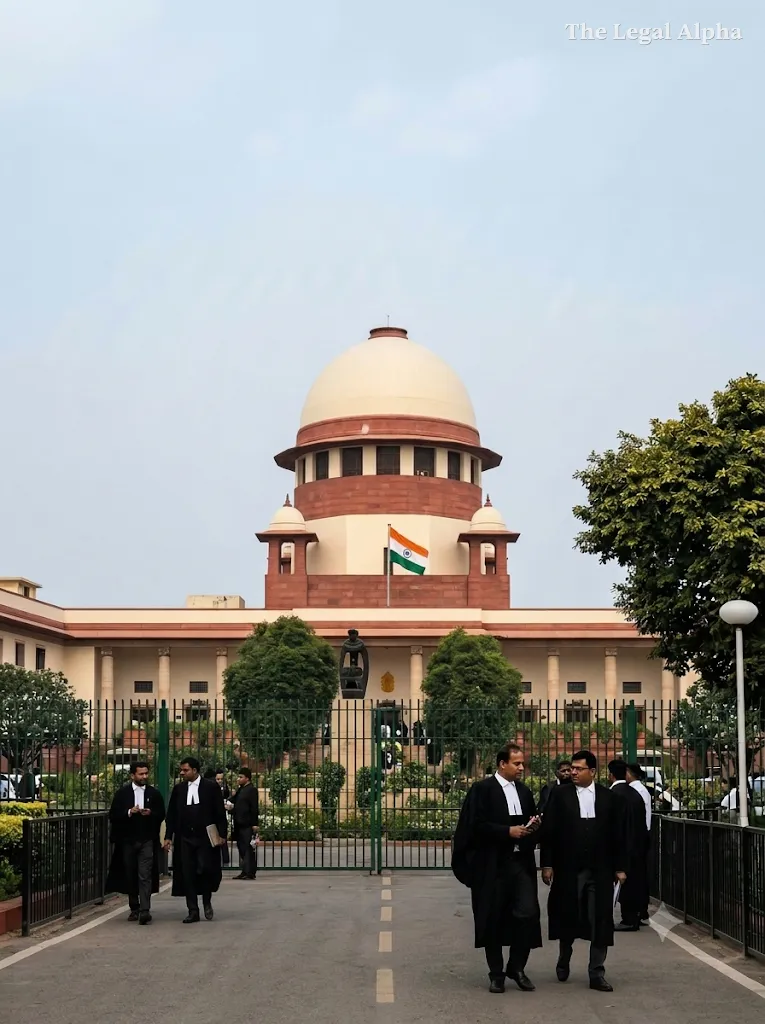
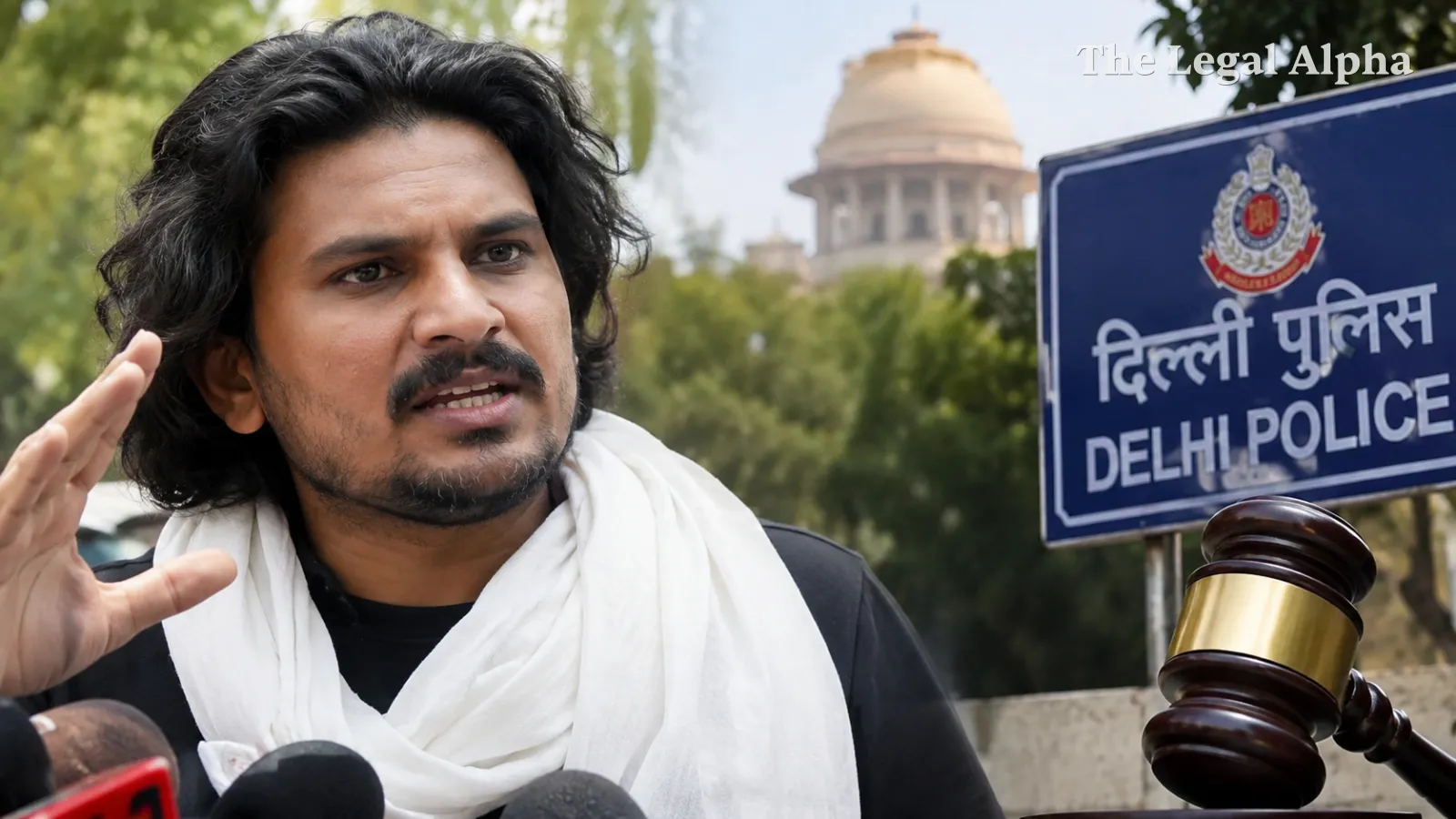
Curative Plea in Supreme Court Challenges CEC Appointment Verdict, Citing Conflict Over Judge’s Son Representing Election Commission
A fresh controversy has emerged before the Supreme Court of India after petitioner Dr. Jaya Thakur filed an extraordinary curative petition seeking the recall of a September 23, 2026 judicial order concerning the appointment mechanism for election commissioners.
The underlying proceeding involved a challenge to the Chief Election Commissioner and Other Election Commissioners (Appointment, Conditions of Service and Term of Office) Act, 2023. A Division Bench comprising Justice Dipankar Datta and Justice Satish Chandra Sharma had delivered a split view on whether the constitutional challenge should be referred to a five-judge Constitution Bench. While Justice Datta declined the reference, Justice Sharma favored it; both judges ultimately sent the matter to the Chief Justice of India on the administrative side to constitute an appropriate larger bench.
The new curative plea alleges that Justice Sharma’s participation in the matter gave rise to a reasonable apprehension of bias. The petitioner pointed to reports revealing that the judge’s son, advocate Siddharth Sharma, has served as a standing counsel for the Election Commission of India before the Madhya Pradesh High Court since July 2024. Dr. Thakur contended that this professional link was not disclosed during the five-day hearing, breaching fundamental principles of natural justice and warranting a complete recall of the split verdict for a fresh hearing before an untainted bench.
Legal Topic
Area of Law: Constitutional Law / Judicial Administration
Sub-topic: Judicial Ethics, Recusal, and Curative Jurisdiction under Article 142
Core Legal Issue
The substantive proceedings examine whether Parliament’s 2023 legislation—which replaced the Chief Justice of India with a nominated Union Cabinet Minister on the selection panel for election commissioners—undermines institutional independence and violates the basic structure of the Constitution.
However, the curative petition raises an urgent threshold question of procedural propriety: Does an undisclosed familial connection between a presiding Supreme Court judge and standing counsel representing a respondent commission before a High Court create a "reasonable apprehension of bias" sufficient to vitiate judicial proceedings and justify invoking the court’s extraordinary curative powers?
What Did the Court Decide?
The Supreme Court has not yet adjudicated the newly filed curative petition, which remains pending consideration.
In the September 23 order that the petition seeks to recall:
-
The Division Bench diverged on how the constitutional challenge should proceed: Justice Datta found no necessity to refer the statutory validity to a five-judge Constitution Bench, whereas Justice Sharma held that the issues warranted interpretation by a larger bench.
-
To avoid an administrative deadlock and ensure prompt resolution, both judges agreed to place the case records before the Chief Justice of India to determine the appropriate bench strength.
-
The bench also asked the Chief Justice of India to examine setting up a permanent Constitution Bench for resolving seminal constitutional controversies.
The curative petition now seeks to undo this procedural referral entirely, asking that the September 23 order be recalled and the petitions heard afresh by a bench that excludes Justice Sharma.
Key Legal Points
-
Exceptional Invocation of Curative Jurisdiction: Under the landmark precedent in Rupa Ashok Hurra v. Ashok Hurra, the Supreme Court established that its curative jurisdiction under Article 142 may be engaged where a judge failed to disclose a connection with the subject matter or parties, resulting in an apprehension of bias and a violation of natural justice.
-
Apprehension of Bias versus Actual Partiality: Established judicial propriety requires only that a fair-minded and informed observer would harbor a reasonable apprehension of bias; proof of actual partiality or corrupt intent is not legally necessary to invalidate proceedings.
-
Procedural Duty of Voluntary Disclosure: The controversy underscores the affirmative duty placed on judges to place potential conflicts—including familial representation of institutional litigants—on the record prior to commencing substantive hearings.
-
Separation of Merits from Procedural Integrity: While the substantive dispute centers on executive dominance in appointing election watchdogs, the curative filing halts progress by challenging the institutional legitimacy of the adjudicatory process itself.
Relevant Law
-
Article 142 of the Constitution of India: Grants the Supreme Court plenary powers to pass orders necessary to do complete justice, underpinning the court’s curative jurisdiction.
-
Article 324(2) of the Constitution of India: Governs the appointment of the Chief Election Commissioner and Election Commissioners, subject to provisions of any law made by Parliament.
-
Chief Election Commissioner and Other Election Commissioners (Appointment, Conditions of Service and Term of Office) Act, 2023: The legislation replacing the judicial member on the selection panel with a Union Cabinet Minister, thereby giving the executive a 2:1 majority.
-
Rupa Ashok Hurra v. Ashok Hurra (2002) 4 SCC 388: The five-judge Constitution Bench judgment laying down the strict standards and narrow grounds required to maintain a curative petition after the exhaustion of review remedies.
-
Anoop Baranwal v. Union of India (2023) 6 SCC 161: The Constitution Bench ruling that instituted a committee comprising the Prime Minister, Leader of Opposition, and Chief Justice of India as an interim safeguard pending parliamentary enactment.
Arguments of the Parties
Petitioner's Submissions
-
The petitioner argued that the presence of Justice Satish Chandra Sharma on the Division Bench vitiated the September 23 proceedings because his son is actively engaged as standing counsel representing the Election Commission of India before the Madhya Pradesh High Court.
-
The plea submitted that this relationship was never disclosed to the parties during the hearings and only came to light via media reports two days after the verdict.
-
Counsel maintained that non-disclosure created a legitimate apprehension of bias, invoking the principle that justice must not only be done but must manifestly and undoubtedly be seen to be done.
-
Relying on Rupa Ashok Hurra, the petitioner contended that bypass of the routine review process was warranted because the defect directly struck at natural justice and judicial impartiality.
Opposing Stance and Context
-
In the underlying challenge, the Union of India contended that the 2023 statute falls squarely within Parliament’s competence under Article 324(2) and successfully fills the legislative field identified in Anoop Baranwal.
-
On the question of reference, the Centre maintained that examining statutory modifications to institutional appointment panels involves complex constitutional interpretations that must be resolved by a five-judge Constitution Bench.
-
While the Union has not yet filed formal pleadings on the curative petition, judicial precedents typically distinguish between an advocate appearing in an unrelated forum and a direct pecuniary or personal interest in the outcome of the litigation before the apex court.
Why Does It Matter?
This development places judicial ethics and the procedural thresholds of curative jurisdiction under direct public scrutiny. Curative petitions represent the most restrictive avenue of relief in India’s legal architecture, historically entertained only in cases of egregious procedural failure or manifest conflict of interest.
If entertained, the petition could delay the definitive constitutional review of the 2023 appointment statute, leaving the current appointment process—where the executive holds majority control—in operational limbo ahead of crucial assembly elections. Beyond the immediate statute, the plea tests the boundaries of judicial recusal norms in India, testing whether an indirect familial retainership with a constitutional body requires automatic disclosure or recusal in litigation concerning that body's overarching statutory framework.
Legal Takeaway
Under Indian constitutional jurisprudence, judicial impartiality is evaluated through an objective test: the appearance of potential bias is as legally significant as proven partiality. Where an undisclosed professional relationship exists between a judge’s immediate family and a statutory party to the dispute, litigants may invoke the Supreme Court’s rare curative powers to safeguard the credibility and perceived fairness of the justice system.
Sources
Primary Source
-
Rupa Ashok Hurra v. Ashok Hurra, (2002) 4 SCC 388 (Supreme Court of India)
-
Supreme Court of India, Split Verdict and Referral Order dated September 23, 2026, in Writ Petition (Civil) challenging the Chief Election Commissioner and Other Election Commissioners Act, 2023.
Additional Sources
-
High Court of Madhya Pradesh panel notifications concerning Standing Counsel engagements for the Election Commission of India.
-
Anoop Baranwal v. Union of India, (2023) 6 SCC 161.