Contractual Dues and Negative Covenants: Eclatant Films Serves Multi-Crore Recovery Notice on Filmmaker Ram Gopal Varma
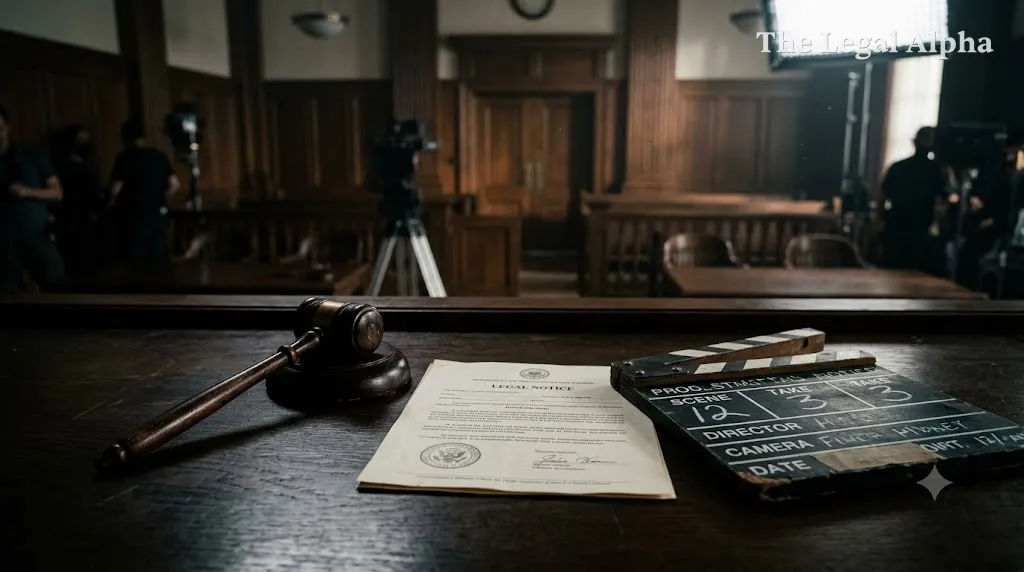
Production banner Eclatant Films Private Limited initiated recovery proceedings against filmmaker Ram Gopal Varma, demanding the clearance of outstanding dues totaling approximately ₹29.67 crore. The dispute traces back to a commercial agreement executed between the parties in April 2010, which later formed the subject matter of an order passed by the Bombay High Court in April 2013.
Alongside a formal demand notice addressed directly to the filmmaker, the production house published public notices across industry trade publications. The notice warns film financiers, producers, streaming networks, and distribution houses against executing commercial agreements, acquiring exploitation rights, or collaborating with the filmmaker on new projects without obtaining prior written clearance.
Legal Topic
-
Area of Law: Commercial Law / Media & Entertainment Law
-
Sub-topic: Breach of Contract, Negative Covenants, and Contractual Liens
Core Legal Issue
The controversy turns on the enforceability of contractual negative covenants and the creation of commercial liens over creative output and intellectual property.
At the center of the dispute is whether a production house can restrict a filmmaker's professional engagements and third-party commercial transactions across the entertainment sector based on a decade-old agreement and subsequent court order, particularly where third-party rights, OTT licensing agreements, and project-specific revenues are involved.
What Did the Court / Authority Decide?
No fresh judicial decree or restraining order has been issued in the current round of disputes; the development remains at the stage of a pre-litigation recovery notice and public caution notice issued by an aggrieved party.
-
Eclatant Films served a legal notice dated October 15, 2026, granting a deadline until October 30, 2026, to remit ₹29,67,64,000 (comprising principal liabilities along with accrued interest of over ₹11.38 crore).
-
The claimant cited an underlying Bombay High Court order passed on April 17, 2013, concerning the original April 10, 2010 pact.
-
Eclatant Films asserted that failure to settle the sum would result in the formal enforcement of contractual liens over the filmmaker's copyright interests, exploitation rights, and financial shares across covered titles, warning third-party platforms that dealing without clearance occurs at their own risk.
Key Legal Points
-
Operation of Negative Covenants: The agreement incorporates a restrictive term requiring the filmmaker to procure a prior No-Objection Certificate before directing, writing, or producing films with third parties until dues are discharged.
-
Assertion of Contractual Liens: The claimant purports to hold a preferential charge or contractual lien over intellectual property and distribution revenues stemming from projects covered under the arrangement.
-
Doctrine of Constructive Notice: By issuing public notices in entertainment trade publications, the claimant seeks to put potential buyers, streaming networks, and co-producers on legal notice to defeat any defense of "bona fide purchaser for value without notice".
-
Interplay with Section 27 Restraints: Post-contractual or open-ended bans on a creator’s right to practice their profession often face stringent judicial scrutiny regarding reasonable trade restraint under Indian contract law.
Relevant Law
-
Indian Contract Act, 1872:
-
Section 73 (Compensation for loss or damage caused by breach of contract)
-
Section 27 (Agreement in restraint of trade, void to that extent, subject to statutory limits)
-
Section 171 (General principles governing liens and charges)
-
-
Specific Relief Act, 1963:
-
Section 41 and Section 42 (Injunctions to perform negative covenants)
-
-
Copyright Act, 1957:
-
Provisions governing assignment, licensing, and priority of exploitation rights in cinematographic works
-
Arguments of the Parties
Eclatant Films Private Limited The production house contends that the financial liability crystallized under the April 2010 agreement remains unpaid, attracting substantial compound or commercial interest over time. It maintains that the pact expressly conditions any future creative or managerial assignments on an explicit written No-Objection Certificate, entitling the firm to assert an overriding lien on upcoming distribution streams, intellectual property, and producer shares if default persists.
Opposing Position / Filmmaker The filmmaker has not yet released a formal legal reply or public statement addressing the claims. In commercial disputes of this profile, resisting parties typically challenge the computation of penal interest, raise statutory limitation bars where applicable, contest the validity of broad negative covenants restricting professional work under Section 27 of the Contract Act, and clarify whether specific newly launched titles fall outside the original contractual scope.
Why Does It Matter?
This development highlights the legal friction between long-standing commercial recovery claims and modern film financing workflows. In media production, streaming platforms, digital distributors, and secondary financiers rely heavily on unencumbered intellectual property chain-of-title documentation.
When a claimant publishes formal trade warnings asserting prior liens, it injects direct compliance and due-diligence risks into ongoing production pipelines. Third-party acquirers often face escrow demands, litigation notices, or injunction suits that can freeze digital distribution rollouts until underlying contractual liabilities are resolved or secured before a commercial court.
Legal Takeaway
Public trade notices and claims of contractual liens over creative personnel underscore the necessity of rigorous chain-of-title vetting in film finance. Commercial parties dealing with directors or production banners subject to past judicial orders must independently verify clearance mechanisms and liability releases to avoid getting drawn into recovery disputes.
Sources
Primary Reference:
-
Legal and Caution Notice issued by Eclatant Films Private Limited (as published in trade records citing the Bombay High Court proceedings of April 17, 2013)
Additional Sources:
-
Industry coverage from Complete Cinema, The Indian Express, and Deccan Chronicle reporting on the commercial dispute and public trade notices