Calcutta High Court Directs Police to Protect Interfaith Couple Facing Threats Over Marriage
Area of Law: Constitutional Law
Sub-topic: Right to Marry, Personal Liberty and Police Protection
What Happened?
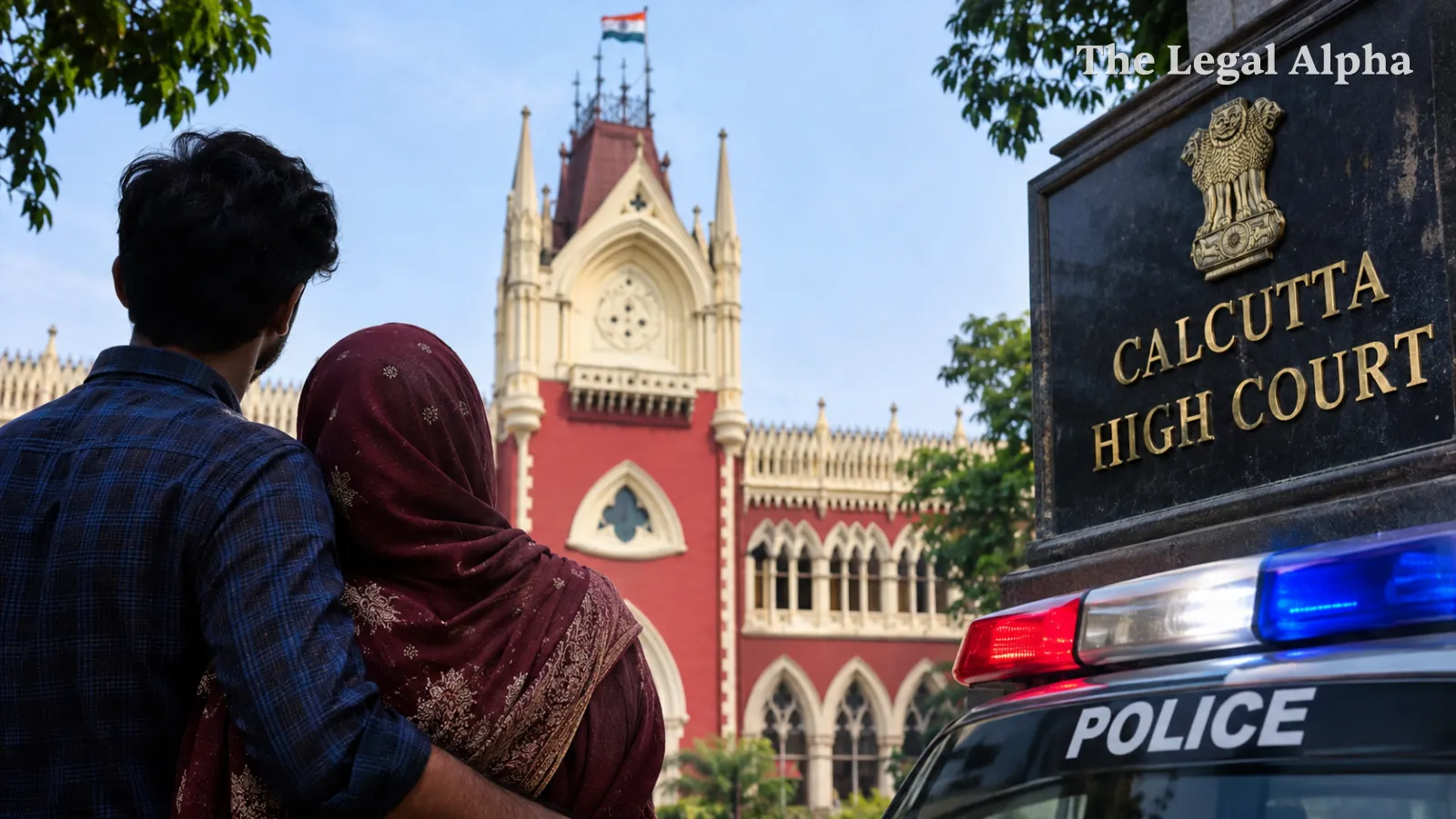
The Calcutta High Court has directed police authorities to provide protection to an interfaith married couple and their family members after they allegedly faced threats and intimidation from members of a Hindu organisation.
The matter was heard by Justice Saugata Bhattacharyya. The couple approached the High Court seeking protection after their confidential marriage solemnisation notice was allegedly accessed through a publicly accessible web portal and circulated among members of an activist group.
According to the petitioners, the circulation of the notice triggered repeated harassment, including threats to kill them and set their property on fire unless they ended their marriage. The couple also alleged that their requests for police assistance had not received an effective response.
Legal Topic
Area of Law: Constitutional Law
Sub-topic: Right to Choose a Life Partner, Personal Liberty and Police Protection
Core Legal Issue
The central legal question was whether an adult married couple could seek judicial protection against alleged threats and interference from third parties because of their interfaith marriage.
The matter also raised concerns about the protection of personal liberty and the ability of individuals to continue their marital relationship without intimidation or coercion.
What Did the Court Decide?
Justice Saugata Bhattacharyya observed that every citizen has the right to choose their life partner under Part III of the Constitution and that this choice should not be interfered with.
The Court considered an affidavit submitted by the woman, in which she expressed her willingness to continue living with her husband. Taking this statement into account, the Court found that she was sufficiently willing to continue the marriage.
Accordingly, the High Court directed the concerned police authorities to provide appropriate protection to the couple and their family members.
The direction was intended to enable the couple to continue their married life without fear arising from the alleged threats.
Key Legal Points
-
Right to choose a life partner: The Court reaffirmed that an individual's choice of spouse is protected under Part III of the Constitution.
-
Protection against intimidation: Police authorities were directed to provide appropriate protection to the couple and their family members.
-
Individual consent: The woman's affidavit expressing her intention to continue the marriage was considered by the Court.
-
Personal liberty: The case highlights the importance of protecting adults from unlawful interference in their marital decisions.
-
Police responsibility: Allegations of threats and intimidation require appropriate attention from law enforcement authorities.
Relevant Law
Constitution of India
-
Article 21: Protects the right to life and personal liberty. The freedom to make personal choices, including the choice of a life partner, has been recognised as an important aspect of this constitutional protection.
-
Part III: Guarantees fundamental rights, including the protection of individual liberty and dignity.
Special Marriage Act, 1954
The legislation provides a statutory framework for civil marriages, including marriages between individuals belonging to different religious communities, subject to its legal requirements.
Arguments of the Parties
Petitioners' Arguments
The couple, represented by Advocate Sabyasachi Chatterjee, submitted that they were already married and wished to continue their married life without fear.
They alleged that members of a Hindu activist organisation had circulated their marriage notice, subjected them and their family members to harassment, and issued threats of violence and arson.
The woman also submitted an affidavit affirming her intention to remain with her husband.
Respondents' Position
The Bar & Bench report does not provide detailed submissions from the State or other respondents on the allegations. Therefore, no specific opposing argument can be attributed to them.
Why Does It Matter?
The ruling highlights the constitutional importance of protecting individual choices in marriage, particularly when couples face opposition because of differences in religion.
An adult's decision to marry someone from another religious community cannot, by itself, become a justification for intimidation or unlawful interference.
The case also draws attention to the responsibility of police authorities to respond effectively when individuals approach them with allegations of threats to their safety.
Importantly, the Court considered the woman's own affidavit rather than treating allegations of family opposition as sufficient to undermine her stated decision to continue the marriage.
The development reinforces the principle that personal relationships and marital decisions must be protected from coercion and intimidation.
Legal Takeaway
The freedom to choose a life partner is an important aspect of constitutional liberty and personal autonomy. Interfaith couples are entitled to seek protection when they face threats or unlawful interference because of their marital choices. Police authorities have a responsibility to ensure their safety in accordance with law.
Sources
Primary Source: The specific High Court order in the present matter was not independently available for verification.
Additional Sources:
Editorial note: The earlier Baishali Saha proceeding is not the same case as the November 19, 2026 ruling. The present article is based on the reported facts and observations, without attributing the earlier case's directions to the present matter.