Bombay High Court Seeks Accountability Over Kanjurmarg Waste Facility, Orders Internal Audit
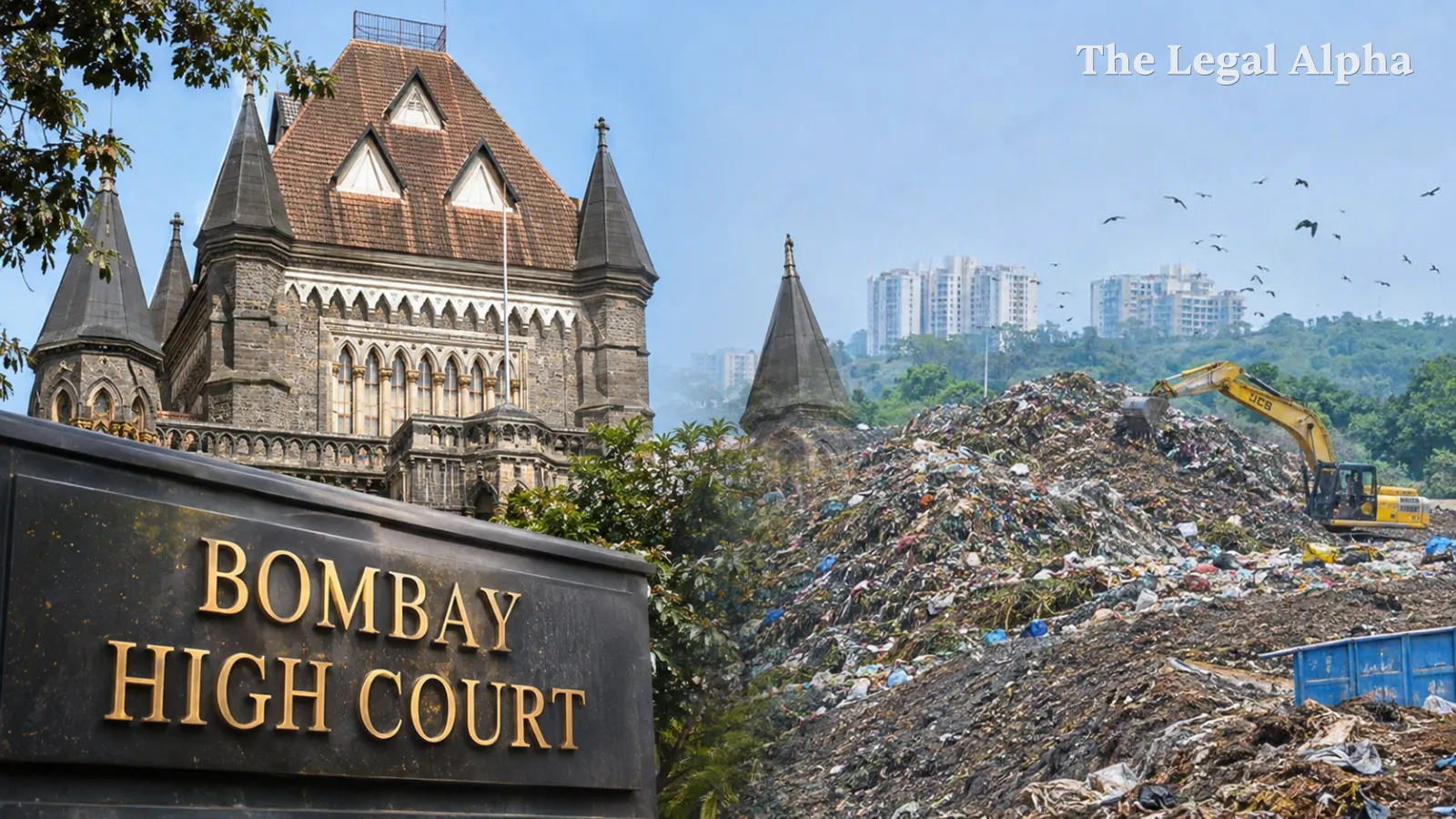
The Bombay High Court has directed a monitoring committee to conduct an internal audit of the Kanjurmarg waste management facility in Mumbai amid continuing complaints of foul odour, pollution and potential public health risks. The November 18, 2026 order calls for operational improvements, better waste segregation and technological solutions to address the environmental concerns affecting surrounding residential areas.
What Happened?
The case arises from petitions filed by Kannamwar Co-operative Housing Society Association and Sanjay Yelve, who raised concerns about the impact of the waste facility on nearby residential communities.
A Division Bench comprising Justices Girish Kulkarni and Neela Gokhale took note of continuing complaints from residents of Vikhroli, Bhandup and Mulund. The court observed that the facility continued to generate unpleasant odours and pollution despite steps taken by the Brihanmumbai Municipal Corporation (BMC).
The facility receives more than 7,000 metric tonnes of waste daily. The court stressed that the existing waste-handling system requires improvements, particularly in the separation of wet and dry waste.
Legal Topic
Area of Law: Environmental Law
Sub-topic: Solid Waste Management, Environmental Pollution and Right to Public Health
Core Legal Issue
The central legal question concerns the responsibility of municipal authorities and waste facility operators to ensure that waste processing activities comply with environmental requirements and do not expose nearby residents to continuing pollution and health risks.
The proceedings also raise questions about the effectiveness of existing monitoring arrangements, waste segregation practices and the accountability of authorities responsible for maintaining environmental standards.
What Did the Court Decide?
In its November 18, 2026 order, the Bombay High Court directed the monitoring committee to conduct an internal audit of the Kanjurmarg facility and identify operational improvements.
The court's directions and observations include:
-
Internal audit: The monitoring committee must examine the facility's functioning and recommend immediate improvements.
-
Waste segregation: Authorities must introduce systematic segregation of wet and dry waste at the point of generation, including pilot initiatives in difficult wards.
-
Technological improvements: The committee and municipal corporation must consider waste-to-energy technology and possible incineration.
-
Slum waste management: The Maharashtra Government has been directed to constitute a high-level committee to develop a scientific approach to garbage management in slum areas.
-
Plastic pollution: Authorities have been asked to examine measures concerning single-use plastics and stronger enforcement of plastic restrictions.
-
Public participation: The court appreciated the BMC's efforts to encourage citizens to separate wet and dry waste.
The matter has been scheduled for further hearing on December 7, 2026. The internal audit and implementation of the proposed measures remain matters requiring further consideration.
Key Legal Points
-
Environmental protection requires effective regulation of waste collection, transportation and processing.
-
Waste segregation at source can reduce the operational burden on municipal facilities.
-
Public health concerns arising from pollution require meaningful monitoring and corrective action.
-
Municipal authorities must ensure that environmental safeguards are implemented rather than remaining administrative requirements.
-
Scientific waste management and public participation are important components of sustainable urban governance.
Relevant Law
The legal framework relevant to the dispute includes:
Environment (Protection) Act, 1986: Provides the central framework for preventing and controlling environmental pollution and prescribing environmental safeguards.
Solid Waste Management Rules, 2016: Establish requirements concerning waste segregation, collection, transportation, processing and scientific disposal.
Article 21 of the Constitution: Protects the right to life, which the Supreme Court has interpreted to include the right to a clean and healthy environment.
Article 48A: Places a constitutional responsibility on the State to protect and improve the environment.
Article 51A(g): Recognises the fundamental duty of citizens to protect and improve the natural environment.
Arguments of the Parties
Petitioners
The Kannamwar Co-operative Housing Society Association and Sanjay Yelve raised concerns regarding persistent foul odours and pollution from the Kanjurmarg facility. They highlighted the difficulties faced by residents living in surrounding localities and sought effective intervention to address the environmental and health-related concerns.
Respondents
The BMC placed details of its waste segregation initiatives, cleanliness programmes and technological measures before the court. The facility operator also indicated steps towards relocating its Material Recovery Facility and developing a new composite plant to minimise odour-related problems.
The court considered the measures presented by the authorities but remained concerned that the complaints had continued despite earlier interventions.
Why Does It Matter?
The proceedings highlight an important challenge in urban environmental governance: municipal waste management cannot be assessed merely by the quantity of garbage collected or processed. The impact of waste disposal operations on surrounding communities must also be considered.
The court's intervention is significant for several reasons.
First, it places greater emphasis on accountability and independent assessment of waste processing operations. An internal audit could help identify shortcomings that routine administrative monitoring may fail to address.
Second, the focus on segregation at source highlights the responsibility of citizens, residential societies and municipal authorities in managing urban waste.
Third, the proposed policy for slum areas recognises that waste management requires solutions adapted to different urban settlements rather than relying exclusively on conventional collection systems.
The proceedings also underline the importance of protecting residents from environmental conditions that may affect their health and quality of life.
Legal Takeaway
The Kanjurmarg proceedings demonstrate that environmental compliance involves more than establishing waste processing infrastructure. Authorities must ensure effective monitoring, scientific disposal practices and timely corrective measures to protect public health.
The continuing proceedings before the Bombay High Court will be important in determining how these directions translate into practical improvements in Mumbai's waste management system.
Sources
Primary Source:
-
Bombay High Court proceedings in Kannamwar Co-op. Housing Society Association Ltd. v. Union of India & Ors., Writ Petition No. 790 of 2018.
Additional Sources: