Bombay High Court Seeks Accountability Over ₹59 Crore Released to Sinhgad Education Trust
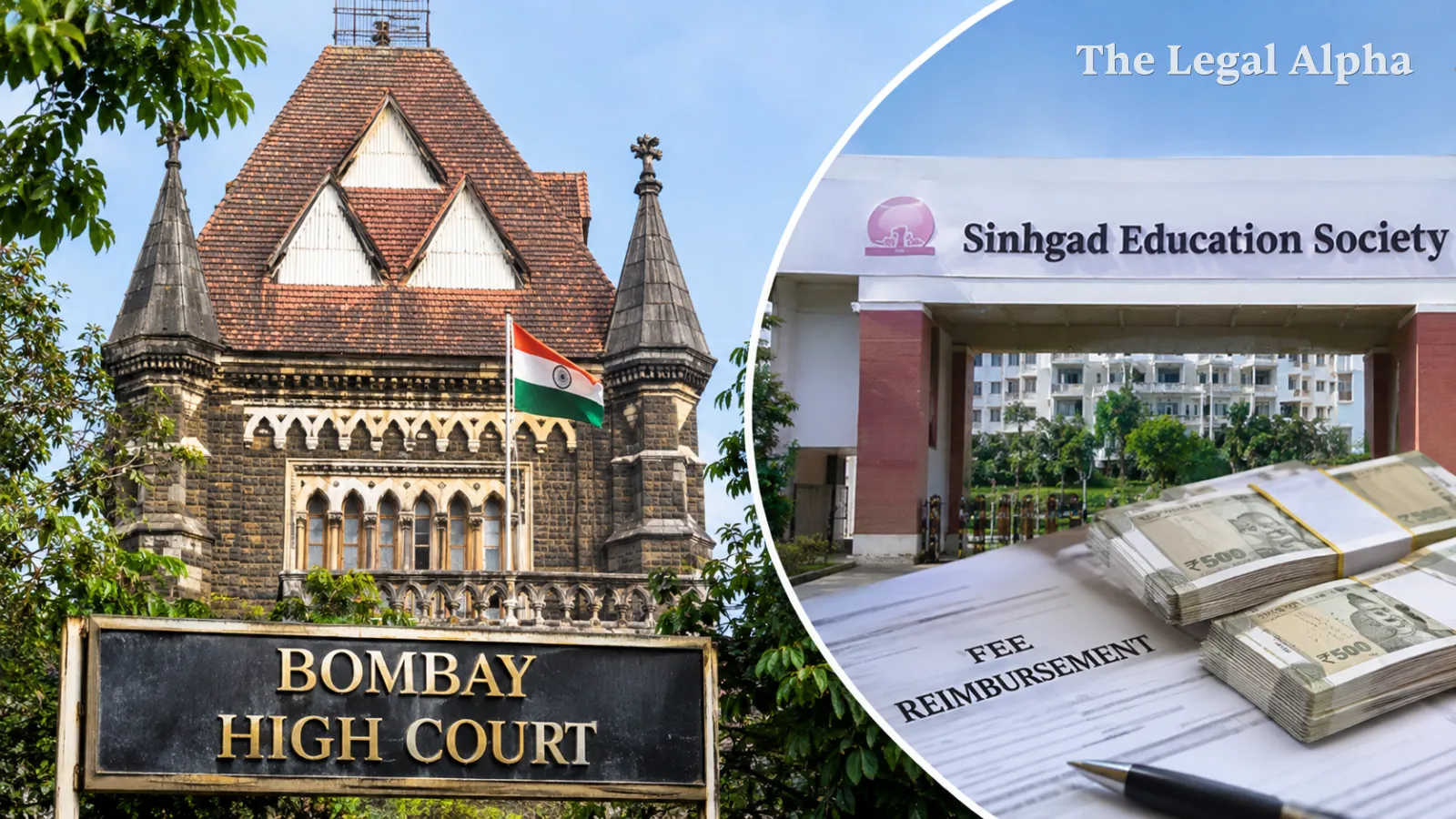
The Bombay High Court has directed further scrutiny of approximately ₹59 crore released by the Maharashtra government to the Sinhgad Technical Education Society (STES) towards students’ fee reimbursements. The court has raised concerns over the handling of public funds, the society’s financial disclosures and the conduct of education department officials who authorised payments despite pending judicial proceedings.
What Happened?
The matter concerns fee reimbursements released to STES, which operates 44 educational institutions. The payments have come under scrutiny amid complaints by teaching and non-teaching employees that their salaries and retirement benefits have remained unpaid for several years.
The latest proceedings before a division bench comprising Justice G.S. Kulkarni and Justice Neela Gokhale focused on the whereabouts of the money and the financial transactions undertaken by the society.
The court was informed that STES held 278 bank accounts. However, the affidavit submitted by trustee Rachana Alok Ashtekar did not disclose balances in certain accounts maintained offline. The court therefore directed her to provide the missing financial details.
Legal Topic
Area of Law: Constitutional Law and Trust Administration
Sub-topic: Judicial Supervision, Public Fund Accountability and Financial Irregularities in Educational Institutions
Core Legal Issue
The central legal question is whether government-funded fee reimbursements were properly released and utilised, particularly when the society was already facing judicial proceedings concerning unpaid employee dues and its financial management.
The proceedings also raise questions about the accountability of government education officials who authorised payments despite earlier court directions concerning the handling of funds.
What Did the Court Decide?
The Bombay High Court directed further disclosure and scrutiny of the financial affairs of STES and its trustees.
The important directions and observations include:
- Disclosure of bank balances: Trustee Rachana Alok Ashtekar must provide details of the amounts held in the society's bank accounts, including those whose balances were not disclosed in the earlier affidavit.
- Examination of financial transactions: STES and Ashtekar must disclose whether any bank accounts were operated or any movable or immovable properties belonging to the trust or its trustees were dealt with after the court's order dated August 5, 2026.
- Explanation from education officials: The directors of education have been directed to submit separate affidavits explaining the amounts released to the society and providing a clear break-up of sums payable to the trust and its students.
- Funds deposited in court: The bench recorded that approximately ₹27 crore had already been deposited with the court. STES also informed the bench that a demand draft of ₹7.5 crore was being prepared for payment to the petitioners.
- Further financial disclosures: Trustee Rohit Navale was directed to submit a fresh affidavit explaining the amounts received by him from Indian parties, STES and its educational institutions.
The court also directed Savitribai Phule Pune University to submit a status report concerning all colleges affiliated with STES. The Maharashtra Charity Commissioner was asked to examine the trust deed, pending change reports and other substantive orders relating to the society.
The matter has been listed for further hearing on November 25, 2026.
Key Legal Points
-
Public funds released for educational purposes must remain subject to proper financial accounting and scrutiny.
-
Court-directed disclosure of bank accounts and assets can help establish the movement and present status of institutional funds.
-
Government officials may face judicial scrutiny when their actions appear inconsistent with earlier court directions.
-
Trustees are expected to provide transparent information about institutional finances and their own relevant financial dealings.
-
The interests of employees and students remain important considerations when courts examine the administration of educational institutions.
Relevant Law
The proceedings primarily concern the High Court's constitutional and supervisory jurisdiction and the legal obligations governing public charitable trusts and educational institutions.
Relevant legal frameworks include:
-
Article 226 of the Constitution of India: Empowers High Courts to issue directions, orders and writs to protect legal rights and ensure lawful exercise of public authority.
-
Maharashtra Public Trusts Act, 1950: Governs the administration, supervision and regulation of public charitable trusts in Maharashtra.
-
Indian Trusts Act, 1882: Provides general principles concerning trust obligations, although its application to public charitable trusts is subject to statutory exclusions.
-
Applicable education regulations: Govern the administration and regulatory oversight of educational institutions.
The latest reported proceedings do not identify a specific statutory provision as the basis for the financial disclosure directions.
Arguments of the Parties
Employees / Petitioners
The proceedings arise from complaints by teaching and non-teaching employees seeking payment of outstanding salaries and retirement benefits. Their grievances concern prolonged non-payment of dues despite the society operating multiple educational institutions.
Sinhgad Technical Education Society
The society's counsel informed the court that ₹7.5 crore was being arranged through a demand draft for payment to the petitioners. The society was also required to provide further financial disclosures through its trustees.
State Government / Education Department
The education authorities were required to explain the reimbursements released directly to STES and provide details of the amounts payable to the society and students.
Why Does It Matter?
The proceedings raise an important question about accountability when government funds are released to privately managed educational institutions.
The case has implications for several stakeholders:
-
Educational employees: The investigation and financial disclosures may help establish the whereabouts of funds and facilitate recovery of outstanding salaries and retirement benefits.
-
Students: The financial condition and administration of educational institutions can directly affect academic continuity and institutional stability.
-
Government authorities: The proceedings highlight the importance of maintaining proper records and ensuring compliance with judicial directions before releasing public money.
-
Charitable trusts: The case reinforces the importance of transparent financial management, proper accounting and accountability of trustees.
The court's scrutiny also demonstrates that judicial oversight can extend beyond the immediate dispute over unpaid dues when questions arise about the management of institutional finances.
Legal Takeaway
The central legal lesson is that public funds released for educational purposes must be properly accounted for, and those responsible for their administration may be required to explain their utilisation. The Bombay High Court's directions underline the importance of financial transparency, institutional accountability and compliance with judicial orders.
Sources
Primary Sources:
-
Bombay High Court proceedings in Sinhgad Technical Education Society v. Pune Municipal Corporation, order dated November 19, 2026.
Bombay High Court proceedings concerning financial disclosures and reimbursements, reported on November 20, 2026.
Additional Sources:
Hindustan Times, report dated November 21, 2026.
LiveLaw, reporting on the November 10, 2026 investigation directions.