Bombay High Court Questions Omission of 99% Stakeholder Parth Pawar in Pune Land Deal, Grants Anticipatory Bail to Revenue Official
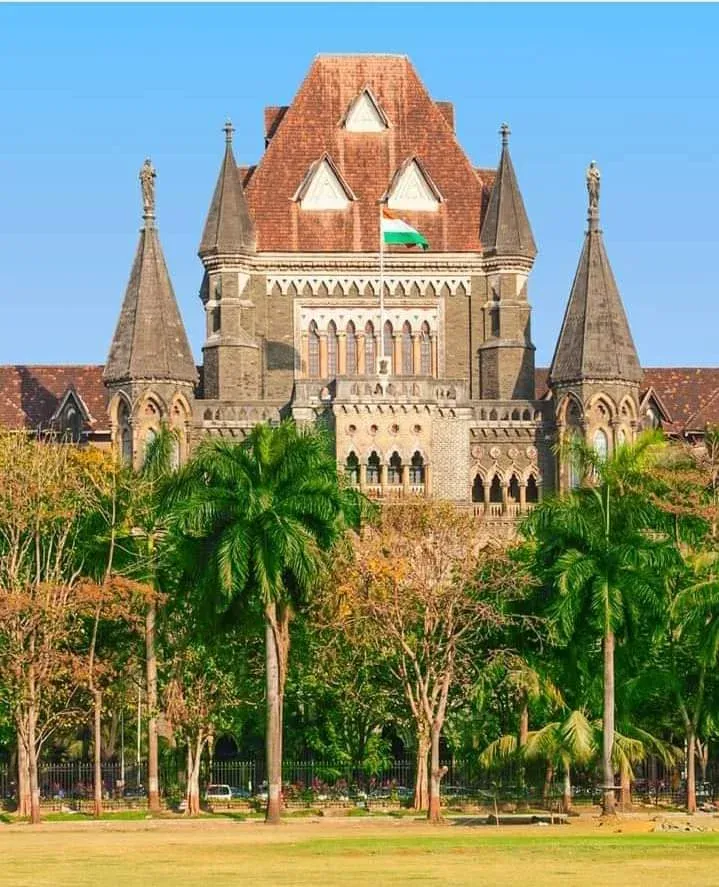
The Bombay High Court questioned the Maharashtra Police over an apparent blind spot in its investigation into an alleged land scam in Pune, asking why Rajya Sabha MP Parth Pawar was excluded from criminal proceedings despite holding a 99 percent stake in the firm that acquired the government plot at a steep discount.
The transaction involves a 40-acre parcel of Mahar Watan land in Pune's Mundhwa area, previously leased to the Botanical Survey of India, which was transferred to Amadea Enterprises LLP allegedly without the mandatory statutory clearance from the state government. While the Economic Offences Wing booked Pawar’s business partner Digvijay Patil—who holds only a 1 percent share in the partnership firm—alongside revenue officials, Pawar was omitted from the First Information Report.
The issue came before a single-judge bench of Justice Madhav J. Jamdar during pre-arrest bail proceedings initiated by Pune Tehsildar Suryakant Gulabrao Yewale, who faces charges of misusing his official position to facilitate the transaction.
Legal Topic
Area of Law: Criminal Law & Public Accountability
Sub-topic: Anticipatory Bail, Selective Prosecution, and Corporate Attribution in Public Land Alienation
Core Legal Issue
The matter raises two interrelated legal questions: first, whether an investigating agency can lawfully differentiate between partners of a limited liability entity by charging a nominal 1 percent partner while omitting the 99 percent majority partner on identical allegations of unlawful enrichment; and second, whether a public official is entitled to pre-arrest protection under Section 438 of the Code of Criminal Procedure when the investigative process itself displays material disparities and custodial interrogation is not demonstrated to be necessary.
What Did the Court Decide?
Justice Madhav J. Jamdar granted anticipatory bail to Pune Tehsildar Suryakant Gulabrao Yewale.
During the hearing, the court scrutinized the State's prosecutorial approach, orally querying how the controlling partner and primary equity holder could be treated as a non-beneficiary of an allegedly discounted public land transaction while his minority associate was arrayed as an accused.
In response to earlier directions issued by the High Court seeking an explanation from the highest echelons of the police administration, Maharashtra Director General of Police Sadanand Date filed an affidavit acknowledging that the case records revealed a need for a "more professional and detailed investigation." The DGP instructed Pune Police Commissioner Amitesh Kumar to conduct further investigation, review weekly progress reports, and confirmed that the DGP’s office will supervise the probe periodically. The broader inquiry remains ongoing under this heightened oversight framework.
Key Legal Points
-
Non-Arbitrariness in Partner Attribution: Where an entity is alleged to have derived an unlawful commercial benefit from undervalued public property, the investigating agency cannot insulate the overwhelming equity holder while targeting a nominal minority partner without objective, documented justification.
-
Judicial Check on Selective Prosecution: While criminal courts do not ordinarily dictate how the police investigate an offence, the High Court possesses supervisory authority to scrutinize evident omissions where political standing appears to steer the boundaries of an FIR.
-
Standard for Pre-Arrest Protection: Anticipatory bail was granted to the revenue official upon evaluating the nature of the allegations, available documentary material, and the absence of a demonstrated need for custodial detention.
-
Supervised Further Investigation: The concession by the Director General of Police requiring weekly reviews by the Pune Police Commissioner institutionalizes accountability under Section 173(8) of the CrPC, keeping future additions of accused persons open.
Relevant Law
-
Section 438 of the Code of Criminal Procedure, 1973 (CrPC) (and corresponding provisions of the Bharatiya Nagarik Suraksha Sanhita, 2023) — Governs the grant of bail to persons apprehending arrest.
-
Section 173(8) of the Code of Criminal Procedure, 1973 (CrPC) — Empowers investigative agencies to conduct further investigation in respect of an offence after a preliminary report is filed.
-
Indian Penal Code, 1860 (IPC) — Sections concerning cheating, forgery, criminal breach of trust, and criminal conspiracy in transactions involving public land.
-
Maharashtra Land Revenue Code, 1966 & Mahar Watan Abolition Framework — Regulates restrictions on alienating, transferring, or selling government-leased and assigned Watan properties without prior executive sanction.
Arguments of the Parties
Petitioner: Suryakant Gulabrao Yewale
Senior Advocate Harshad Nimbalkar contended that the Tehsildar had been made a convenient scapegoat and falsely implicated in a high-profile transaction wherein he held no personal interest. Counsel highlighted the arbitrary manner of the probe, pointing out that although Amadea Enterprises LLP was the principal purchaser, the State shielded its 99 percent owner, Parth Pawar, due to his political influence as the son of Maharashtra Deputy Chief Minister Sunetra Pawar, while naming lower-level administrative personnel and a 1 percent partner.
Respondent: State of Maharashtra
Additional Public Prosecutor S.V. Gavand initially resisted the pre-arrest bail plea, arguing that Yewale had exercised official powers to clear and facilitate the illicit alienation of government-held land. However, regarding the investigative disparities flagged by the bench, the State—supported by the affidavit of DGP Sadanand Date—conceded that earlier proceedings lacked thoroughness, assuring the court that the Pune Police Commissioner would head a revamped, professionally monitored probe.
Why Does It Matter?
The High Court's intervention targets a recurring tension in white-collar and real estate crime in India: the shielding of politically prominent corporate controllers behind corporate veils and junior functionaries. By refusing to overlook the stark 99-to-1 equity ratio within Amadea Enterprises LLP, the bench signaled that courts will not turn a blind eye when investigative discretion selectively stops short of controlling beneficiaries.
For the administrative machinery, the ruling underscores that while revenue officers must answer for dereliction of duty, they cannot be singled out for custodial detention in proceedings where the primary commercial beneficiaries are insulated. Moreover, directing the DGP and City Police Commissioner to monitor the inquiry weekly sets a clear precedent for institutional accountability in politically sensitive public land scams.
Legal Takeaway
An investigating agency cannot legitimately dissect corporate culpability to book nominal equity partners while giving a clean pass to the controlling majority stakeholder of a beneficiary entity. The ruling affirms that the High Court will intervene against selective prosecution and ensure that public land transactions are investigated with parity, regardless of the political prominence of the individuals involved.
Sources
Primary Source:
Bombay High Court, Order dated October 1, 2026, in Suryakant Gulabrao Yewale v. State of Maharashtra (Anticipatory Bail Application No. 8 of 2026), Single-Judge Bench of Justice Madhav J. Jamdar.
Additional Sources:
-
Official Affidavit of the Director General of Police, Maharashtra (Sadanand Date), submitted before the Bombay High Court in ABA No. 8 of 2026.
-
Previous Order of the Bombay High Court dated September 7, 2026, in ABA No. 8 of 2026.