Bombay High Court Directs Two Firms to Vacate RBI-Owned Amar Building After Decades-Long Dispute
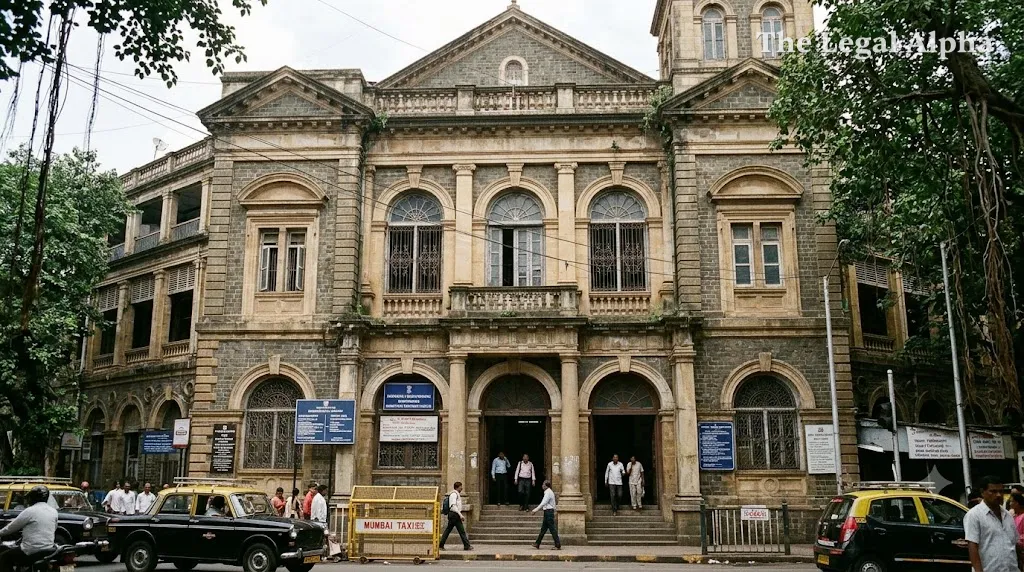
The Bombay High Court has delivered a decisive ruling upholding a 2014 city civil court order that directed two commercial firms to vacate their premises in the historic Amar Building, located in Mumbai's Fort district. The property has been owned by the Reserve Bank of India (RBI) since 1947. The occupants, Munjee Nathoobhoy & Company and Reunion Private Limited, remained in possession of the premises for years despite formal eviction notices served on them in April 2013 under public premises legislation.
The underlying conflict dates back more than six decades. Although the occupants had entered into consent terms as far back as January 1961 undertaking to search for alternative premises, successive rounds of litigation allowed them to stay. Justice Sandeep Marne brought an end to the prolonged legal battle, observing that the time had finally arrived for the occupants to hand over possession back to the central bank.
Legal Topic
-
Area of Law: Property & Public Premises Law
-
Sub-topic: Eviction of Unauthorised Occupants / Possession of Public Property
Core Legal Issue
The primary legal question before the court was whether a statutory authority or public body, such as the Reserve Bank of India, is legally required to establish specific grounds—such as a bona fide requirement or demonstrable security threat—to seek the eviction of an unauthorized occupant under public premises law, or whether the lawful termination of tenancy alone is sufficient.
Additionally, the court examined whether commercial occupants can challenge or dismiss threat assessments issued by national intelligence and local law enforcement agencies on the claim that those reports have grown stale over time.
What Did the Court Decide?
The Bombay High Court dismissed the petitions filed by both firms and affirmed the eviction order previously confirmed by the city civil court.
Justice Marne observed that the sheer pendency of prolonged litigation was the sole reason the petitioners were able to retain possession for roughly 65 years despite their earlier commitments to move. The court ruled that the RBI is not legally obligated to demonstrate a bona fide requirement or a specific security risk to reclaim its own property under the statute. Nevertheless, the court found that the RBI had placed ample, verified material on record establishing legitimate security concerns, which the petitioners failed to discredit.
Key Legal Points
-
No Obligation to Prove Bona Fide Need: Under public premises legislation, a public authority is not held to the same evidentiary burden as private landlords under rent control acts; it does not need to prove a personal bona fide requirement or specific operational emergency to recover possession.
-
Inviolability of Security Assessments: Private occupants lack the standing to dispute or substitute their own opinions for official threat assessments formulated by designated intelligence agencies and law enforcement.
-
Absence of Commercial Motive: The fact that the public authority sought possession purely for institutional security, without any intention to re-let the property commercially, reinforces the fairness and legitimacy of its action.
-
Litigation Delay Grants No Substantive Right: Prolonged occupation made possible exclusively by court delays and interim stays cannot mature into an enforceable right to remain indefinitely on public land.
Relevant Law
-
Primary Statute: Public Premises (Eviction of Unauthorised Occupants) Act, 1971
-
Historical Context: Bombay Rents, Hotel and Lodging House Rates Control Act, 1947
-
Judicial Undertaking: Consent Terms dated 12 January 1961
Arguments of the Parties
Petitioners (Munjee Nathoobhoy & Co. and Reunion Pvt. Ltd.)
-
Argued that the eviction notices were founded on outdated, stale intelligence reports that could no longer justify displacement.
-
Maintained that their continued presence in the building posed no tangible danger to the central bank’s operations.
-
Relied on their multi-decade occupancy to contest the summary eviction proceedings initiated against them.
Respondent (Reserve Bank of India)
-
Contended that having private, non-RBI commercial entities operating within Amar Building heightened the institution's vulnerability to security threats.
-
Relied on directives and advisories issued by the Intelligence Bureau (2002), the Mumbai Police (2005), and internal security assessments (2010), all recommending the complete removal of outside occupants.
-
Submitted that the termination of tenancy was pursued strictly on institutional security grounds, with no intention of leasing the space to any third party.
Why Does It Matter?
This decision reinforces the framework of public premises eviction laws across India. It prevents commercial entities from exploiting procedural delays in the judicial process to hold onto public and state-owned properties well after their legal rights have expired.
Furthermore, the ruling establishes that constitutional and statutory bodies tasked with critical national functions do not carry an onerous burden to prove operational necessity when reclaiming their premises. It also affirms that security assessments conducted by national agencies will be respected by courts rather than second-guessed by commercial occupants.
Legal Takeaway
Occupants of public properties acquire no permanent right to possession once their tenure is lawfully brought to an end, and public authorities are not required to justify evictions under the standard of bona fide requirement. Prolonged stays enabled solely by litigation pendency do not confer legality upon an unauthorized occupation.
Sources
-
Primary Source: Bombay High Court Judgment / Order, Single-Judge Bench of Justice Sandeep Marne (October 2026).
-
Additional Sources: Case records under the Public Premises (Eviction of Unauthorised Occupants) Act, 1971; City Civil Court records (Mumbai).