Beyond Case Counts: Former Delhi High Court Judge Highlights Institutional Strain and Procedural Realities Behind Judicial Pendency
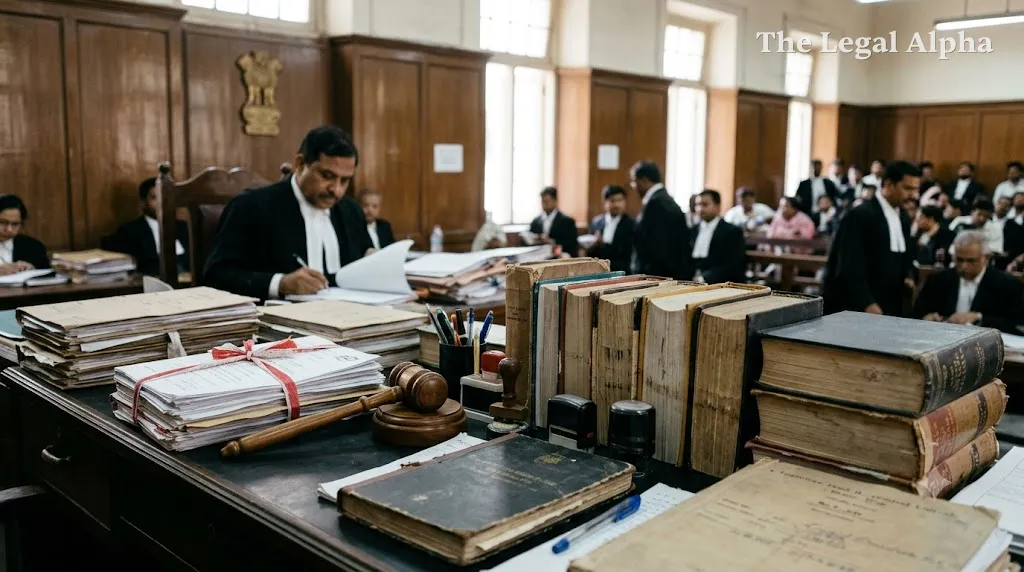
Former Delhi High Court judge Poonam A. Bamba shared detailed reflections on the operational mechanics and daily pressures shaping the subordinate and higher judiciary in India. Drawing from decades of judicial service, she highlighted the heavy caseloads handled by trial courts, where judicial magistrates frequently navigate cause lists containing 125 to 150 matters a day.
Her observations address common public misconceptions about court output, noting that metrics focused purely on daily disposals ignore the procedural demands of complex trials. These include recording evidence continuously for hours, reviewing records running across tens of thousands of pages, and working alongside understaffed court administrative machinery. She also emphasized the emotional strain placed on judicial officers and urged greater caution regarding public perceptions formed through isolated courtroom video clips.
Legal Topic
-
Area of Law: Judicial Administration and Procedural Law
-
Sub-topic: Court Management, Case Disposal Metrics, and Judicial Capacity
Core Legal Issue
The fundamental issue centers on how the efficiency and delivery of justice in India are evaluated: whether judicial productivity can be measured solely by disposal figures, or whether systemic backlogs are primarily driven by procedural mandates, evidentiary volume, and institutional resource deficits.
This raises broader questions regarding court administration: how statutory evidentiary requirements, heavy dockets of routine financial offenses, and acute shortages of auxiliary infrastructure impede speedy trials under constitutional guarantees.
What Did the Court / Authority Decide?
As these remarks constitute experiential observations rather than an adjudicatory decree, no judicial orders were issued. However, the key points raised regarding the administration of justice include:
-
The substantial contribution of cheque-dishonor proceedings to judicial backlogs, with single district dockets accumulating tens of thousands of pending disputes.
-
The reality that complex criminal trials—such as financial fraud and terror-financing matters investigated by central agencies—require day-long recording of oral and documentary evidence, which cannot be captured by mere disposal tallies.
-
Recognition of auxiliary court staff, including stenographers and police witnesses, whose operational challenges directly dictate the speed of court dockets.
-
A warning against evaluating judicial conduct based on decontextualized social media clips, urging public scrutiny to be informed by complete orders and court records.
Key Legal Points
-
Evidentiary Rigor vs. Summary Output: Substantive criminal trials under procedural codes require meticulous recording of witness testimonies and scrutiny of exhaustive documentary records, making speedy disposal metrics secondary to fair trial standards.
-
Statutory Docket Congestion: Quasi-criminal statutory offenses, specifically cheque-bouncing complaints, continue to impose an overwhelming burden on lower magistrate courts, diverting time from serious criminal adjudications.
-
Institutional Support Dependency: The speed of judicial proceedings depends heavily on auxiliary infrastructure, stenographic assistance, and police investigation workflows rather than judicial bench hours alone.
-
Integrity of Open Court Proceedings: Out-of-context video snippets from live-streamed proceedings risk misrepresenting judicial temperament and trial decorum, reinforcing the principle that court proceedings must be assessed through official judicial records.
Relevant Law
-
Article 21 of the Constitution of India: The fundamental right to a speedy and fair trial, balanced against procedural thoroughness.
-
Code of Criminal Procedure, 1973 / Bharatiya Nagarik Suraksha Sanhita, 2023 (BNSS): Provisions governing trials before Courts of Session and Magistrates, including continuous day-to-day recording of evidence.
-
Indian Evidence Act, 1872 / Bharatiya Sakshya Adhiniyam, 2023 (BSA): Rules governing proof of voluminous documentary evidence and examination of prosecution witnesses.
-
Section 138, Negotiable Instruments Act, 1881: Statutory offense for dishonor of cheques, which forms a major portion of subordinate court pendency.
Arguments of the Parties
Because these insights stem from judicial commentary and institutional assessment rather than an adversarial courtroom proceeding, there are no competing litigants or formal party submissions.
-
Judicial Perspective: Judicial officers operate under demanding procedural duties where time spent examining thousands of pages or recording sensitive witness testimony is vital to due process, even when it produces no formal case disposals on the daily board.
-
Public Perception Challenge: The general public and court observers frequently evaluate judicial productivity using superficial metrics or short video recordings, overlooking administrative constraints, heavy workloads, and the need to read complete judicial orders for context.
Why Does It Matter?
These observations highlight the disconnect between public critiques of judicial delays and the procedural mechanics inside Indian trial courts. Evaluating court productivity purely through algorithmic case-count metrics creates unrealistic expectations and fails to capture the true causes of judicial backlogs.
At a policy level, addressing pendency requires expanding judicial support systems—such as stenographic pools, court transcription infrastructure, and witness scheduling—alongside specialized mechanisms to resolve high-volume matters like cheque dishonor disputes. Furthermore, as courtrooms increase public transparency through live streaming and digitisation, maintaining fair public engagement requires relying on official case orders rather than sensationalized social media summaries.
Legal Takeaway
Judicial output cannot be judged solely by the number of cases disposed of each day. Due process demands detailed evidence recording and rigorous document examination, making investments in administrative staffing and specialized statutory courts essential for true judicial efficiency.
Sources
-
Primary Source: Public reflections and judicial insights by Justice Poonam A. Bamba (Retd.), former Judge, Delhi High Court.
-
Additional Sources: The Times of India report on judicial workload and subordinate court functioning (October 2026); High Court of Delhi Judicial Roster and Official Profile.