Bank Loan Settlement Offers Cannot Stall Money Laundering Probes: Telangana High Court Upholds ED Summons
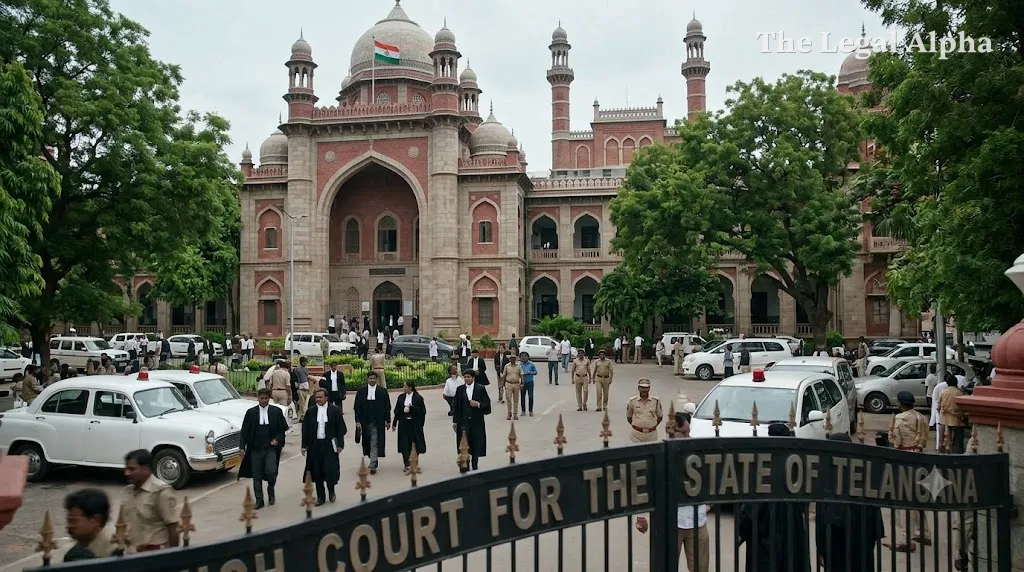
The Telangana High Court dismissed a petition seeking to quash summons issued by the Enforcement Directorate (ED) under the Prevention of Money Laundering Act, 2002 (PMLA). The case stems from an alleged Rs 5.10 crore bank fraud involving the State Bank of India.
The petitioners, business couple Paruchuri Kumar (alias Kanuganti Suresh Kumar) and Pokala Pallavi, approached the High Court to halt the ED's proceedings, arguing that parallel criminal investigations were already underway by the Hyderabad Central Crime Station and the Central Bureau of Investigation (CBI), and that they had offered a one-time settlement (OTS) to the bank. Justice J. Sreenivas Rao rejected the plea, holding that neither ongoing debt recovery efforts nor multi-agency investigations preclude the ED from exercising its statutory power to issue summons and trace suspected proceeds of crime.
Legal Topic
-
Area of Law: Criminal Law / Economic Offences
-
Sub-topic: Money Laundering / Power of Summons under Section 50 of PMLA
Core Legal Issue
The fundamental legal question was whether a pending one-time settlement proposal with a creditor bank, along with simultaneous investigations by police and the CBI, can legally disable the Enforcement Directorate from issuing summons under Section 50 of the PMLA.
The High Court was required to evaluate whether judicial intervention is warranted at the investigatory summons stage, and whether private repayment arrangements with financial institutions can extinguish a statutory money laundering inquiry.
What Did the Court Decide?
Justice J. Sreenivas Rao dismissed the quashing petition and declined to extend any interim protection against coercive action.
The court ruled that the ED possesses legitimate authority and territorial jurisdiction to issue Section 50 summons in connection with scheduled offences. It observed that the petitioners failed to provide any material showing that the agency acted without jurisdiction or lacked statutory basis.
Emphasizing that civil settlements cannot erase criminal wrongdoing, the bench held that an application for a one-time settlement with SBI or an offer to repay outstanding dues does not restrict the ED from probing money laundering transactions. Consequently, the summons remains valid, and the petitioners are required to join the investigation.
Key Legal Points
-
Section 50 Mandate: Under Section 50 of the PMLA, the ED is empowered to summon any individual whose attendance is considered necessary to give evidence or produce documents; summoned individuals are legally obligated to attend and disclose the truth.
-
Judicial Restraint at Summons Stage: Constitutional courts must exercise caution and rarely interfere at the premature stage of investigation or quash statutory summons in the absence of patent jurisdictional illegality.
-
Independence from Civil Settlements: A borrower’s offer to compromise civil debt or resolve liabilities through an OTS scheme does not wipe out potential criminal liability or arrest proceedings under the PMLA.
-
Autonomy from Parallel Inquiries: The existence of overlapping or underlying inquiries by state police or the CBI does not curtail the ED's distinct mandate to investigate proceeds of crime.
Relevant Law
-
Prevention of Money Laundering Act, 2002:
-
Section 50: Powers of authorities regarding summons, production of documents, and recording statements.
-
Section 3 & Section 4: Offence and punishment for money laundering.
-
-
Code of Criminal Procedure, 1973:
-
Section 482: Inherent powers of the High Court to prevent abuse of the process of any court or secure the ends of justice.
-
-
Judicial Precedents: Supreme Court of India rulings upholding the scope of Section 50 PMLA inquiries and delineating the threshold for judicial interference during pre-trial investigative stages.
Arguments of the Parties
Petitioners The petitioners contended that the impugned summons was arbitrary and unwarranted because the primary allegations of loan default and fraud were already subject to scrutiny by local police authorities and the CBI. They submitted that they had acted in good faith by initiating an application for a one-time settlement with the lender bank and demonstrated readiness to discharge the financial liability, thereby making further coercive investigative steps by the ED unnecessary.
Enforcement Directorate / Respondent The ED submitted that its statutory jurisdiction under the PMLA is independent of traditional recovery proceedings and separate from predicate offence probes conducted by police agencies. The agency maintained that issuing summons under Section 50 is a statutory fact-finding step essential to uncover money trails and unearth proceeds of crime, which cannot be defeated simply because a borrower enters debt negotiation talks with a lending bank.
Why Does It Matter?
This decision reinforces the procedural autonomy of the Enforcement Directorate in white-collar and financial crime probes. It provides clarity to commercial borrowers, banks, and legal practitioners that entering into compromise settlements, restructuring packages, or OTS mechanisms with financial creditors does not operate as an automatic shield against PMLA proceedings.
Additionally, the ruling reaffirms the strict standard governing High Court jurisdiction under Section 482 of the CrPC, reiterating that courts will rarely interdict summonses unless a clear absence of statutory jurisdiction is demonstrated at the outset.
Legal Takeaway
A financial settlement with a lending bank addresses contractual debt recovery but does not erase allegations of economic fraud or money laundering. Summons issued under Section 50 of the PMLA represent a statutory obligation to cooperate and produce evidence, and courts will not quash them merely because parallel inquiries or compromise negotiations are pending.
Sources
-
Primary Source: High Court for the State of Telangana at Hyderabad, Order passed by Justice J. Sreenivas Rao in criminal petition challenging Enforcement Directorate Section 50 PMLA summons (Paruchuri Kumar & Anr.).
-
Additional Sources: The New Indian Express; The420.in legal reporting; The Siasat Daily.