Allahabad High Court Suspends Murder Conviction of Former BJP Worker Seeking to Contest 2027 UP Assembly Elections
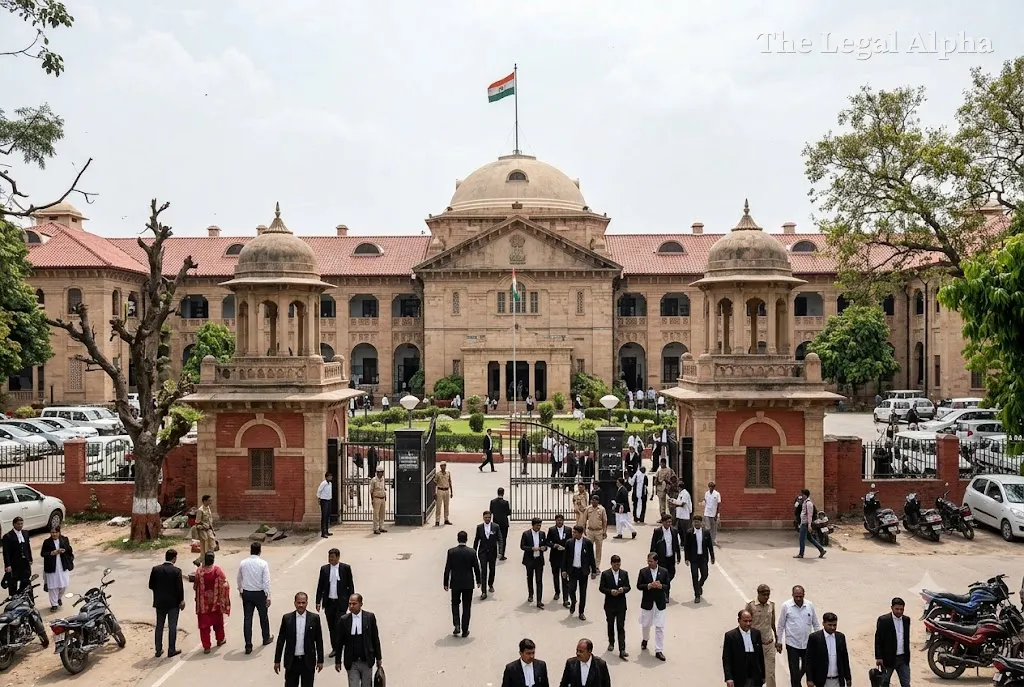
The Allahabad High Court stayed the conviction and suspended the life sentence of Nandlal Rai (alias Babloo Rai), a former Bharatiya Janata Party (BJP) worker convicted in a 2017 murder case, while his criminal appeal remains pending.
Rai had approached the High Court seeking interim suspension of his conviction and sentence specifically because he intends to contest the upcoming 2027 Uttar Pradesh Legislative Assembly elections—either as a candidate fielded by the BJP or as an independent candidate. A Division Bench comprising Justice Siddharth and Justice Vinai Kumar Dwivedi granted him bail and stayed his conviction, observing that the right to livelihood of a common individual is no less significant than the right of a politician to seek elected office.
Legal Topic
-
Area of Law: Criminal Jurisprudence / Election Law
-
Sub-topic: Suspension of Conviction under Section 389(1) CrPC / Disqualification under the Representation of the People Act, 1951
Core Legal Issue
The fundamental legal question before the High Court was whether the appellate court’s discretionary power under Section 389(1) of the Code of Criminal Procedure (CrPC) to stay a conviction—traditionally invoked only in exceptional circumstances to avoid irreversible consequences—can be granted to an appellant facing a serious offense like murder (Section 302 IPC) on the basis of political aspiration and the right to contest elections.
The court was required to evaluate whether the bar against disqualification under Section 8 of the Representation of the People Act, 1951, justified the extraordinary relief of freezing a murder conviction while an appeal remains undecided.
What Did the Court Decide?
The Division Bench held that the conviction and sentence awarded to the appellant deserved to be stayed during the pendency of his criminal appeal.
Key directives and conditions laid down by the court include:
-
Suspension & Bail: Rai's conviction and life sentence are stayed during the pendency of Criminal Appeal No. 1244 of 2026, and he is to be released on bail upon furnishing a personal bond with two sureties of equal amount to the satisfaction of the trial court.
-
Asset Freeze: Rai is restrained from transferring, selling, alienating, or creating any encumbrance or charge over immovable property registered in his name without prior leave of the High Court.
-
Deposit of Fine: Rai must deposit 50% of the fine imposed by the trial court within one month of his release from custody, with recovery of the remaining 50% stayed pending the appeal.
-
Status of Appeal: The High Court directed the registry to prepare the paper book within six weeks and list the appeal for final hearing in due course; the underlying appeal on the merits remains pending.
Key Legal Points
-
Equivalence Between Livelihood and Electoral Rights: The High Court observed that a common citizen's right to livelihood carries equal importance to a politician's aspiration to contest an election, noting that a stay prevents irreversible deprivation before a final verdict on appeal.
-
Application of the Irreversibility Doctrine: The court invoked precedent holding that interim stays on conviction are meant to prevent injustice where the disqualification or loss of status during pendency would render the subsequent acquittal practically ineffective.
-
Prima Facie Infirmities in Evidence: The Bench noted submissions regarding procedural gaps, including a 17-day unexplained delay by witnesses in identifying the appellant and alleged irregularities surrounding the weapon recovery.
-
Interim Nature of Relief: Staying the conviction does not amount to an exoneration or an expression of final opinion on the appellant's guilt, which will be decided exclusively when the appeal is heard on its merits.
Relevant Law
-
Section 389(1), Code of Criminal Procedure, 1973 (CrPC): Governs appellate power to suspend sentences and convictions pending appeal.
-
Section 302 read with Section 34, Indian Penal Code, 1860 (IPC): Offense of murder in furtherance of common intention.
-
Section 8(3), Representation of the People Act, 1951 (RPA): Mandates statutory disqualification from contesting legislative elections upon conviction resulting in imprisonment of two years or more.
-
Judicial Precedents: Afjal Ansari v. State of Uttar Pradesh (Supreme Court, 2023) and Rama Narang v. Ramesh Narang (Supreme Court, 1995), establishing that convictions may be stayed only in rare and exceptional circumstances where denial would create irreversible injustice.
Arguments of the Parties
For the Appellant (Nandlal Rai): Counsel for the appellant argued that Rai was not named in the initial First Information Report (FIR) and that his alleged complicity was brought on record after an unexplained delay of 17 days. It was contended that the primary prosecution witnesses were not eyewitnesses to the actual incident and that the alleged recovery of the weapon was fabricated. Counsel further urged that Rai had served over a year and a half in jail, that the appeal was unlikely to be heard in the immediate future, and that refusal to stay the conviction would irreversibly destroy his constitutional right and political aspiration to contest the 2027 Uttar Pradesh Assembly elections.
For the State of Uttar Pradesh: The Additional Government Advocate opposed the grant of bail and the application for stay of conviction, arguing that the trial court had passed a reasoned judgment of conviction under Section 302 IPC after considering the evidence on record. The State maintained that staying convictions in heinous offenses like murder undermines the integrity of the criminal justice system and that the standard of "rare and exceptional" circumstances was not met.
Why Does It Matter?
This order brings fresh judicial attention to the high threshold required to stay a criminal conviction under Section 389(1) of the CrPC. Under established Supreme Court jurisprudence—such as in K.C. Sareen and Afjal Ansari—the suspension of a conviction is an extraordinary remedy intended to prevent irreversible harm to public representatives or professionals whose livelihood or public mandates would be extinguished before an appeal can be decided.
By extending this logic to an individual who is not currently a sitting legislator, but an aspiring candidate seeking election in an upcoming cycle, the ruling expands the scope of what constitutes "irreversible damage". It also sharpens the debate surrounding decriminalization of politics in India, as a stay of conviction is the sole legal mechanism that neutralizes the automatic statutory disqualification imposed by Section 8 of the Representation of the People Act, 1951.
Legal Takeaway
An appellate court may invoke Section 389(1) CrPC to stay both a sentence and a conviction if denying interim relief would impose irreversible statutory consequences, such as disqualification from contesting upcoming legislative polls. However, such orders are strictly interim measures dependent on the unique facts of the case and do not affect the ultimate adjudication of guilt in the pending appeal.
Sources
-
Primary Source: High Court of Judicature at Allahabad, Nandlal Rai Alias Babloo Rai v. State of U.P. [Criminal Appeal No. 1244 of 2026, Order dated October 5, 2026; Bench of Siddharth, J. and Vinai Kumar Dwivedi, J.].
-
Additional Sources: Supreme Court of India precedents on Section 389(1) CrPC (Afjal Ansari v. State of Uttar Pradesh, 2023; Rama Narang v. Ramesh Narang, 1995).