Aviation Security Trumps Immediate Relief: Calcutta High Court Refuses Interim Access to Century-Old Mosque Inside Kolkata Airport Operational Zone
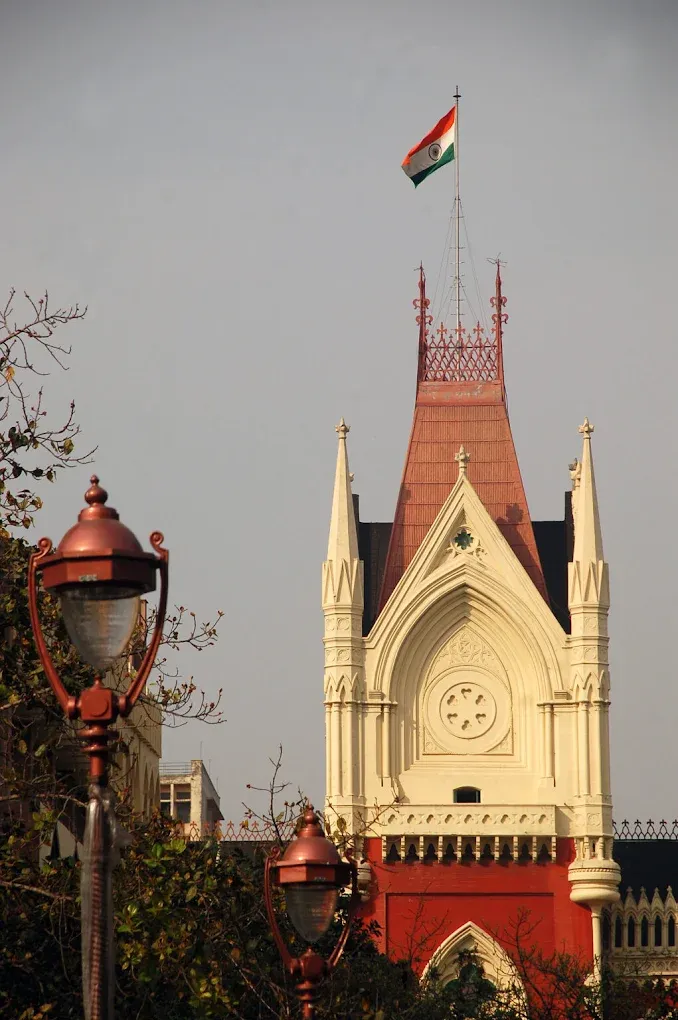
The Calcutta High Court declined to issue an interim order granting worshippers access to offer prayers at a historic mosque situated inside the operational airside area of Netaji Subhas Chandra Bose International Airport in Kolkata.
Presiding over a writ petition filed by the Bankra Masjid Committee, Justice Krishna Rao refused to grant ad-interim relief after the Union of India, the Airports Authority of India, and the State government voiced serious national security and flight safety objections. The petitioners sought to restore prayer access after airport authorities suspended entry arrangements earlier this year, but the court declined to intervene at this preliminary stage and listed the matter for further hearing on October 7, 2026.
Legal Topic
-
Area of Law: Constitutional Law & Administrative Law
-
Sub-topic: Freedom of Religion vs. Public Order and Aviation Security
Core Legal Issue
The fundamental legal question before the High Court is whether the constitutional guarantee of religious practice under Article 25 can compel statutory airport authorities to permit civilian movement into a restricted, high-security operational area.
At the interlocutory stage, the court was tasked with deciding whether the petitioners had made out a prima facie case and demonstrated a balance of convenience sufficient to grant ad-interim prayer access near an active runway, or whether paramount concerns of aviation safety and state security required maintaining the administrative restriction pending final adjudication.
What Did the Court Decide?
Justice Krishna Rao refused to grant any interim directions permitting pilgrims or devotees to enter the airport premises for prayers. The court left the prevailing administrative restrictions undisturbed and adjourned the proceedings to October 7, 2026, for a comprehensive hearing on the merits.
The court made it clear that interim relief could not be granted in the face of acute security sensitivities, noting that aviation threats remain an unpredictable global reality rather than an isolated domestic issue. The order leaves open the final determination of whether the access ban or proposed relocation of the mosque complies with law.
Key Legal Points
-
Interlocutory Restraint in Security Domains: Constitutional courts demonstrate heightened caution when asked to issue mandatory interim orders that could bypass established aviation safety protocols and perimeter controls.
-
Conditional Character of Religious Freedom: The fundamental freedom to practice religion under Article 25 is explicitly subject to public order, morality, and general state welfare.
-
Primacy of Operational Safety: Regulated operational airside spaces near active runways are governed by strict statutory security regimes designed to exclude non-passenger civilians.
-
Preservation of the Status Quo: The refusal to grant interim relief maintains administrative security measures without adjudicating the long-term property and civil rights asserted by the mosque committee.
Relevant Law
-
Article 25(1), Constitution of India: Confers freedom of conscience and the right freely to profess, practice, and propagate religion, subject to public order, morality, and health.
-
Article 226, Constitution of India: Empowers the High Court to issue prerogative writs for the enforcement of fundamental and legal rights against state instrumentalities.
-
Airports Authority of India Act, 1994: Outlines the statutory duties of airport operators to secure, manage, and regulate aerodromes and passenger traffic.
-
Aircraft Rules, 1937 and Civil Aviation Security Regulations: Regulate aerodrome operational boundaries, apron security, and unauthorized access to airside facilities.
Arguments of the Parties
Petitioner's Submissions Senior Advocate Kishore Datta, appearing for the Bankra Masjid Committee, submitted that prayers had been offered at the approximately 136-year-old mosque for decades without causing any operational disturbance. The petitioner argued that access had historically been facilitated through structured security arrangements—including screening by the Central Industrial Security Force (CISF) and designated bus transport across the perimeter. The committee contended that abruptly halting access while broader questions of infrastructure expansion or potential relocation remained pending was arbitrary and disproportionately curtailed devotees' religious observances.
Respondents' Submissions Additional Solicitor General Dhiraj Trivedi, representing the Union of India and the airport authorities, vigorously opposed the plea, asserting that the matter directly engaged national security and aviation protection. The authorities emphasized that the mosque stands roughly 165 metres from the airport's secondary runway within the operational apron, where any civilian infiltration poses catastrophic risks to aircraft movements. State counsel, Additional Advocate General Bilwadal Bhattacharya, supported these objections, underscoring the severe law-and-order and perimeter enforcement challenges that would arise if open civilian entry were restored.
Why Does It Matter?
This dispute underscores the difficult legal intersection between pre-existing religious heritage and modern civil aviation infrastructure. As airports undergo rapid expansion to meet surging air traffic, centuries-old structures that once sat in rural tracts often find themselves enclosed within sterile airside perimeters governed by rigorous international safety standards.
The Calcutta High Court's refusal to issue ad-interim permission confirms that courts are reluctant to second-guess the threat assessments of security and civil aviation agencies. While the substantive writ petition will explore whether a permanent relocation or alternative compensation framework is required, the decision affirms that public safety and runway security take immediate precedence over historical access claims at an interlocutory stage.
Legal Takeaway
The right to practice religion under Article 25 is neither absolute nor exempt from public safety and national security imperatives. Where an active place of worship falls inside a sensitive operational airside zone, courts will prioritize strict aerodrome security standards over interim relief while the larger constitutional dispute is examined.
Sources
-
Primary Source: Calcutta High Court Judicial Order and Hearing Proceedings in Bankra Masjid Committee (Airport) & Anr. v. Union of India & Ors. (WPA/23818/2026), Single Bench of Justice Krishna Rao, heard on October 1, 2026.
-
Additional Sources: Reports and notifications concerning Netaji Subhas Chandra Bose International Airport operational protocols; LiveLaw High Court reporting (October 1, 2026).