Allahabad High Court Restricts Mobile Phone Use by Litigants Inside Courtrooms After Recording Incident
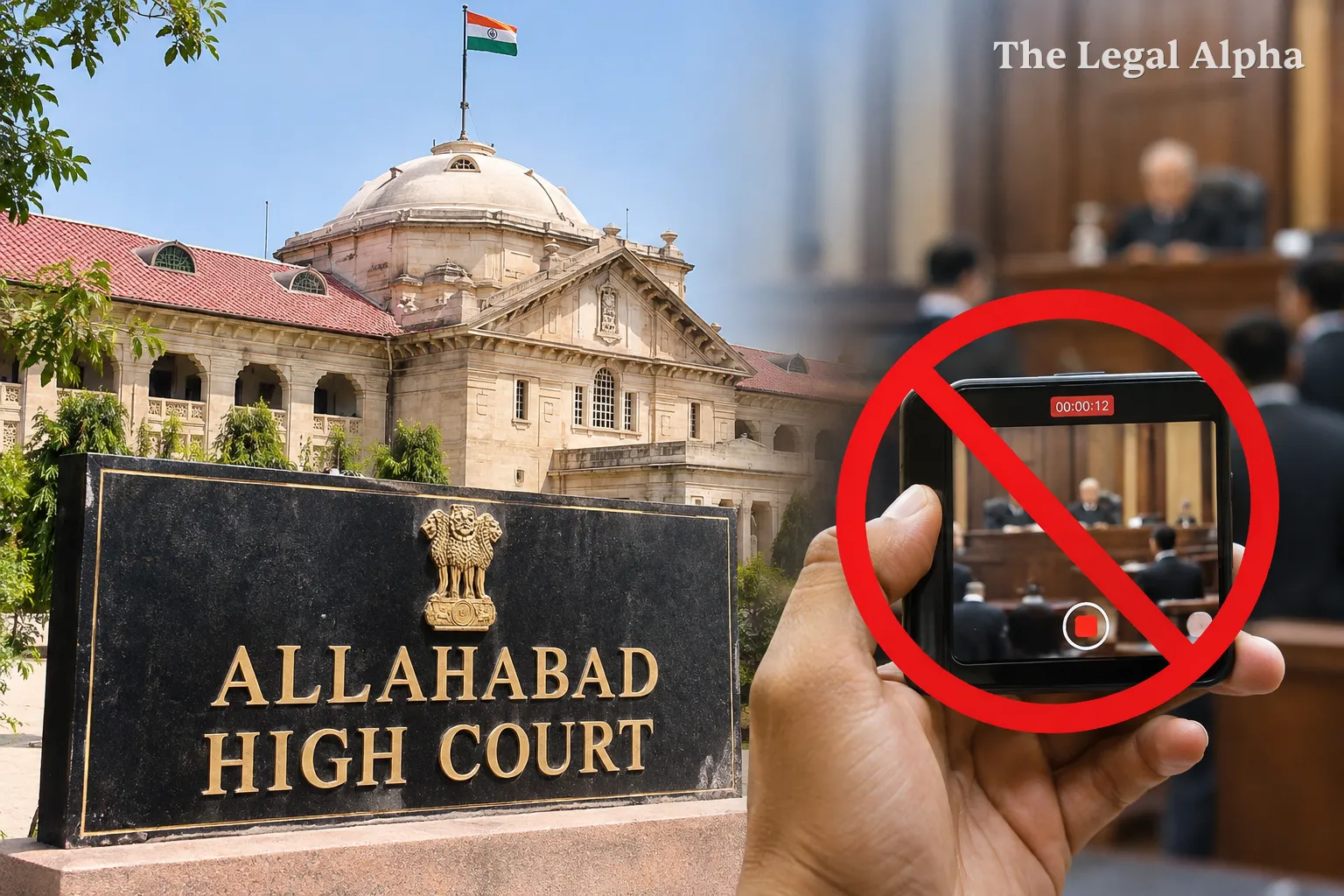
The Allahabad High Court has directed that litigants will no longer be permitted to carry mobile phones inside its courtrooms after a man was caught recording judicial proceedings without the Court's permission.
The development arose in Kuldeep Batra v. State of UP and Another, when Justice Vikram D. Chauhan noticed Raj Kulshrestha, a resident of Varanasi, recording proceedings inside his courtroom on November 19, 2026.
The man's mobile phone was seized by court staff, who reportedly discovered at least three recordings of court proceedings. He was initially taken into custody and directed to be produced before the Court the following day.
However, after Kulshrestha appeared before the Court on November 20 and apologised for his conduct, the Court dropped the proceedings and ordered his release.
The Court also issued broader directions prohibiting litigants from bringing mobile phones into its courtrooms.
Legal Topic
Area of Law: Constitutional Law and Judicial Administration
Sub-topic: Courtroom Decorum, Open Justice and Regulation of Judicial Proceedings
Core Legal Issue
The principal legal question concerned whether members of the public and litigants attending court proceedings can independently record or publish courtroom proceedings without obtaining permission from the Court.
The matter also raised concerns about the balance between the principle of open justice, which allows public access to judicial proceedings, and the judiciary's authority to protect courtroom discipline, litigants' privacy and the integrity of ongoing judicial proceedings.
What Did the Court Decide?
The Allahabad High Court took the view that public access to judicial proceedings does not confer an unrestricted right to record or broadcast them.
The Court observed that it possesses inherent powers to regulate its proceedings and maintain order within the courtroom.
It expressed concern that unauthorised recordings could expose sensitive information, prejudice parties involved in pending litigation and encourage social media trials before judicial determinations have been made.
Following the incident, the Court issued the following directions:
-
Litigants will not be permitted to enter courtrooms carrying mobile phones.
-
Advocates will be responsible for ensuring that their clients do not bring mobile phones into courtrooms.
-
The Registrar General must display notices at the High Court's pass counter informing visitors about the restriction.
-
The Registrar (Protocol) must ensure that individuals without appropriate courtroom entry passes are not permitted to enter.
-
Court-issued passes must carry an endorsement stating that mobile phones are prohibited inside courtrooms for litigants and persons other than advocates.
Regarding Kulshrestha, the Court directed that his mobile phone be returned after deleting the recordings and resetting the device. He was also restrained from publishing the recordings on social media.
The Court subsequently referred the matter to a Division Bench dealing with courtroom security issues.
Key Legal Points
- Open justice has limitations: Public access to court proceedings does not automatically authorise individuals to record or broadcast hearings.
- Judicial authority over courtrooms: Courts possess inherent powers to regulate their own procedures and maintain discipline during judicial proceedings.
- Protection of litigants' privacy: Unauthorised recordings may expose sensitive personal information, particularly in cases involving vulnerable individuals.
- Prevention of social media trials: Publishing courtroom recordings without permission could influence public perception before the judicial process reaches its conclusion.
- Responsibility of advocates: Lawyers have been directed to ensure that their clients comply with the mobile phone restrictions.
Relevant Law
Inherent Powers of Constitutional Courts
The Court relied on its inherent authority to regulate courtroom proceedings and preserve judicial discipline.
Article 215 of the Constitution of India
The provision recognises every High Court as a Court of Record and gives it the power to punish for contempt of itself.
However, the reported order does not establish that the proceedings against Kulshrestha resulted in a final contempt conviction.
Principle of Open Justice
The principle ensures transparency in the administration of justice by allowing public access to judicial proceedings, subject to restrictions imposed by law and the Court.
Courtroom Security and Procedural Regulation
The High Court's directions also concern the regulation of courtroom access, visitor passes and the protection of judicial proceedings from unauthorised recording.
Arguments of the Parties
The available report does not provide detailed submissions from the parties on the legal questions involved.
The immediate proceedings arose after the Court discovered unauthorised recordings on Kulshrestha's mobile phone. He subsequently apologised for his conduct, following which the Court dropped the proceedings and ordered his release.
The Court's concerns primarily centred on maintaining courtroom discipline and protecting the privacy and rights of litigants.
Why Does It Matter?
The Allahabad High Court's directions highlight an important distinction between attending a public judicial proceeding and having the freedom to record or distribute its contents.
Although transparency is fundamental to the justice delivery system, courtroom proceedings frequently involve sensitive information relating to personal liberty, child sexual abuse, investigations by agencies such as the CBI and Enforcement Directorate, and matters involving elected representatives.
Unauthorised recordings of such proceedings can expose confidential personal details and potentially subject litigants and victims to public scrutiny before the Court has reached a decision.
The restriction also places an additional responsibility on advocates, who must ensure that their clients follow the Court's instructions.
Importantly, the directions concern entry into the Allahabad High Court's courtrooms and should not automatically be treated as a nationwide prohibition on mobile phones in every Indian court.
Legal Takeaway
The Allahabad High Court has reiterated that the principle of open justice does not create an unrestricted right to record or broadcast courtroom proceedings. Courts retain authority to regulate access, maintain discipline and protect the privacy and rights of individuals appearing before them. Transparency in judicial proceedings must operate alongside the proper administration of justice.
Sources
Primary Source: Court order in Kuldeep Batra v. State of UP and Another, dated November 19–20, 2026. The original order could not be independently retrieved for verification.
Additional Source: Bar & Bench – Allahabad High Court's directions on courtroom recordings and mobile phones.