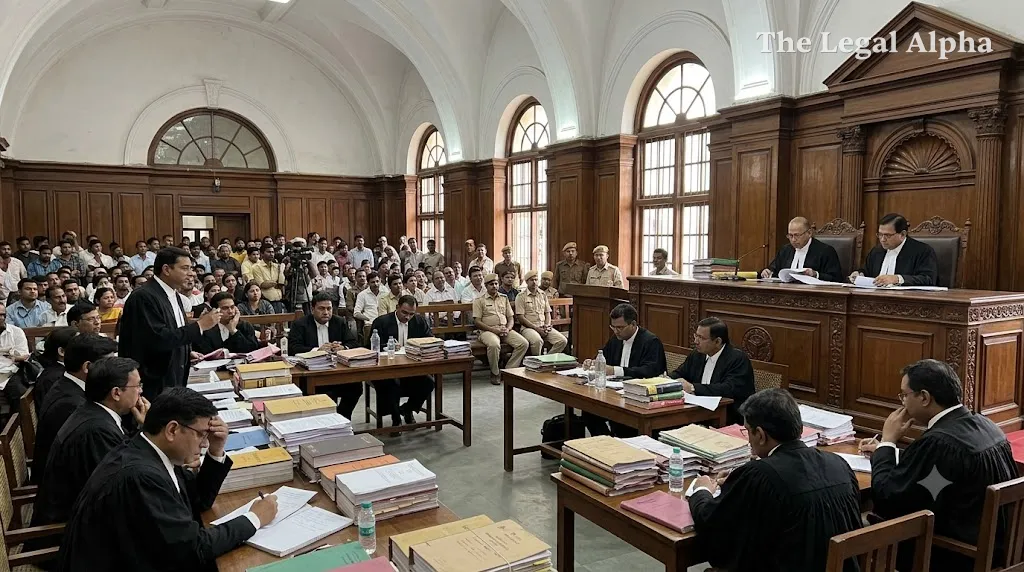
Ahmedabad Civil Court Rejects Adoption of Deceased Sister’s Son, Citing Statutory Bar Under Hindu Adoption Law

An Ahmedabad City Civil Court dismissed a plea filed by a Hindu couple seeking legal recognition for the adoption of their late sister’s son, alongside corrections across the child's identity documents. While the child’s biological father had previously consented and executed a registered adoption deed, the court determined that the adoption failed on a foundational legal requirement: the couple already had a living biological son at the time of the adoption.
The couple had stepped in following the demise of the child’s mother, raising the boy as their own and funding his education. However, when they approached the civil court to regularise the adoption and update official records—including the boy's birth certificate, Aadhaar card, and school records—the court ruled that statutory prohibitions under personal law cannot be overridden by emotional bonds, informal care arrangements, or registered deeds.
Legal Topic
Area of Law: Family Law / Personal Law
Sub-topic: Validity of Adoption and Statutory Disqualifications under the Hindu Adoptions and Maintenance Act, 1956
Core Legal Issue
The core legal question before the court was whether a registered adoption deed executed with the consent of the biological father, coupled with continuous de facto custody and care, can validate the adoption of a boy when the adoptive parents already have a living biological son.
A secondary question was whether civil courts can grant consequential directions to amend official identification documents—such as birth certificates and school records—if the underlying adoption itself contravenes the mandatory conditions prescribed under statute.
What Did the Court / Authority Decide?
The Ahmedabad City Civil Court rejected the application outright.
The court held that the adoption directly violated the mandatory criteria laid down under the Hindu Adoptions and Maintenance Act, 1956. It noted that the presence of an existing biological son at the time of adoption operates as an absolute legal disqualification against adopting another son.
The court also held that because the underlying adoption is void and unenforceable under the statute, no consequential directions could be issued to civic or educational authorities to replace the biological parents' names in birth registers, Aadhaar cards, or school records.
Key Legal Points
-
Mandatory Statutory Prohibition: Section 11(i) of the Hindu Adoptions and Maintenance Act, 1956, strictly mandates that adoptive parents must not have a living Hindu son, grandson, or great-grandson (whether by blood or adoption) if they intend to adopt a male child.
-
Registered Deeds Cannot Cure Illegality: Even if a deed of adoption is formally registered and entered into by mutual agreement between natural and prospective parents, it cannot override express prohibitions established by parliamentary legislation.
-
De Facto Care Does Not Equate to Legal Status: Providing upbringing, moral care, financial sustenance, and emotional support to a relative’s child does not automatically create legal filiation or adoptive parentage in the presence of a statutory bar.
-
Consequential Reliefs Fall with the Primary Plea: Administrative changes to civil registries, educational records, and identity cards cannot be granted when the root claim of adoption is legally invalid.
Relevant Law
-
Section 11(i) of the Hindu Adoptions and Maintenance Act, 1956 (HAMA): Prescribes that if the adoption is of a son, the adoptive father or mother must not have a Hindu son, son’s son, or son’s son’s son living at the time of adoption.
-
Section 11(ii) of HAMA: Similarly bars the adoption of a daughter if the adoptive parents already have a Hindu daughter or son's daughter living.
-
Section 5 and Section 6 of HAMA: Establish the essential requisites for a valid adoption and render any adoption made in contravention of the Act void ab initio.
-
Section 16 of HAMA: Deals with the statutory presumption regarding registered documents relating to adoption, which remains rebuttable if the adoption violates foundational eligibility conditions.
Arguments of the Parties
Applicants (Prospective Adoptive Parents)
The applicants contended that they had taken custody of the child following the untimely demise of his biological mother (the applicant's sister). They submitted that they had continuously looked after the boy's welfare, provided him with a proper education, and treated him as their own son. They further pointed out that the boy’s surviving natural father had formally consented to the arrangement and had duly executed a registered adoption deed. On these grounds, they urged the court to formally declare the adoption valid and direct authorities to update his official records accordingly.
Opposing Stand / Statutory Mandate
The proceedings were evaluated against the express provisions of personal law governing Hindu adoptions. While the natural father did not contest the execution of the deed, the legal threshold required the court to ensure compliance with substantive law. The bar under Section 11(i) was found to be strict and non-derogable, leaving no scope for judicial discretion to overlook the existence of the applicants' living biological son.
Why Does It Matter?
This decision underscores the distinction between informal guardianship and lawful adoption under Indian personal laws. In Indian families, it is common for relatives to step forward and raise nephews, nieces, or orphaned children following domestic tragedies. While such altruistic arrangements are socially and morally laudable, they do not automatically translate into a legal parent-child relationship.
The ruling clarifies that parties cannot circumvent the eligibility restrictions of HAMA merely by registering an adoption agreement or citing years of cohabitation and emotional support. For families navigating inter-familial care, reliance on informal agreements without examining statutory eligibility creates long-term legal hurdles—particularly when dealing with school admissions, passports, inheritance rights, and civil registry rectifications. Families facing statutory bars under personal law may need to explore legal guardianship mechanisms under the Guardians and Wards Act, 1890, or the juvenile justice framework rather than seeking formal adoption.
Legal Takeaway
Under the Hindu Adoptions and Maintenance Act, 1956, parents with a living biological son are strictly barred from adopting another son, regardless of family consent or compassionate circumstances. Because a registered adoption deed cannot cure an express statutory prohibition, courts will not order updates to official identity records on the basis of a legally void adoption.
Sources
Primary Source:
-
Order of the City Civil Court, Ahmedabad in the adoption declaration and record-correction petition under the Hindu Adoptions and Maintenance Act, 1956.
Additional Sources:
-
The Times of India / Ahmedabad News: "Existing son bars nephew’s adoption: Court" (Reported by Saeed Khan, October 2026).
-
Statutory text of the Hindu Adoptions and Maintenance Act, 1956 (Section 5, Section 6, Section 11, and Section 16).