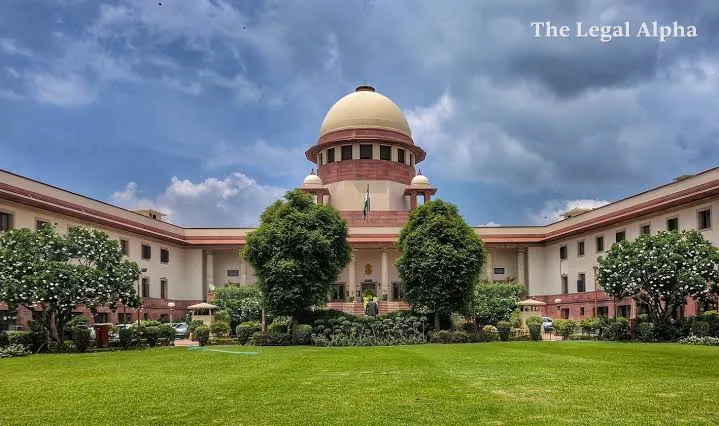
UPSC Civil Services 2025: Batch Seniority Protected Amid Supreme Court Creamy Layer Clarification

The Department of Personnel and Training (DoPT) confirmed that the pending clarification before the Supreme Court regarding the Other Backward Classes (OBC) creamy layer criteria will not affect the inter-se seniority, gradation, or career progression of candidates selected in the Civil Services Examination (CSE) 2025.
Service allocation and the subsequent commencement of the foundational training course for 958 recommended candidates were held up after the Union government approached the top court. The Centre moved the court seeking operational directions on whether the Supreme Court's March 2026 judgment in Union of India v. Rohith Nathan applies retrospectively to the ongoing 2025 selection cycle. Despite the procedural delay, government authorities clarified that administrative training institutes remain prepared for prompt deployment once judicial guidance is delivered, ensuring candidates suffer no career disadvantage.
Legal Topic
-
Area of Law: Service Law / Constitutional Law
-
Sub-topic: Affirmative Action / Public Employment & Seniority Rights
Core Legal Issue
The controversy centres on the retrospective versus prospective application of judicial interpretations governing reservation norms. Specifically, the Supreme Court must determine whether candidate eligibility and OBC quota verification finalized under pre-existing DoPT criteria can be unsettled mid-stream following a fresh judicial interpretation of parental income benchmarks.
A secondary legal issue is whether administrative delays resulting from constitutional clarification before the court can legally degrade the seniority or service standing of an entire recruitment cohort.
What Did the Court / Authority Decide?
While the Supreme Court constituted a special bench to resolve the retrospective operation of the creamy layer parameters for the CSE 2025 batch, the DoPT issued an administrative assurance regarding service conditions:
-
The DoPT established that delay in conducting the foundation course will have zero impact on the official seniority, gradation, or confirmed conditions of service for the 2025 batch.
-
Allocation of services remains paused pending specific directions from the Supreme Court's special bench.
-
The government requested that the top court allow service allocations for the 958 candidates to proceed based on the criteria in place prior to the March 11 ruling, preventing disruption across the civil services framework.
Key Legal Points
-
Salary Exclusion Principle: In Rohith Nathan, the Supreme Court reaffirmed that parental "salary" income cannot simply be conflated with taxable business income or wealth when determining creamy layer exclusions among OBC candidates, including children of Public Sector Undertaking (PSU) and banking employees.
-
Rules of the Game Doctrine: Well-settled jurisprudence dictates that the criteria governing public recruitment cannot ordinarily be altered after the selection process has commenced, unless explicitly mandated by law or court directions.
-
Protection of Seniority: Inter-se seniority in All India and Central Civil Services is linked to batch year and merit ranking rather than the exact calendar date of joining training academies delayed by administrative or judicial pauses.
-
Avoidance of Administrative Re-opening: Applying altered criteria retrospectively risks opening closed selection lists and compelling scrutiny of candidates who did not claim reservations initially.
Relevant Law
-
Article 16(4) of the Constitution of India: Enables the State to provide reservations in appointments in favour of backward classes not adequately represented in State services.
-
Article 14 of the Constitution of India: Guarantees equality before the law and protection against arbitrary state action in public recruitment.
-
DoPT Office Memorandum of September 8, 1993: The foundational framework setting out creamy layer exclusion criteria based on status, land, and non-salary income thresholds.
-
Indra Sawhney v. Union of India (1992): The landmark Constitution Bench ruling establishing the creamy layer principle to exclude socially advanced members of backward classes.
-
Union of India v. Rohith Nathan (March 11, 2026): Clarified the computation of parental salary and income for OBC status determination.
Arguments of the Parties
Department of Personnel and Training / Central Government
The Union government submitted that applying the March 11 ruling retrospectively to the CSE 2025 cycle would cause severe administrative disruption and unequal consequences among candidates. It argued that assessing PSU and bank employees' rank equivalences mid-cycle would necessitate exhaustive borderline reviews and potentially require reopening completed examination tiers. Consequently, the Centre urged the court to allow service allocation under the legacy determination system while affirming that trainee seniority remains fully intact.
Reserved Category Candidates / Applicants
Affected candidates argued that the exclusion of certain OBC applicants based on improper inclusion of parental salaries was legally erroneous from the beginning under original 1993 guidelines. They contended that constitutional benefits cannot be withheld merely due to administrative convenience, and correct eligibility standards must guide final allocation into premier services.
Why Does It Matter?
This development provides vital clarity for public administration and administrative law. Public recruitment cycles in India often face protracted litigation when quota metrics or eligibility rules are clarified mid-process.
By insulating batch seniority from procedural delays, the DoPT has reinforced the principle that judicial reference on complex reservation questions should not penalize recruited civil servants in their future career paths, such as empanelment, promotions, and cadre leadership. Furthermore, the Supreme Court's forthcoming decision on prospective application will set a critical precedent for recruitment boards—including state public service commissions and the Staff Selection Commission—whenever parental income definitions undergo legal revisions.
Legal Takeaway
Administrative and judicial delays in interpreting reservation criteria do not diminish the seniority or service status of successfully recommended civil servants. When courts refine the parameters of the creamy layer, service allocations must balance non-arbitrary implementation with the legal principle that retrospective changes should not destabilize completed recruitment examinations.
Sources
Primary Source:
-
Union of India v. Rohith Nathan & Ors. (Supreme Court of India, Order dated March 11, 2026).
-
Official Clarification, Department of Personnel and Training (DoPT), Ministry of Personnel, Public Grievances and Pensions, Government of India.
Additional Sources:
-
DoPT Office Memorandum No. 36012/22/93-Estt.(SCT), dated September 8, 1993 (Creamy Layer Guidelines).
-
Indra Sawhney and Others v. Union of India, 1992 Supp (3) SCC 217.