Supreme Court Rebukes Chhattisgarh Authorities over Custodial Fatality, Mandates CBI Investigation and ₹25 Lakh Interim Relief
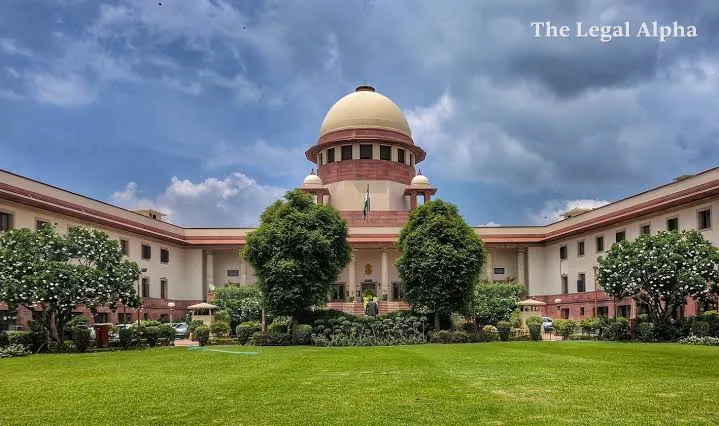
The Supreme Court of India intervened forcefully in a custodial death matter from Chhattisgarh, reprimanding top state administrative and police leadership for their handling of the inquiry and ordering a direct probe by the Central Bureau of Investigation.
The matter arises from the arrest of 34-year-old Shravan Suryavanshi Tamre by the Sipat Police in Bilaspur district in January 2024 under Section 34(2) of the Chhattisgarh Excise Act, 1915, over alleged possession of six litres of illicit mahua country liquor. Within days of his detention, Tamre died while in custody. While a subsequent judicial inquiry established that the victim died of severe head trauma, the Chhattisgarh High Court had earlier disposed of the matter by directing a compensation of merely ₹1 lakh citing official negligence. Dissatisfied with the lack of accountability and meager compensation, his widow, Lehra Bai, escalated the matter before the Supreme Court, prompting the apex court to initiate independent criminal investigations and dramatically enhance interim monetary restitution.
Legal Topic
Area of Law: Constitutional Law / Criminal Jurisprudence
Sub-topic: Custodial Violence, Fundamental Rights Violations, and Public Law Compensation
Core Legal Issue
The primary legal questions before the Supreme Court centered on the state’s constitutional liability under Article 21 when a citizen dies under unexplained physical trauma in custody, and whether token damages awarded by a High Court satisfy the constitutional threshold for public law remedies.
The Court was also tasked with examining whether the internal inquiry conducted by state authorities—including contradictory stands taken by the Director General of Police, DG (Prisons), and the Home Department—warranted transferring the investigation to an independent agency to ensure an impartial probe into institutional culpability.
What Did the Court Decide?
The Supreme Court sharply criticized the Chhattisgarh Director General of Police (DGP), Director General (Prisons), and the Principal Secretary (Home), characterizing official claims and conduct as reprehensible and contrary to established facts on record.
The Court issued the following key directives:
-
Directed the State of Chhattisgarh to pay an interim compensation of ₹25,00,000 (Twenty-Five Lakh Rupees) to the petitioner.
-
Transferred the investigation to the Central Bureau of Investigation (CBI), directing the agency to register a regular criminal case and determine individual responsibility for the custodial death.
-
Expressed displeasure over the ₹1 lakh award previously sanctioned by the High Court, deeming it an inadequate redressal for gross fundamental rights violations.
-
Kept pending the final determination of relief and claims made by other legal heirs regarding shares in the compensation payout.
Key Legal Points
-
Strict Liability for Custodial Safety: When an individual is taken into sovereign custody, the State owes an unyielding duty of care; unexplained physical injuries resulting in death trigger the doctrine of strict liability under public law.
-
Independent Investigation in Institutional Deaths: Where local police departments stonewall inquiries or attempt institutional cover-ups—such as withholding station records or maintaining silence over inquiries—constitutional courts possess the authority to transfer the investigation to central agencies such as the CBI to secure fair process.
-
Public Law Compensation vs Statutory Damages: Constitutional compensation under Article 32 or Article 226 operates independently of private civil suits and must be substantial and deterrent, rather than a nominal or token figure.
-
Judicial Inquiry as Evidentiary Foundation: The findings of a statutory inquiry under Section 176 of the Code of Criminal Procedure / BNSS, confirming ante-mortem head injuries, cannot be superseded by standard administrative denials from jail or police officials.
Relevant Law
-
Article 21 of the Constitution of India: Right to life and personal liberty, which extends to suspects, undertrials, and prisoners.
-
Article 32 of the Constitution of India: Plenary writ jurisdiction of the Supreme Court to remedy fundamental rights breaches and fashion appropriate interim compensation.
-
Section 176 of the Code of Criminal Procedure, 1973 (now Section 196 of the Bharatiya Nagarik Suraksha Sanhita, 2023): Mandatory magisterial/judicial inquiry into deaths occurring in police or judicial custody.
-
Section 34(2) of the Chhattisgarh Excise Act, 1915: Penal provision for unlawful possession and transport of intoxicants.
-
Precedents: Nilabati Behera v. State of Orissa (establishing public law liability and monetary compensation for custodial deaths) and D.K. Basu v. State of West Bengal (procedural safeguards against police excess).
Arguments of the Parties
The Petitioner:
Counsel representing the petitioner contended that the deceased had been taken into custody without lawful justification or medical follow-through, subsequently suffering severe, unaddressed blunt-force injuries to his head. The petitioner argued that requests for station house CCTV records were ignored and that the administrative hierarchy failed to hold errant personnel accountable. Additionally, it was submitted that the High Court’s award of ₹1 lakh trivialized the loss of a family’s primary breadwinner resulting from state excess.
The State Respondents:
The State and administrative departments submitted that the detainee had regular pre-production medical screenings reflecting no major external trauma at the time of initial court remand. They highlighted the victim’s prior booking history under local excise laws and resisted allegations of torture or willful foul play inside the facility.
Why Does It Matter?
This ruling reinforces the constitutional judiciary’s role in curbing institutional impunity surrounding custodial torture and custodial deaths. Despite statutory mandates requiring immediate reporting and magisterial scrutiny under the criminal procedure codes, local police units often close ranks, rendering private citizen challenges nearly impossible without legal assistance.
By rejecting the High Court's nominal award of ₹1 lakh and instituting a ₹25 lakh interim remedy, the Supreme Court signals that compensation for constitutional torts must reflect the magnitude of the infringement and provide meaningful economic survival for vulnerable surviving families. Furthermore, assigning the investigation to the CBI underscores that higher ranks of state policing will not be permitted to insulate station-level officials when ante-mortem injuries remain unaccounted for.
Legal Takeaway
Custodial death directly engages the State’s strict liability under Article 21, stripping authorities of administrative immunity. Where state mechanisms fail to transparently investigate severe injuries sustained in official custody, the Supreme Court will not hesitate to bypass state agencies with independent CBI probes and enforce substantial monetary restitution against the executive.
Sources
-
Primary Source: Supreme Court of India interim orders and proceedings in the matter of custodial death arising out of Sipat Police Station, Bilaspur, Chhattisgarh (2024–2026).
-
Additional Sources: Judicial Inquiry Report dated July 22, 2024; High Court of Chhattisgarh Division Bench order dated December 2024; Nilabati Behera v. State of Orissa (1993) 2 SCC 746.