Bombay High Court Rebuffs UP Bridge Corporation Over Six-Year Delay in Worker Compensation Challenge
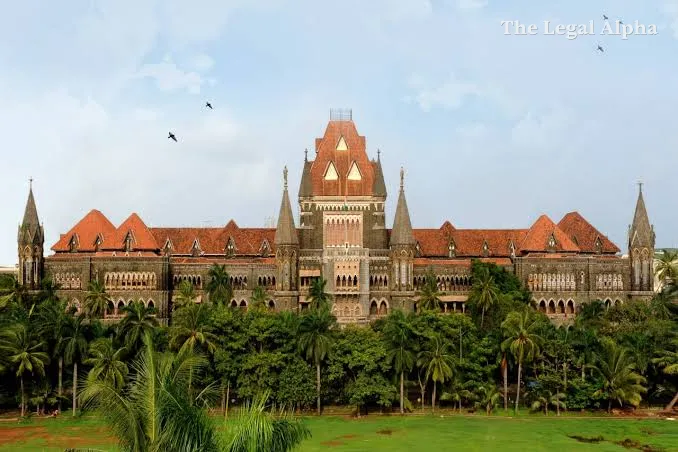
The Goa Bench of the Bombay High Court dismissed a writ petition filed by Uttar Pradesh State Bridge Corporation Ltd., declining to disturb a 2018 labour tribunal award that granted monetary compensation to six terminated workmen.
The state-owned corporation had moved the High Court in May 2024, nearly six years after the Industrial Tribunal and Labour Court directed it to pay ₹2.5 lakh to each workman within 60 days, failing which an annual interest rate of 9% would accrue. Justice S. G. Chapalgaonkar refused to condone the protracted delay, ruling that the unexplained lapse in approaching the court disentitled the corporation from seeking extraordinary judicial relief.
Legal Topic
Area of Law: Labour and Employment Law / Constitutional Law
Sub-topic: Delay and Laches / Supervisory Jurisdiction under Article 227 / Retrenchment vs. Disciplinary Termination
Core Legal Issue
The principal issue before the High Court was whether a public sector employer could invoke the High Court's extraordinary supervisory jurisdiction under Article 227 of the Constitution after an unexplained hiatus of six years to challenge an industrial award.
Substantively, the corporation sought to dispute whether the Industrial Tribunal could treat a termination purportedly founded on misconduct as an illegal retrenchment governed by Section 25-F of the Industrial Disputes Act, 1947.
What Did the Court Decide?
Justice S. G. Chapalgaonkar dismissed the corporation's writ petition in limine on the grounds of inordinate delay and laches. The bench found the corporation’s justification for sitting on the 2018 award until May 2024 completely unacceptable.
Consequently, the High Court refused to exercise its discretionary supervisory jurisdiction under Article 227, leaving the 2018 tribunal award operative and executable.
Key Legal Points
-
Supervisory Discretion Bars Stale Claims: The High Court reaffirmed that Article 227 is an extraordinary, discretionary remedy that cannot be extended to litigants who display gross lethargy and fail to furnish convincing explanations for procedural delays.
-
Finality of Industrial Awards: Awards rendered by labour courts and tribunals attain finality if they are not challenged promptly, preventing prolonged uncertainty for vulnerable workmen who have already fought protracted legal battles.
-
Merits Subordinated to Gross Laches: Even if an employer seeks to raise technical legal objections regarding the statutory classification of retrenchment under Section 25-F, gross delay and laches will bar judicial examination of the substantive merits.
Relevant Law
-
Article 227 of the Constitution of India: Confers supervisory jurisdiction on High Courts over all subordinate courts and tribunals within their territory.
-
Section 25-F of the Industrial Disputes Act, 1947: Mandates statutory conditions precedent, such as notice and retrenchment compensation, before retrenching workmen with continuous service.
-
Doctrine of Laches: Equitable principle barring relief to parties that unreasonably sleep on their rights to the detriment of the other side.
Arguments of the Parties
Petitioner (Uttar Pradesh State Bridge Corporation Ltd.) Counsel for the corporation argued that the Industrial Tribunal erred in law by applying Section 25-F of the Industrial Disputes Act. The petitioner contended that Section 25-F strictly governs ordinary retrenchment rather than punitive dismissal for misconduct. Since the workers had faced disciplinary action leading to their 1992 termination, the corporation asserted that the tribunal’s finding of statutory non-compliance was legally flawed, and sought condonation of the six-year delay in approaching the High Court.
Respondent (Workmen represented by the Goa Trade and Commercial Workers Union) Appearing for the workmen, Advocate Sabina Martins submitted that the petition was hopelessly barred by unexplained delay and laches. The defence urged that the workmen had endured over three decades of litigation following their termination in 1992. Permitting the employer to reopen a 2018 award after six years would frustrate the core objective of labour welfare legislation and cause undue prejudice to the employees.
Why Does It Matter?
This ruling underscores that public sector undertakings and state instrumentalities do not enjoy an open-ended licence to challenge adverse labour awards at their leisure. Industrial adjudication is rooted in the prompt resolution of disputes between unequal parties. By shutting the door on stale petitions, the High Court has reinforced that government corporations must adhere to reasonable timelines when seeking prerogative writ remedies, particularly where delay directly impacts the livelihoods and financial security of workmen.
Legal Takeaway
Supervisory jurisdiction under Article 227 of the Constitution is an equitable, discretionary remedy, not a right of appeal. Where an employer sleeps on an industrial tribunal award for years without cogent justification, courts will refuse to entertain technical legal defenses on merits and dismiss the challenge for inordinate delay and laches.
Sources
Primary Source:
-
High Court of Judicature at Bombay at Goa, Writ Petition challenging the 2018 Award of the Industrial Tribunal and Labour Court, Order by Justice S. G. Chapalgaonkar.
Additional Sources:
-
Uttar Pradesh State Bridge Corporation Ltd. v. Yogendra Yadav & Ors. (Goa Trade and Commercial Workers Union).
-
Times of India, "HC dismisses UP Bridge Corporation plea, upholds Rs 2.5 lakh aid to six workers," Panaji Bench report.