Trump DOJ’s Epstein Declaration Faces Legal Scrutiny Over Reliability of Evidence
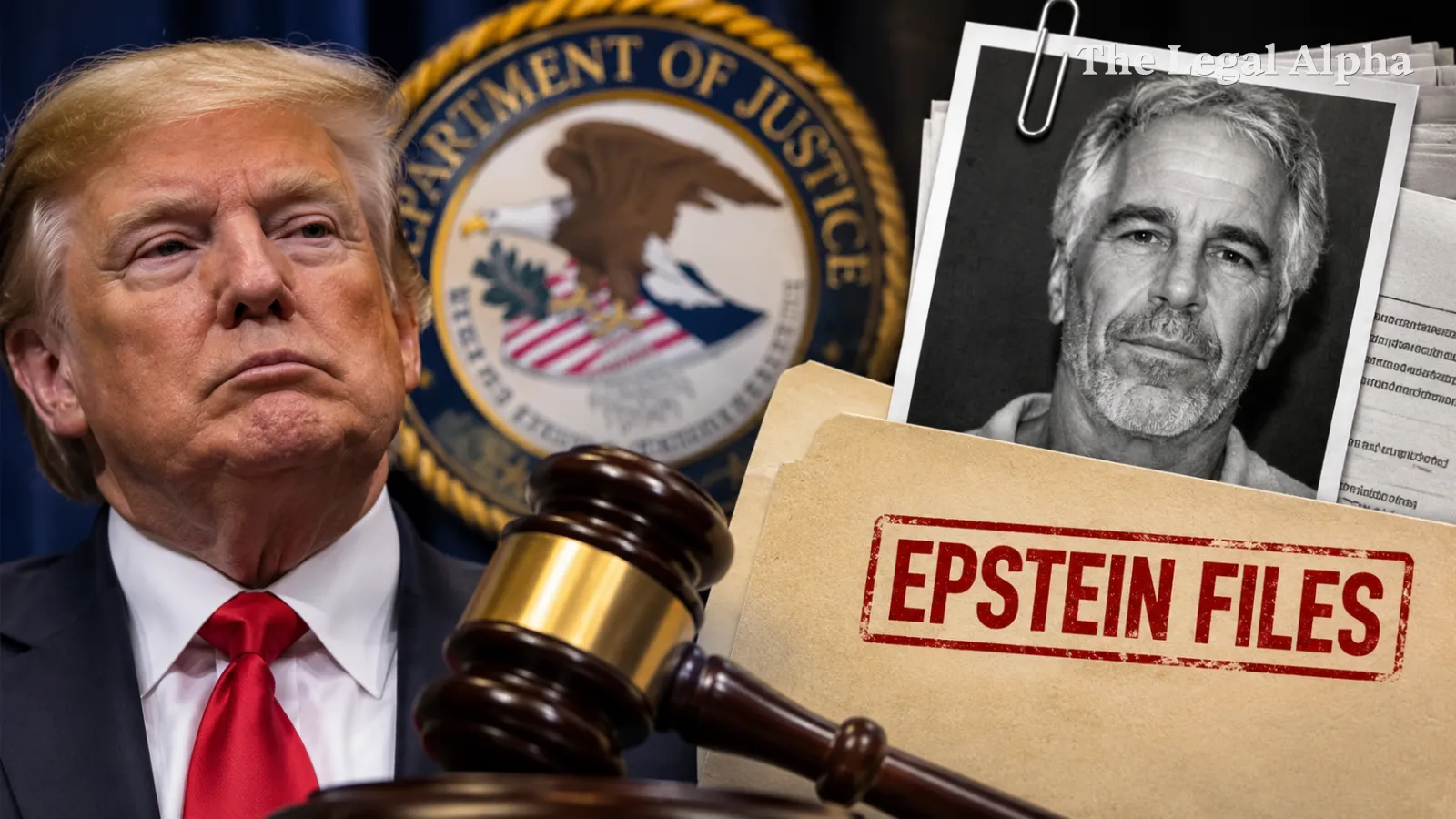
A legal controversy has emerged over the Trump administration's handling of documents connected to the investigation of Jeffrey Epstein. The central issue concerns a declaration submitted by the US Department of Justice and whether the information provided in it adequately establishes the department's compliance with its legal obligations.
The dispute forms part of wider litigation concerning the disclosure of Epstein-related investigative records, including FBI interview materials and documents that have not been made publicly available.
The distinction between a government official making a declaration and that official having direct knowledge of the facts is particularly important in assessing the evidentiary value of such a filing.
The controversy raises questions about the foundation on which the DOJ's representations are made. In legal proceedings, a declaration is expected to provide reliable information about matters within the declarant's knowledge.
A statement that does not adequately establish the source of the declarant's knowledge may face challenges over its evidentiary weight. However, describing a declaration as legally worthless is an expert assessment, not automatically a judicial finding.
Area of Law: US Constitutional and Administrative Law
Sub-topic: Government Accountability, Evidentiary Standards and Disclosure of Federal Records
The principal legal question is whether the Justice Department has provided an adequate and legally sustainable explanation of its decisions concerning the disclosure, redaction and withholding of Epstein-related records.
The dispute also raises the question of whether declarations submitted by government officials sufficiently demonstrate the factual basis for the department's position.
The wider dispute is being examined in litigation involving journalist Katie Phang and the Department of Justice before US District Judge Emmet G. Sullivan.
In November 2026, the court issued directions concerning FBI interview notes, foreign-language records and the administrative record underlying the DOJ's disclosure decisions.
The court also required a declaration from an individual with personal knowledge to support the department's status report concerning foreign-language documents.
These directions concern procedural accountability and access to government records. They should not be confused with a final determination that the DOJ's declaration is invalid or that the department has deliberately concealed evidence.
-
A declaration's evidentiary value depends on the reliability and foundation of the information it contains.
-
Government agencies must be able to explain the reasoning behind decisions that are challenged in judicial proceedings.
-
The administrative record can help courts assess whether an agency acted arbitrarily or contrary to law.
-
Redactions and withholding of investigative documents must have a legally sustainable basis.
-
Allegations appearing in FBI records must not be treated as established criminal findings.
Epstein Files Transparency Act, Public Law 119-38: Governs disclosure of specified government records relating to Jeffrey Epstein and Ghislaine Maxwell, subject to statutory exceptions.
Administrative Procedure Act, 5 U.S.C. §§ 701–706: Provides the framework for judicial review of federal agency action, including review of whether agency decisions are arbitrary, capricious or contrary to law.
Federal Rules of Civil Procedure: Govern declarations, affidavits and evidentiary procedures in federal civil litigation.
Position challenging the DOJ
The challenge concerns whether the department has adequately explained its disclosure decisions and whether its representations are supported by sufficient factual material.
Department of Justice
The department has maintained that its handling of Epstein-related records involves statutory disclosure obligations, victim privacy protections, legally protected material and the review of documents requiring redaction.
The controversy goes beyond the disclosure of documents connected to one high-profile investigation. It concerns the extent to which federal agencies must substantiate their representations when their decisions are challenged in court.
For victims, the dispute involves balancing public transparency against the protection of sensitive personal information. For the public, it concerns confidence in the government's handling of records involving powerful individuals.
It also highlights an important principle of administrative law: government agencies cannot rely solely on broad assurances when courts require an identifiable factual and legal basis for their decisions.
A government declaration is not automatically reliable merely because it is submitted by an official. Its evidentiary value depends on its contents, the declarant's knowledge and the applicable procedural requirements. The ultimate question of the DOJ's compliance remains subject to judicial examination.
Primary Sources:
Additional Sources: