Supreme Court Takes Up Petitions Challenging Unilateral Functioning and Seeking Interim Suspension of Chief Election Commissioner Gyanesh Kumar
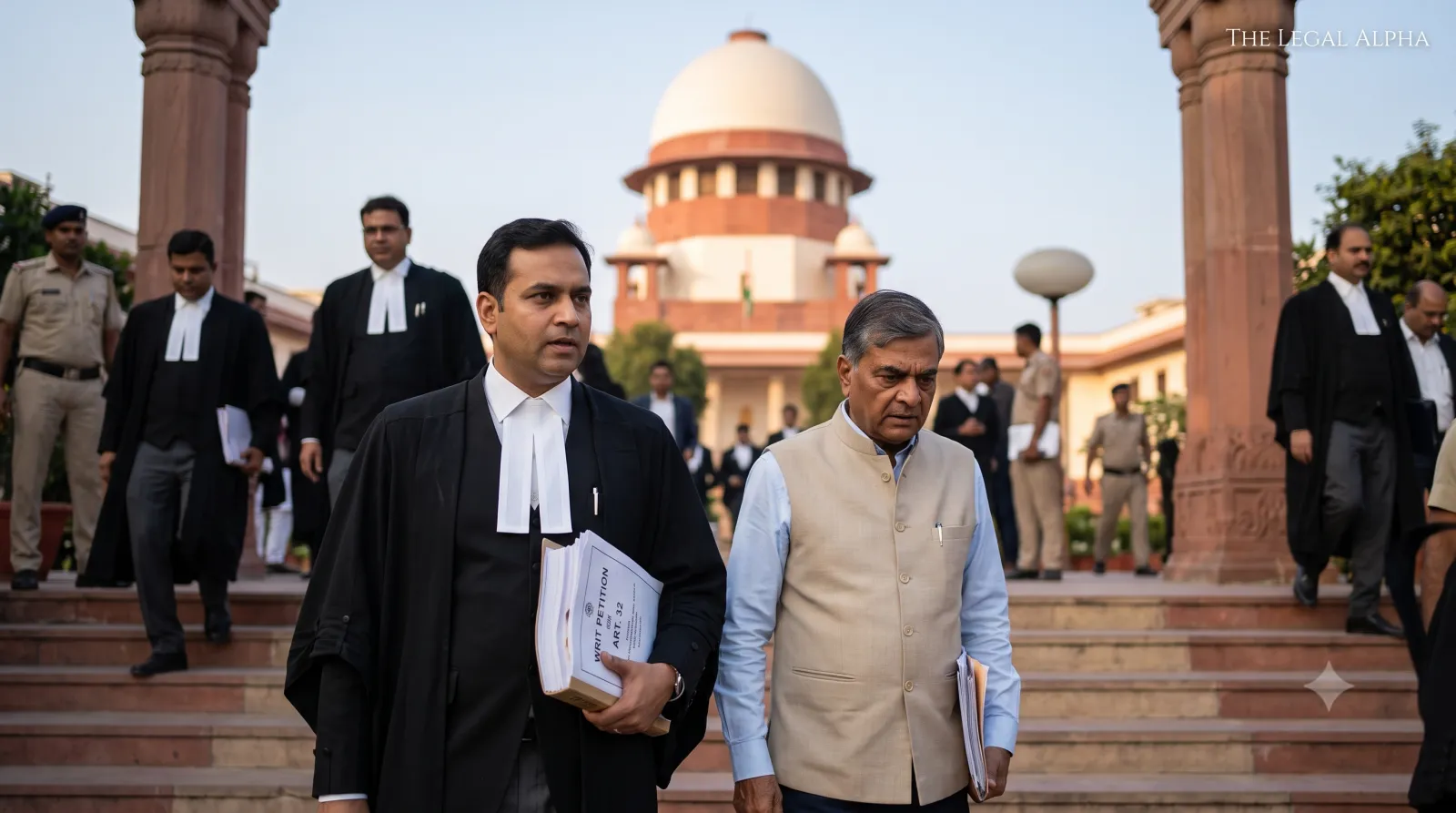
The Supreme Court of India has listed for consideration petitions challenging the administrative decisions taken by Chief Election Commissioner (CEC) Gyanesh Kumar. The petitions allege that key decisions, including nationwide electoral roll revision directives and procedural software modifications, were implemented unilaterally by the CEC without the statutory concurrence of the other two Election Commissioners, Sukhbir Singh Sandhu and Vivek Joshi.
The petitioners, including former Union Home Secretary R.K. Singh and advocate Shailendra Mani Tripathi, have approached the top court requesting interim suspension of the CEC, judicial scrutiny of internal Commission records, and the formation of a court-monitored Special Investigation Team (SIT) to probe potential personal criminal liability and breaches of administrative procedure.
Legal Topic
Area of Law: Constitutional Law & Administrative Law
Sub-topic: Multi-Member Commission Governance / Election Commission of India Functioning
Core Legal Issue
The controversy centres on whether the Chief Election Commissioner possesses statutory or constitutional autonomy to take administrative and policy actions on behalf of the Election Commission of India without the concurrence or majority approval of the full multi-member commission.
The legal question addresses whether bypassing the collegiate structure mandates judicial intervention under Article 32, rendering such unilateral administrative directives void ab initio, and whether constitutional immunity shields commission heads against court-ordered investigations when operating outside collegial consensus.
What Did the Court / Authority Decide?
The Supreme Court agreed to list the petitions for hearing to determine the maintainability of the prayers and examine preliminary records regarding the decision-making process within the poll panel.
The matter remains pending before the Bench. The court has not yet passed any final order on the merits of the allegations, nor has it granted interim directions regarding the suspension of the CEC. The proceedings are currently focused on whether a prima facie case exists to warrant calling for internal records or instituting an independent inquiry.
Key Legal Points
-
Multi-Member Collegiality: Article 324(1) vests the superintendence, direction, and control of elections in the collective Election Commission rather than an individual Chief Election Commissioner, requiring decision-making by majority or consensus.
-
Validity of Subordinate Directives: Changes made to statutory voter forms, regulatory guidelines, or tech infrastructure without collegiate approval risk being struck down as ultra vires the governing statutory framework.
-
Threshold of Official Immunity: The petitioners argue that administrative actions executed outside constitutional procedures do not enjoy institutional protection and may warrant personal accountability.
-
Procedural Checks on Statutory Alterations: Established procedure dictates that any major restructuring of electoral rolls requires deliberation across all members of the Commission to safeguard institutional integrity.
Relevant Law
-
Article 324 of the Constitution of India: Governs the superintendence, direction, and control of elections and establishes the structure of the Election Commission.
-
Chief Election Commissioner and other Election Commissioners (Appointment, Conditions of Service and Term of Office) Act, 2023: Regulates the transaction of business and collegial decision-making within the Commission.
-
Representation of the People Act, 1950 & Registration of Electors Rules, 1960: Prescribes the statutory forms and procedures for electoral roll inclusion, revision, and objection processes.
-
T.N. Seshan v. Union of India (1995): Five-judge Constitution Bench precedent establishing that the CEC is primus inter pares (first among equals) and that the Election Commission must function as a multi-member institution with decisions guided by majority opinion.
Arguments of the Parties
Petitioner / Applicant
The petitioners argued that internal commission records reveal that the two other Election Commissioners formally dissented or raised objections to at least 14 administrative decisions between late 2025 and mid-2026. Counsel submitted that the CEC bypassed institutional checks by issuing directives and altering technological features without formal majority assent. They contended that these actions violate the multi-member design established under Article 324, warranting the quashing of all such unilateral orders and the appointment of an independent judicial inquiry to safeguard the electoral process.
Respondent / State / Opposing Party
The Union and representatives for the Commission maintained that administrative directives, procedural updates, and day-to-day coordination are within the administrative purview necessary to execute nationwide electoral oversight efficiently. They submitted that routine internal discussions, differing administrative viewpoints, and technological iterations do not constitute illegality or justify extraordinary judicial interference in a constitutional body's day-to-day operations.
Why Does It Matter?
This development addresses the core institutional mechanics of India's electoral apparatus. If the Supreme Court examines the internal records of the Election Commission, the ruling will provide direct judicial clarity on the limits of the CEC's individual authority versus the collective mandate of the multi-member Commission.
Beyond the immediate administrative row, the litigation tests the boundaries of judicial oversight over the internal deliberations of constitutional bodies and reinforces whether non-consensual administrative decisions can survive judicial review under administrative law principles.
Legal Takeaway
Under established constitutional jurisprudence, the Election Commission of India must operate as a collegial, multi-member body where policy decisions and statutory revisions reflect collective consensus or a majority view. Unilateral executive decisions taken without the concurrence of fellow Commissioners remain vulnerable to judicial review and constitutional challenge.
Sources
Primary Source:
-
Petitions under Article 32 of the Constitution of India before the Supreme Court of India (Rakesh Kumar Singh v. Union of India & Ors. and Shailendra Mani Tripathi v. Union of India & Ors.).
Additional Sources:
-
LiveLaw News Network: Plea Against CEC Gyanesh Kumar: Live Updates From Supreme Court (October 2026).
-
Supreme Court Precedents: T.N. Seshan, Chief Election Commissioner of India v. Union of India & Ors. (1995) 4 SCC 611.