State Cannot Substitute Social Media Posts for Legal Appeals: Punjab and Haryana High Court Reprimands Punjab over DA Arrears
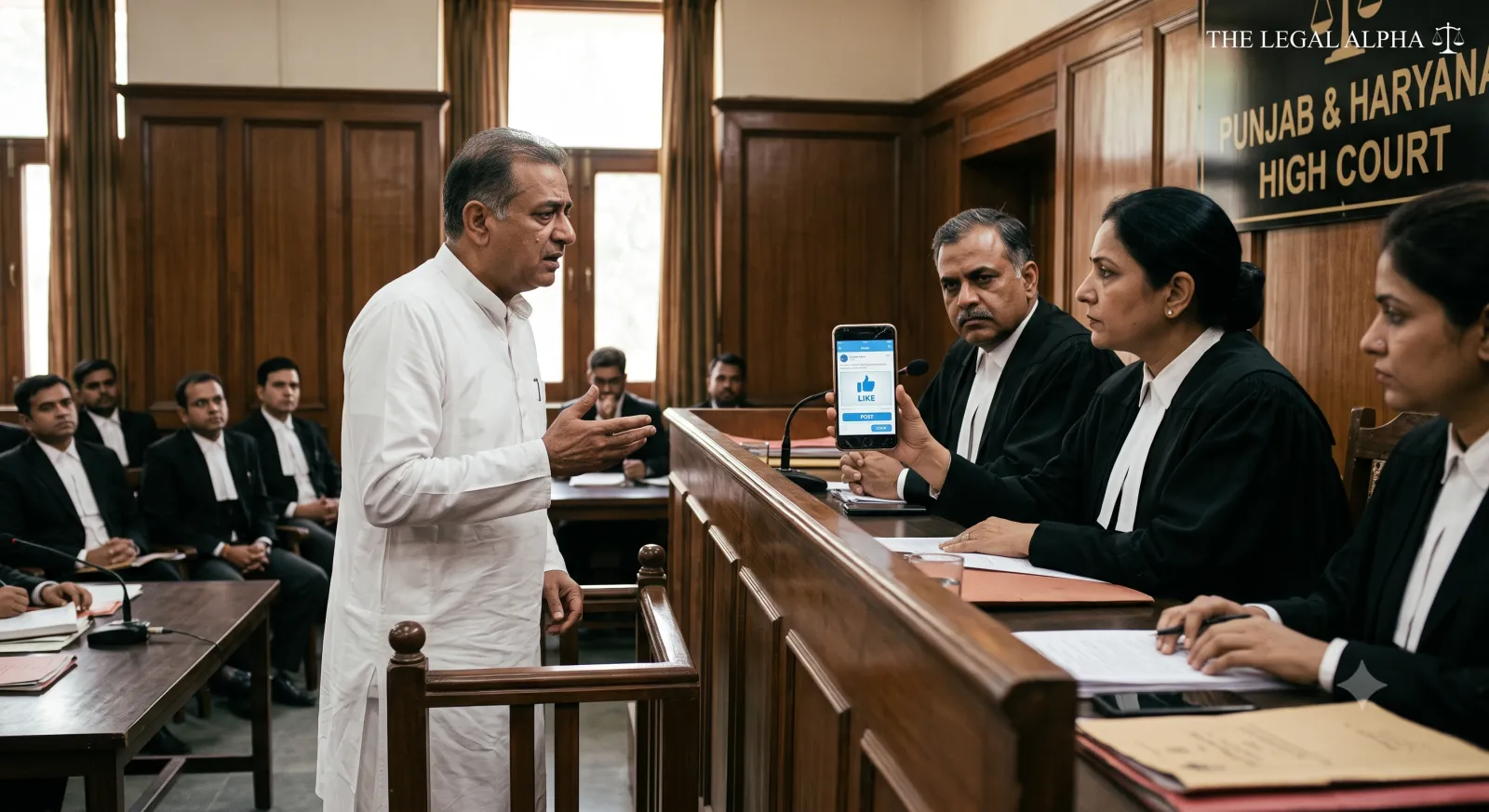
The Punjab and Haryana High Court expressed strong disapproval of the Punjab Government’s conduct regarding compliance with judicial directions to disburse pending Dearness Allowance (DA) and Dearness Relief (DR) to state employees and pensioners.
The matter arose during follow-up proceedings after an earlier ruling by the High Court directed the state administration to clear pending DA/DR installments at parity with All India Services officers. Rather than obtaining a formal stay or diligently pursuing its Special Leave Petition before the Supreme Court, the state administration reportedly engaged in public statements on social media platforms while allowing procedural defects in its apex court appeal to linger. Taking note of these actions, the Bench observed that judicial decisions must be challenged through established procedural remedies rather than public discourse or social media channels.
Legal Topic
Area of Law: Service Law / Constitutional Law Sub-topic: Judicial Compliance, Enforcement of Decrees, and Dearness Allowance Entitlement
Core Legal Issue
The core legal issue is whether an executive authority can legitimately withhold compliance with a binding High Court mandamus by merely initiating an appeal in the Supreme Court without curing procedural registry defects or securing an interim stay order.
At a systemic level, the court addressed the constitutional boundaries of executive accountability: whether an elected government can seek to deflect its obligation to obey judicial orders through external commentary and social media declarations while adopting dilatory tactics in judicial proceedings.
What Did the Court Decide?
The High Court held that the state administration cannot maintain an evasive stance or play "hide and seek" with judicial orders.
The court made it clear that filing an appeal in the registry does not automatically stay an operative judgment. Observing that public posturing cannot replace formal judicial remedies, the court scrutinized the status of the state's petition before the Supreme Court Registry. The Bench deferred proceedings briefly to verify the exact status of the appeal from the Supreme Court Registry and reiterated that unless an express interim stay is granted by the apex court, the High Court’s directions remain binding and fully executable.
Key Legal Points
-
Mere filing of an appeal before an appellate court does not amount to an automatic stay of the lower court’s operative judgment or mandamus.
-
Public statements, media campaigns, or social media commentary cannot act as a substitute for standard appellate procedures and legal compliance.
-
The state cannot rely on administrative delay or registry defects in an appellate petition as a defense against contempt or enforcement applications.
-
Parity in dearness allowance between state civil servants and central service cadres, once judicially recognized, creates an enforceable right unless reversed by a superior court.
Relevant Law
-
Article 226 of the Constitution of India: Writ jurisdiction of the High Court to issue directions, orders, or writs to enforce legal and fundamental rights.
-
Article 14 of the Constitution of India: Guarantee of equality before the law and equal protection of the laws, central to the underlying parity claim between state employees and All India Services cadres.
-
Contempt of Courts Act, 1971: Enforcement mechanisms regarding wilful disobedience of court orders, directions, and undertakings.
-
Order XLI, Rule 5 of the Code of Civil Procedure, 1908 (read with High Court Rules): Well-established principle that an appeal does not operate as an automatic stay of execution unless an express stay order is granted by the appellate forum.
Arguments of the Parties
Petitioner / Applicant Employees The petitioners contended that the state government was deliberately delaying compliance with the High Court's directions. Counsel pointed out that while the administration claimed an appeal had been instituted before the Supreme Court, it deliberately failed to clear registry objections to prevent the appeal from being listed, thereby stalling execution proceedings before the High Court without securing an actual stay.
Respondent / State of Punjab The state submitted that it had already approached the Supreme Court against the High Court's directions concerning the payment of DA arrears. The administration argued that substantial financial liabilities were involved and that steps were being taken to have the appeal heard before the apex forum, denying any intentional effort to bypass or disregard the High Court’s ruling.
Why Does It Matter?
This development reinforces an essential constitutional boundary between executive conduct and the rule of law. In modern administrative practice, public authorities increasingly utilize press statements and digital platforms to present policy positions; however, this ruling makes it clear that social media communication holds no standing inside a courtroom.
For public sector employees and pensioners, the proceedings ensure that statutory or judicially recognized monetary claims cannot be delayed through procedural procrastination. For government litigators and executive departments, the ruling delivers a strict institutional warning: pursuing an appeal requires active prosecution within the court system, and absent an operative stay, government bodies remain fully liable to implement court orders without delay.
Legal Takeaway
An ongoing appeal or a defective petition filed in an appellate registry does not suspend the binding effect of an operative High Court judgment. Executive authorities must obtain a formal interim stay from a competent court to halt compliance, as administrative delay tactics and social media commentary carry zero legal weight against a judicial mandamus.
Sources
Primary Source:
-
High Court of Punjab and Haryana, orders and proceedings in the Dearness Allowance (DA/DR) compliance applications arising out of the August 2026 judgment.
Additional Sources:
-
Bar & Bench Litigation News Report: "You cannot challenge judgment through tweets: P&H High Court raps Punjab government in DA case".
-
Court Registry records and legal reporting covering State of Punjab's challenge against the High Court's parity directions on employee dearness allowance arrears.