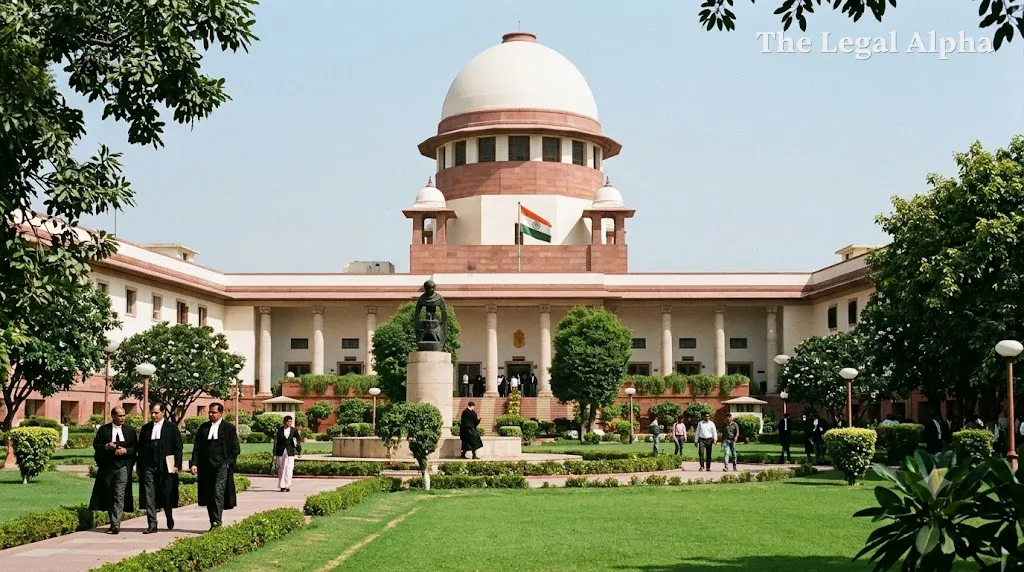
Supreme Court Scrutinises Election Commission Over Electoral Revision Forms And Decision-Making Protocol

The Supreme Court of India examined the procedural integrity of the Special Intensive Revision (SIR) conducted by the Election Commission of India (ECI). A bench led by Chief Justice of India Surya Kant questioned the poll body regarding modifications made to Form 6 (voter registration) and concerns over large-scale Form 7 submissions (voter deletion/objection). Concurrently, the court addressed broader controversies touching upon the internal decision-making mechanisms of the three-member commission, while advancing hearings on related commercial and digital rights matters, including challenges to the Digital Personal Data Protection (DPDP) Act and unauthorised circulation of courtroom recordings.
Legal Topic
-
Area of Law: Constitutional and Election Law
-
Sub-topic: Electoral Rolls, Statutory Forms, and Regulatory Process
Core Legal Issue
The primary legal issue centres on whether the Election Commission possesses the unilateral administrative authority to introduce supplemental declarations and documentation requirements alongside statutory voter registration forms (specifically Form 6) without amending the underlying statutory rules framed under the Representation of the People Act, 1950. A related question addresses whether the administrative directions issued during the Special Intensive Revision conformed to the statutory mandate requiring unanimous or majority-based collegial decision-making among the Chief Election Commissioner and Election Commissioners.
What Did the Court / Authority Decide?
The Supreme Court clarified that it had not granted judicial approval to any administrative alteration of Form 6 and called for official commission records to ascertain how and by whom the revised declaration requirements were formulated. The bench observed that commission decisions must statutorily follow either unanimous consent or majority approval among its members.
While declining to grant interim prayers seeking to restrain Chief Election Commissioner Gyanesh Kumar from discharging his duties, the court kept the substantive challenges to the SIR process and form legality pending for detailed examination.
Key Legal Points
-
Preservation of Statutory Forms: Form 6 is prescribed under the Schedule of the Registration of Electors Rules, 1960; executive modifications to statutory templates require formal delegated rule-making by the Central Government, not ad-hoc administrative notes.
-
Institutional Collegiality: The decision-making process of the multi-member Election Commission is legally anchored in collective deliberation, requiring formal majority or unanimous determinations under governing statutes.
-
Scrutiny of Voter Roll Exclusions: The court directed authorities to examine complaints concerning mass submissions of Form 7 objections to prevent arbitrary disenfranchisement.
-
Separation of Declarations: Following judicial scrutiny, the poll body uncoupled mandatory supplementary declarations from the primary registration portal in areas where revision exercises were concluded.
Relevant Law
-
Statutory Rules: Registration of Electors Rules, 1960 (specifically Form 6 for registration and Form 7 for objections/deletions).
-
Enabling Statute: Representation of the People Act, 1950 (Section 28, governing the rule-making power of the Central Government in consultation with the ECI).
-
Commission Governance: Chief Election Commissioner and Other Election Commissioners (Appointment, Conditions of Service and Term of Office) Act, 2023 (Section 18, governing institutional decision-making).
Arguments of the Parties
Petitioners The petitioners contended that the Election Commission effectively altered statutory registration requirements by mandating supplementary declarations linking applicants to legacy rolls, thereby creating an unauthorised burden of proof on eligible voters. They further submitted that major directives governing the SIR process were implemented without lawful, documented consensus among all three commissioners.
Election Commission of India The ECI maintained that Form 6 was never formally amended, as amending authority lies solely with the Union Government, asserting that the supplementary declaration was a separate procedural document intended to ensure electoral roll verification. The poll body also submitted that all formal SIR orders were approved unanimously by the three-member panel, arguing that internal notes, procedural queries, or dissenting office file notings do not constitute formal institutional orders.
Why Does It Matter?
This litigation reinforces the strict boundary between statutory election rules and internal administrative discretion. By subjecting the SIR mechanics and voter-deletion triggers (Form 7) to judicial review, the Supreme Court signals that procedural adjustments cannot erode voter enfranchisement protections or bypass the formal rule-making framework. Furthermore, judicial scrutiny into internal commission voting protocols highlights the legal enforceability of collegial decision-making within independent constitutional authorities.
Legal Takeaway
Administrative guidelines and declarations issued by the Election Commission cannot bypass or modify statutory forms established under parliamentary rules. Any revision exercise affecting voter enrollment must adhere to formal rule-making procedures and satisfy statutory collegial decision-making standards.
Sources
-
Primary Source: Supreme Court of India proceedings and record orders in Special Intensive Revision / Form 6 PILs (Bench led by CJI Surya Kant).
-
Additional Sources: Election Commission of India counter-affidavits filed under the Chief Election Commissioner and Other Election Commissioners Act, 2023; Registration of Electors Rules, 1960.