Supreme Court Concludes Monitoring of Ram Mandir Donation Embezzlement Probe, Grants Petitioners Liberty to Assist Trial Court
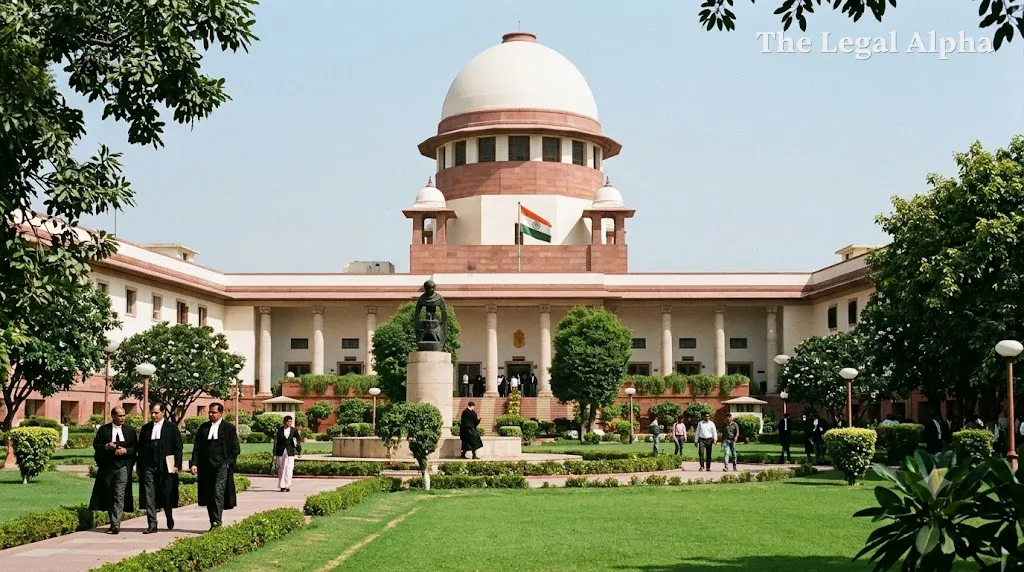
The Supreme Court of India has formally closed proceedings monitoring the investigation into the alleged theft and misappropriation of donation funds at the Ayodhya Ram Mandir.
A special investigation team constituted by the Uttar Pradesh government completed its probe and filed a formal chargesheet before the competent trial court. A three-judge bench headed by Chief Justice of India Surya Kant declined prayers to transfer the matter to the Central Bureau of Investigation, concluding that continuous constitutional supervision was no longer required. However, recognizing the wider public interest surrounding trust offerings, the bench granted the public-spirited petitioners permission to actively participate and assist the local trial magistrate during judicial proceedings.
Legal Topic
Area of Law: Criminal Procedure & Public Trust Governance
Sub-topic: Judicial Monitoring of Investigation / Victim Representation and Public Interest Participation in Criminal Trials
Core Legal Issue
The primary issue before the court was whether constitutional writ jurisdiction should continue supervising a criminal inquiry after the investigating agency has concluded its investigation and submitted a statutory chargesheet under criminal procedural law.
A related issue was whether third-party or public-spirited petitioners, in an offence involving public religious trust funds, hold locus standi to assist the prosecuting agency before the trial court on terms analogous to statutory victim participation rights.
What Did the Court / Authority Decide?
The bench comprising Chief Justice of India Surya Kant, Justice Joymalya Bagchi, and Justice V. Mohana disposed of the batch of writ petitions:
-
Concluded court monitoring of the criminal investigation following the submission of the final police report.
-
Refused demands to transfer the ongoing investigation to the Central Bureau of Investigation.
-
Granted express liberty to the petitioners to assist the trial magistrate, observing that the misappropriation of sacred public donations transcends a routine private criminal dispute between the State and the accused.
-
Directed the competent trial court in Ayodhya to proceed expeditiously in accordance with criminal law.
Key Legal Points
-
Cessation of Writ Monitoring Post-Chargesheet: Once an investigating agency gathers evidence and files its formal police report before the jurisdictional magistrate, high courts and the apex court generally avoid continuous surveillance, allowing statutory trial mechanisms to take over.
-
Public Interest Standing at the Trial Stage: While criminal prosecutions are typically conducted by the State, the court carved out space for public-spirited petitioners to assist the trial court, treating large-scale public trust embezzlement cases on the same footing as victim-assistance provisions.
-
Forensic Rigor in Financial Fraud: The deployment of independent forensic auditors and chartered accountants alongside police investigators was treated as adequate safeguards, negating the necessity of an extraordinary federal agency transfer.
Relevant Law
-
Section 24(8) / Section 301(2) of the Code of Criminal Procedure, 1973 (and corresponding Section 18 / Section 338 of the Bharatiya Nagarik Suraksha Sanhita, 2023): Governs the rights of private persons and victims to engage counsel to assist the public prosecutor or the court during inquiry and trial.
-
Indian Trusts Act, 1882 / Charitable and Religious Trusts Principles: Fiduciary duties and the administration of trust funds created for public religious purposes.
-
Article 32 of the Constitution of India: Writ jurisdiction invoked by the petitioners seeking continuous court monitoring and transfer of investigation.
Arguments of the Parties
Petitioners The petitioners contended that an independent federal probe by the Central Bureau of Investigation was essential due to the sheer magnitude of temple donations and the potential for institutional bias or opacity in local management. They highlighted the public nature of the funds, arguing that the public-at-large has an actionable stake in holding the perpetrators accountable and that scrutiny must remain transparent at every stage of the legal process.
State / Investigating Agency Appearing for the authorities, Solicitor General Tushar Mehta submitted that a thorough and uncompromised investigation had been finalized by the Special Investigation Team with forensic audit expertise. He informed the bench that the probe unearthed over a hundred instances of illicit cash extraction and trace assets purchased through untaxed transaction differences, culminating in a robust chargesheet before the trial court. The State argued that further apex court monitoring was unnecessary and that the statutory trial process should proceed unimpeded.
Why Does It Matter?
The decision underscores a vital procedural boundary for Indian appellate courts: judicial monitoring is an exceptional oversight mechanism designed to spur an investigation, not a substitute for the trial process itself.
Significantly, the bench’s ruling broadens practical standing before magistrate courts in financial crimes involving religious and charitable trusts. By likening public stakeholders to victims of a crime, the Supreme Court has set a notable precedent allowing vigilant citizens to assist prosecutors in public fund embezzlement trials, creating a viable mechanism for transparency in religious endowment governance without paralyzing regular criminal courts.
Legal Takeaway
Judicial monitoring under constitutional jurisdiction ends once a formal chargesheet is filed before the trial magistrate. However, in crimes involving public endowments and trust finances, citizens can be permitted to assist the trial court on par with crime victims to ensure transparent adjudication.
Sources
Primary Source:
-
Supreme Court of India, Bench comprising CJI Surya Kant, Justice Joymalya Bagchi, and Justice V. Mohana (Proceedings dated November 2, 2026).
Additional Sources:
-
High Court / Trial Court Record Filings and Uttar Pradesh Special Investigation Team (SIT) Status Report.
-
Official Submissions of Solicitor General Tushar Mehta before the Supreme Court of India.