Supreme Court Mandates Four-Month Deadline for Physical Verification and Demarcation of Wetlands Across India
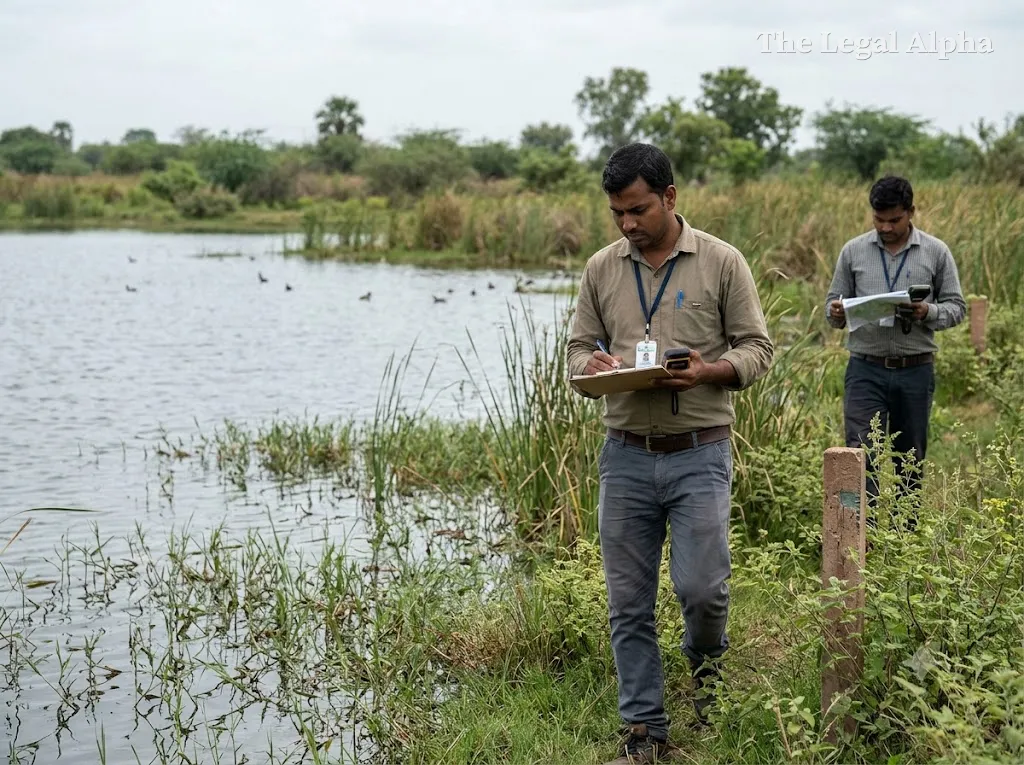
The Supreme Court of India has ordered all State Governments and State Wetland Authorities to conduct ground-truthing and physical verification of water bodies across the country within four months.
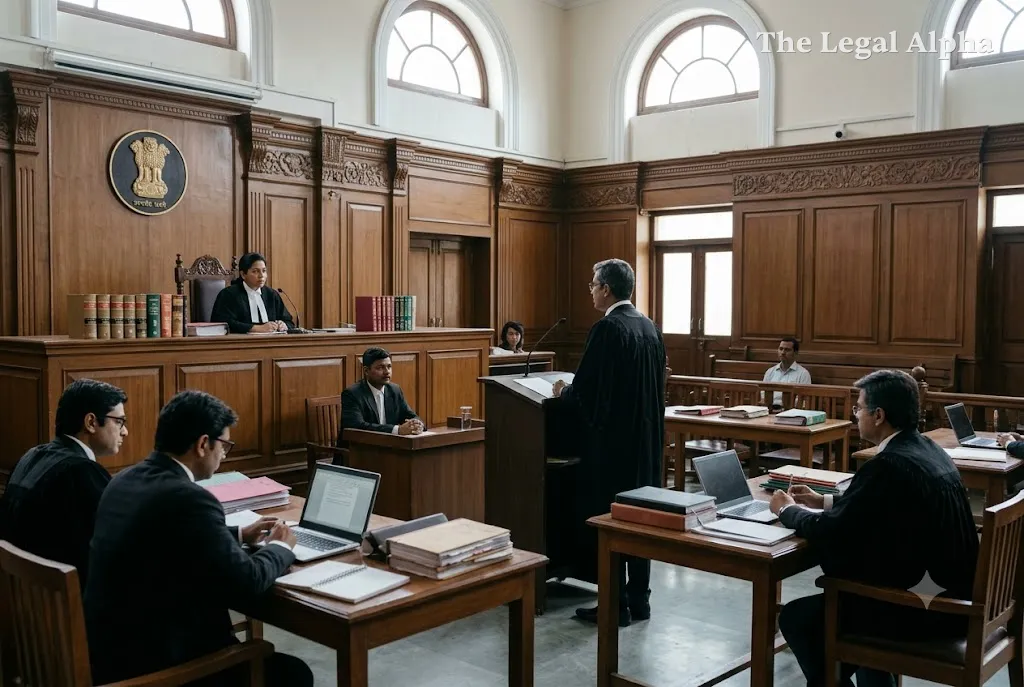
Expressing serious concern over systemic delays in ecological preservation, the bench observed that the judiciary cannot remain a silent spectator while vital water bodies and wetlands remain vulnerable and unprotected. The order came during proceedings reviewing the implementation of statutory environmental protections, where the court noted that despite nearly a decade having passed since the notification of the governing rules, extensive numbers of wetlands remain unverified on the ground.
The bench refused a plea by state counsel seeking an extension of up to nine months, holding that while inter-departmental logistics are complex, urgent ecological necessity requires a strict four-month timeline. States must also submit detailed compliance affidavits within four weeks outlining their adopted methodology.
Legal Topic
Area of Law: Environmental Law
Sub-topic: Conservation of Wetlands / Public Trust Doctrine / Fundamental Right to Clean Water
Core Legal Issue
The primary legal issue before the Court was whether State authorities can defer or delay statutory duties under environmental conservation frameworks on administrative and logistical grounds.
Specifically, the Court examined whether the prolonged failure by State Wetland Authorities to physically verify, identify, and demarcate mapped water bodies violates the State's obligations under the public trust doctrine and infringes upon citizens' fundamental rights to access clean drinking water and a protected ecology under Article 21 of the Constitution.
What Did the Court / Authority Decide?
The Supreme Court issued clear, time-bound procedural directions to enforce compliance:
-
Affidavits on Methodology: All States and Union Territories must file detailed affidavits within four weeks specifying the criteria, mode, and method adopted for carrying out ground-truthing exercises, including coverage for water bodies smaller than 2.25 hectares.
-
Ground-Truthing Timeline: The Court rejected requests by counsel for an extension of six to nine months, fixing a firm outer limit of four months for completing physical ground-truthing and demarcation across all jurisdictions.
-
Accountability for Wetland Authorities: The bench directed State Wetland Authorities to move beyond satellite mapping data alone and physically identify the boundaries of each water body on the ground to halt further ecological degradation and encroachment.
-
Pending Status: The broader public interest litigations remain pending before the Supreme Court, with future hearings scheduled to track state-by-state compliance and progress.
Key Legal Points
-
Duty Against Inaction: The Court reiterated that judicial bodies have a positive duty under public interest jurisdiction to step in when the executive apparatus fails to protect vital natural resources.
-
Ground-Truthing as a Legal Prerequisite: Satellite identification via space applications (such as ISRO wetland atlases) is insufficient on its own; actual physical verification and on-ground boundary demarcation are mandatory for effective legal protection against encroachment.
-
Rejection of Administrative Delay: Purely bureaucratic challenges and administrative burdens cannot justify prolonged non-compliance with statutory environmental conservation mandates.
-
Extension to Smaller Water Bodies: Protection cannot be restricted exclusively to massive ecological zones; smaller water bodies critical for regional water tables and rural drinking reserves must also be accounted for and conserved.
Relevant Law
-
Wetlands (Conservation and Management) Rules, 2017: Particularly Rule 5, which mandates State Wetland Authorities to prepare comprehensive inventories, verify boundaries, and recommend identified wetlands for statutory regulation.
-
Environment (Protection) Act, 1986: Sections conferring regulatory powers upon central and state authorities to manage ecologically fragile areas.
-
Constitution of India:
-
Article 21: Right to life, judicially expanded to encompass clean drinking water and a pollution-free environment.
-
Article 48A: Directive Principle obligating the State to protect and improve the environment and safeguard forests and wildlife.
-
Article 51A(g): Fundamental duty of citizens and public authorities to protect and improve the natural environment, including lakes and rivers.
-
-
Judicial Precedents: M.K. Balakrishnan & Ors. v. Union of India (laying down foundational parameters for wetland inventory and interim protections).
Arguments of the Parties
Petitioners (Environmental Litigants / Intervenors)
The petitioners submitted that:
-
Despite previous apex court rulings and the passage of several years since the 2017 Rules came into effect, hundreds of thousands of ecologically vital water bodies mapped across India remain unprotected by formal notification.
-
Lack of physical demarcation on the ground leaves wetlands exposed to rapid construction, illegal waste dumping, and real estate encroachment.
-
State Wetland Authorities have exhibited systemic inertia, requiring direct judicial monitoring to ensure natural water reservoirs do not permanently disappear.
Respondents (State Authorities & Counsel)
The respondents contended that:
-
The exercise of ground-truthing requires physical surveys, multi-departmental coordination (revenue, forest, irrigation, and local urban bodies), and substantial manpower.
-
Senior counsel representing state interests submitted that surveying thousands of sites is inherently time-consuming, praying for a reasonable accommodation of six to nine months to complete the verification accurately.
-
State authorities maintained they were working toward statutory compliance but needed sufficient logistical breathing room to avoid incomplete or erroneous surveying.
Why Does It Matter?
This order has immediate legal and regulatory ramifications across India. By setting strict time limits, the Supreme Court signals an end to indefinite bureaucratic deferral regarding wetland demarcation.
For developers, industries, and local infrastructure projects, accelerated demarcation will establish clear geographical boundaries where construction, effluent discharge, or land reclamation are prohibited by law, mitigating future litigation regarding whether a parcel constitutes an unnotified wetland.
For state governments and urban planning bodies, failure to execute physical surveys within four months risks contempt of court and will constrain local municipal authorities from issuing conversion permits on land parcels that function as hydrological buffers.
Legal Takeaway
Administrative complexity does not exempt State authorities from their legal obligations to protect public natural resources. State Wetland Authorities are strictly required to conduct physical ground-truthing and demarcate water bodies within four months, underscoring that statutory conservation rules demand prompt on-ground enforcement rather than perpetual procedural delay.
Sources
-
Primary Source: Supreme Court of India, Anand Arya v. Union of India & Ors. [Writ Petition (Civil) No. 304/2018 with connected petitions, Order dated October 12, 2026].
-
Additional Sources: The Wetlands (Conservation and Management) Rules, 2017; M.K. Balakrishnan & Ors. v. Union of India [W.P.(C) No. 230/2001].