Supreme Court Calls on WhatsApp and Intermediaries to Detail Action Plans Against Digital Arrest Scams
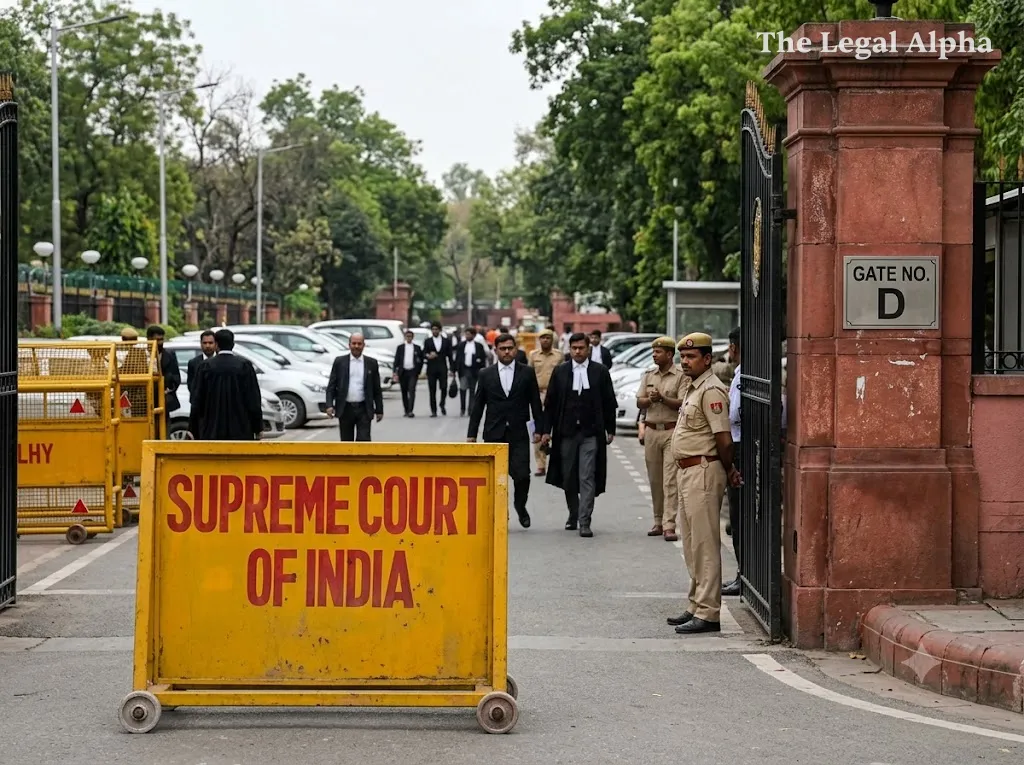
The Supreme Court of India has intensified its scrutiny of rampant cyber fraud, specifically targeting the phenomenon known as "digital arrest" scams. A three-judge bench led by Chief Justice of India Surya Kant, alongside Justices Joymalya Bagchi and V. Mohana, issued directions requiring WhatsApp LLC and other social media intermediaries to explain the preventive mechanisms they intend to deploy.
The court mandated that these messaging platforms submit concrete technical and operational proposals both to the bench and to the Indian Cybercrime Coordination Centre (I4C) under the Ministry of Home Affairs. Broadening the accountability framework, the bench also directed the Reserve Bank of India to devise clear compensation mechanisms holding financial institutions liable when due diligence failures facilitate such frauds.
Legal Topic
Area of Law: Information Technology & Cyber Law
Sub-topic: Intermediary Due Diligence / Financial Cyber Fraud Prevention
Core Legal Issue
The primary legal issue centres on the scope of intermediary liability and statutory due diligence obligations of end-to-end encrypted messaging services under Indian cyber jurisprudence. Specifically, the court is examining how platform providers can proactively detect, deter, and interrupt organized cybercrime operations—such as impersonation of law enforcement agencies and extortion—without compromising lawful communication architectures.
Alongside intermediary liability, the court is assessing the institutional obligations of banks and financial intermediaries to protect consumer deposits, particularly whether systemic failures in verifying accounts and tracking suspicious fund flows trigger an automatic duty to indemnify scam victims.
What Did the Court Decide?
The Supreme Court issued several interim directions while hearing the suo motu proceedings titled In Re: Victims of Digital Arrest Related to Forged Documents:
-
Directed WhatsApp LLC and other key intermediaries to formally apprise the court of their proposed prevention strategies and to submit these roadmaps simultaneously to the I4C.
-
Instructed law enforcement departments across all States and Union Territories to submit comprehensive status reports documenting FIRs registered in digital arrest cases, the progress of investigations, and actionable detection strategies.
-
Directed the Reserve Bank of India to formulate binding regulatory measures for victim indemnification and financial compensation, with proposed guidelines to be notified and operationalised promptly.
-
Scheduled the matter for further consideration to review compliance affidavits and institutional responses.
Key Legal Points
-
Proactive Intermediary Accountability: Emphasised that major communication platforms cannot maintain a purely passive posture when their infrastructure is systematically exploited for cross-border cyber extortion.
-
Institutional Restitution: Reinforced the principle that commercial banks and regulated financial entities must bear financial responsibility for fraudulent leakages where KYC lapses or internal monitoring failures occur.
-
Inter-Agency Harmonisation: Mandated operational coordination between private technology intermediaries, law enforcement units, and the central cyber coordination authority (I4C).
-
Judicial Oversight of Cybercrime Ecosystems: Utilised suo motu jurisdiction under public interest procedures to craft systemic institutional remedies rather than treating cybercrimes merely as isolated penal violations.
Relevant Law
-
Section 79 of the Information Technology Act, 2000: Governs the "safe harbour" protection and conditional exemptions from liability for network intermediaries.
-
Information Technology (Intermediary Guidelines and Digital Media Ethics Code) Rules, 2021: Outlines due diligence mandates, grievance redressal, and user safety standards for significant social media intermediaries.
-
Banking Regulation Act, 1949 & RBI Master Directions: Pertaining to Know Your Customer (KYC) norms, anti-money laundering frameworks, and customer protection against unauthorised electronic transactions.
-
Article 32 of the Constitution of India: Inherent and writ powers under which the apex court exercises expansive oversight over systemic violations of public rights and financial security.
Arguments of the Parties
For WhatsApp LLC
Senior counsel submitted that the messaging platform is actively pursuing self-regulatory and technological countermeasures. The platform highlighted that it has already taken enforcement action against thousands of flagged accounts and is actively developing automated software to identify anomalous usage patterns and warn users about potential extortion attempts before financial harm occurs.
The Bench / Amicus / Investigating Authorities
The court highlighted that digital arrest schemes leverage forged official court seals, fake arrest warrants, and impersonated police badges over video calls to terrify unsuspecting citizens. The bench observed that piecemeal action after money has left the country is largely ineffective, necessitating upstream safeguards from tech platforms and downstream indemnity from banking institutions that allow fraudulent accounts to operate.
Why Does It Matter?
This development signals a shift in judicial strategy from reactive criminal prosecution to preventive structural liability. Digital arrest scams have proliferated rapidly, siphoning thousands of crores of rupees by exploiting fear and regulatory blind spots.
By demanding coordination between tech platforms and the I4C, the Supreme Court is pushing intermediaries toward early-stage algorithmic deterrence. Simultaneously, compelling the RBI to establish mandatory victim compensation frameworks directly alters the risk profile for banks. If financial institutions face financial liability for failing to stop suspicious transfers or enforce rigorous KYC compliance, the industry will be forced to drastically upgrade fraud-monitoring infrastructure.
Legal Takeaway
Intermediaries and banking institutions may no longer rely solely on statutory safe harbours and disclaimer clauses when their channels facilitate cyber extortion. Going forward, institutional due diligence is shifting toward an active standard that links operational neglect directly to remediation duties and victim compensation.
Sources
Primary Source:
Supreme Court of India, Record of Proceedings in Suo Motu Writ Petition, In Re: Victims of Digital Arrest Related to Forged Documents, bench comprising CJI Surya Kant, Justice Joymalya Bagchi, and Justice V. Mohana.
Additional Sources:
-
The Economic Times (Litigation / Cyber Law Desk reports)
-
Indian Cybercrime Coordination Centre (I4C), Ministry of Home Affairs Advisories on Digital Arrest Scams
-
Reserve Bank of India Master Directions on Customer Protection and Fraud Risk Management