Madras High Court Pushes for White Paper and Two-Decade Audit in Tamil Nadu Library Book Scam
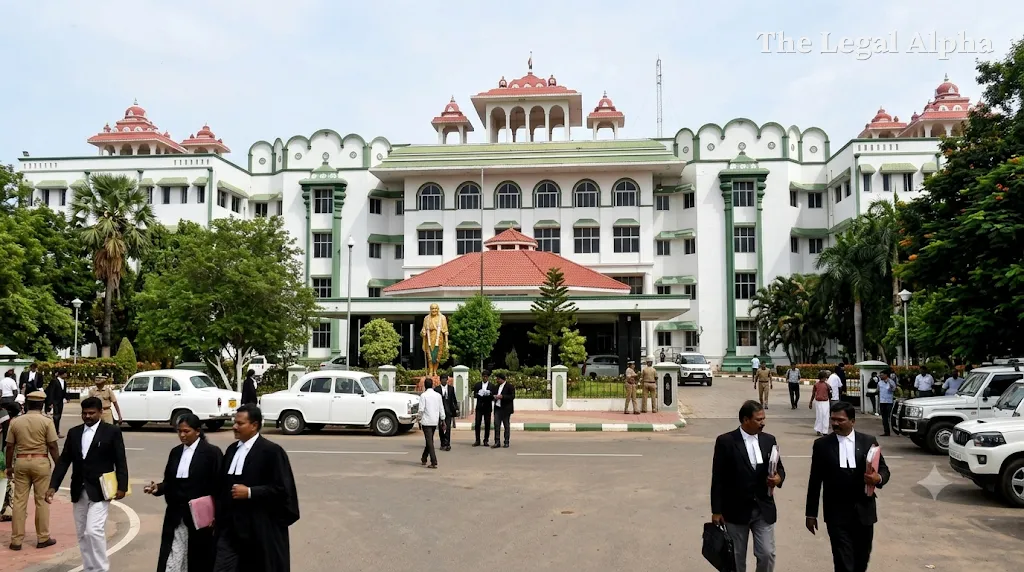
The Madurai Bench of the Madras High Court has urged the Tamil Nadu government to conduct a comprehensive probe and release a White Paper detailing how books have been procured for state public libraries over the past twenty years. The development came during a November 16, 2026 hearing before a Division Bench of Justice G.R. Swaminathan and Justice M.D. Sumathi in a contempt petition filed by Tirunelveli resident V. Ramasubbu.
The case stems from widespread allegations that public funds were used to purchase thousands of sub-standard, plagiarized, and AI-generated books—many carrying fabricated author names and inflated price tags—for state facilities, including the newly inaugurated Periyar Arivulagam in Coimbatore. Following earlier court interventions, the Directorate of Vigilance and Anti-Corruption (DVAC) registered a criminal case, froze bank accounts linked to implicated publishers, and arrested the proprietor of Agal Vilakku Publication, while the state government suspended five library officials and removed over 70,000 suspect books from circulation.
Legal Topic
Area of Law: Administrative Law and Public Procurement
Sub-topic: Contempt of Court / Anti-Corruption and Public Accountability
Core Legal Issue
The central legal question before the Madras High Court is whether state officials willfully disobeyed its binding June 19, 2024 judgment in W.P. (MD) No. 10150 of 2019, which mandated strict adherence to a transparent book procurement policy. Specifically, the Bench is examining how a procurement system designed to filter out dubious works through expert committees and public scrutiny failed, enabling the large-scale purchase of fake and AI-generated content at public expense.
Alongside enforcing compliance under the Contempt of Courts Act, 1971, the Court is assessing the scope of judicial oversight needed to compel systemic administrative reform, audit historical public spending—including statutory library cess funds—and ensure criminal accountability under anti-corruption laws.
What Did the Court / Authority Decide?
During the November 16, 2026 proceedings, the Division Bench recorded significant progress on the criminal and disciplinary fronts while issuing fresh administrative inquiries and policy recommendations:
-
Probe and White Paper Urged: The Bench observed that the scam had shaken public conscience and stated that the government should undertake a detailed inquiry into book procurement over the last twenty years and publish a White Paper to restore public trust.
-
Accounting for Library Cess: Taking judicial notice of the statutory library cess collected from citizens, the Court directed authorities to file an affidavit confirming whether the collected cess has been duly credited and detailing how those funds have been spent.
-
Granular Scrutiny of Selection Records: The judges posed specific questions to the Director of Public Libraries regarding purchases for the Periyar Arivulagam and Kalaignar Library in Madurai, demanding minutes explaining why 600 titles from Agal Vilakku Publication were rejected while 1,700 other titles from the same publisher were approved and bought.
-
Policy Overhaul and New Respondent: The Court suo motu impleaded the Secretary of the School Education Department as a respondent and forwarded three sets of stakeholder recommendations—including one from publisher Badrinarayanan Seshadri—to the government to frame a binding, foolproof Government Order (G.O.).
-
Custodial Interrogation Observation: While noting that courts generally do not dictate arrest decisions to investigators, the Bench remarked that custodial interrogation of identified bogus publishers may be necessary to uncover the money trail and identify complicit public servants.
The matter remains pending, with the next hearing scheduled for November 20, 2026, when the state must file its detailed affidavit and respond to the proposed procurement reforms.
Key Legal Points
-
Violation of Mandatory Transparency Norms: The Court noted that its June 2024 directives—requiring shortlisted books, covers, and details to be published online for a one-month public objection window—had been rendered ineffective by administrative lapses and "special category" exemptions.
-
Interpretation of "Doubtful Taste" Under Library Rules: In an earlier order in the same proceeding, the Bench interpreted Rule 18(4) of the Tamil Nadu Public Libraries Rules, 1950—which prohibits purchasing books of "doubtful taste"—to encompass plagiarized works, fabricated narratives, and AI-generated text, holding that citizens are entitled to assume books in public libraries are authentic.
-
Subversion of Digital and AI Processes: The Court highlighted that unlike traditional procurement irregularities, the present scandal represents an unprecedented misuse of artificial intelligence and digital publishing tools to manufacture fraudulent books at scale for public tenders.
-
Accountability for Public Funds and Cess: By demanding an accounting of the library cess alongside historical procurement data, the Bench reinforced the principle that public authorities hold statutory funds in trust and must justify expenditures through verifiable records.
Relevant Law
-
Contempt of Courts Act, 1971 (Section 11): Invoked by the petitioner to seek punishment against senior bureaucrats for alleged willful disobedience of the High Court's June 19, 2024 judgment.
-
Tamil Nadu Public Libraries Rules, 1950 (Rule 18(4)): Prohibits the acquisition of books and journals of "doubtful taste," construed by the Court to bar fake, plagiarized, and AI-generated publications.
-
Prevention of Corruption Act, 1988 & Bharatiya Nyaya Sanhita (BNS): Invoked by the DVAC in Crime No. 4 of 2026 to investigate criminal misconduct, bribery, and cheating in public procurement.
-
Tamil Nadu Transparent Book Procurement Policy, 2024 (G.O. dated March 7, 2024): Establishes procedural safeguards, expert committee evaluations, and prohibitions against unfair publishing practices such as altering titles or author names.
-
S. Krishnan v. The Secretary to Government, Department of Higher Education (W.P. (MD) No. 10150 of 2019, decided June 19, 2024): The foundational Madras High Court ruling mandating online disclosure of shortlisted books and public consultation prior to library purchases.
Arguments of the Parties
Petitioner
Senior Counsel appearing for petitioner V. Ramasubbu contended that library officials systematically bypassed the High Court's June 2024 transparency directives and the state's own procurement policy. The petitioner submitted that books falsely attributed to authors or generated using AI were procured in bulk through favoured publishers, undermining both public finances and genuine literary work.
Respondents (State of Tamil Nadu)
Appearing for the state, Advocate General Vijay Narayan assured the Bench that the government was taking strict action against all individuals involved, noting that five library officials had already been suspended. The Advocate General requested additional time to answer the Court's specific queries regarding selection timelines and committee minutes, and stated that the government would positively consider stakeholder suggestions to streamline future procurement rules. State Public Prosecutor R. John Sathyan informed the Court that the DVAC had registered an FIR (Crime No. 4 of 2026) under the BNS and the Prevention of Corruption Act, naming Agal Vilakku proprietor Mohan as an accused.
Why Does It Matter?
This case exposes a critical vulnerability in public procurement as generative AI lowers the barrier to producing bulk, low-quality content. When government agencies rely on opaque selection committees or carve out "special category" exemptions from standard tendering rules, public funds can be diverted toward sham vendors at the expense of legitimate authors, independent publishers, and readers.
Beyond Tamil Nadu, the Madras High Court's intervention sets a clear judicial precedent on how existing statutory standards—such as rules barring books of "doubtful taste"—apply to AI-generated and plagiarized material. For public institutions nationwide, the proceedings underscore the necessity of mandatory digital disclosures, enforceable authenticity warranties from vendors, and transparent audit trails whenever taxpayer money or dedicated cesses are spent.
Legal Takeaway
Public authorities cannot treat transparency guidelines as optional formalities, especially when spending dedicated public funds like a library cess. Courts will scrutinize both administrative shortcuts and emerging forms of fraud—including AI-generated deliverables—by enforcing strict disclosure rules, personal accountability for officials, and criminal investigations into vendor collusion.
Sources
Primary Source:
-
Order dated November 16, 2026, passed by the Madurai Bench of the Madras High Court (Justice G.R. Swaminathan and Justice M.D. Sumathi) in Ramasubbu v. K. Gopal, IAS & Anr., Contempt Petition (MD) No. 3763 of 2026.
Additional Sources:
-
Judgment dated June 19, 2024, passed by the Madras High Court in W.P. (MD) No. 10150 of 2019.
-
Reporting by LawBeat, LawChakra, The New Indian Express, and DT Next on the November 10, 11, and 16, 2026 hearings.