State Cannot Tax Hydropower Generation Under the Garb of Water Charges: Jammu & Kashmir High Court Strikes Down Statutory Levy
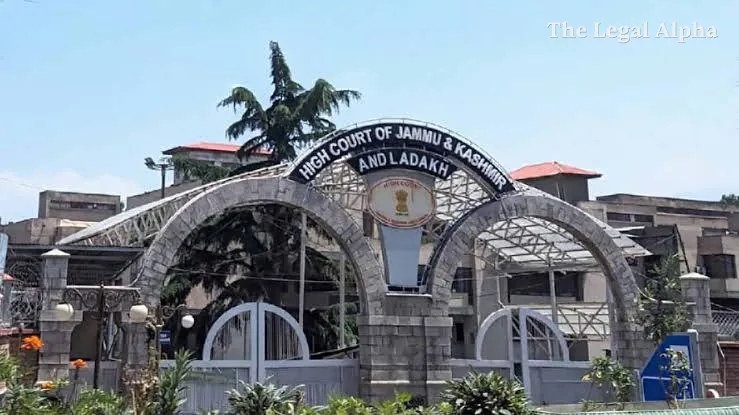
The High Court of Jammu & Kashmir and Ladakh delivered a major ruling holding that water usage charges imposed on hydroelectric power projects are unconstitutional. Ruling on a batch of petitions led by state-run power generators, including NHPC Limited, the court quashed demand notices issued by the administration since 2010 and permanently restrained authorities from levying taxes on electricity generation disguised as water usage fees.
The dispute stems from a long-standing confrontation between power generation entities and local authorities regarding whether regional governments have the constitutional power to levy exactions on water consumed or utilised during hydroelectric power generation.
Legal Topic
-
Area of Law: Constitutional Law / Taxation Law
-
Sub-topic: Legislative Competence / Electricity Taxation / Doctrine of Ultra Vires
Core Legal Issue
The core question before the High Court was whether a State or Union Territory legislature possesses the legislative competence to levy water usage charges on hydroelectric projects under the framework of water resource regulation.
The court had to determine whether such charges represent a genuine regulatory fee or if they constitute an indirect, impermissible tax on the generation of electricity—a subject outside the legislative competence of the State under the constitutional division of powers. Additionally, the court addressed whether provisions void ab initio could gain constitutional validity simply through their subsequent adoption under the Jammu and Kashmir Reorganisation Act, 2019.
What Did the Court Decide?
The High Court allowed the writ petitions and struck down the contested provisions of the Jammu and Kashmir Water Resources (Regulation and Management) Act, 2010 to the extent that they imposed water usage charges on hydropower producers.
The court ruled that the exaction, though labelled a "water usage charge," operates in substance as a tax on electricity generation. Consequently, all pending and retrospective demand notices issued against the power generating companies were quashed. The bench specifically restrained the administration from enforcing any similar tax on power generation under the pretext of water regulation. Furthermore, the court rejected the administration’s contention that the adoption of the 2010 Act by Parliament via the Reorganisation Act cured the initial constitutional infirmity.
Key Legal Points
-
Substance Over Nomenclature: Courts must assess the pith and substance and true operational incidence of an exaction; disguising a tax on electricity generation as a regulatory water charge cannot bypass constitutional entry limitations.
-
No Retrospective Legitimacy for Void Laws: An enactment that is ultra vires the Constitution at inception cannot acquire constitutional validity merely because Parliament subsequently saved or adopted state laws during an administrative reorganisation.
-
Separation of Taxing Fields: Under the constitutional distribution of powers, the authority to tax the generation of electricity is strictly constrained and cannot be exercised by the State through an expanded reading of water regulation entries.
-
Doctrine of Severability: The ruling does not invalidate the entire water management legislation; it specifically excises the provisions levying charges on power-producing bodies.
Relevant Law
-
Constitution of India: Provisions governing legislative competence, distribution of taxation fields under the Seventh Schedule, and Entry-specific constraints on electricity taxation.
-
Statutory Framework: Jammu and Kashmir Water Resources (Regulation and Management) Act, 2010; Jammu and Kashmir Reorganisation Act, 2019.
-
Judicial Precedents: Deep Chand v. State of U.P. (1959) and Krishna Chandra Gangopadhyay v. Union of India (1975) (establishing that unconstitutional and void statutes cannot be revived or legitimized by subsequent legislative adoption).
Arguments of the Parties
Petitioners (NHPC and Hydropower Generators): The petitioners argued that water used in hydroelectric production is not consumed or sold, but simply routed through turbines to generate power. They contended that the levy had no direct nexus to a regulatory fee or service rendered and operated exclusively as a covert excise or tax on electricity generation, which lies beyond the legislative competence of the regional government. They further asserted that the demands were invalid from their inception.
Respondents (Union Territory Administration / State Authorities): The administration maintained that the state holds complete sovereign ownership and regulatory control over its water bodies. They contended that the fee was a valid regulatory charge aimed at managing natural resources and generating revenue for local conservation and development. The respondents also argued that following the 2019 administrative reorganisation, the saving and adaptation of the 2010 Act under the Jammu and Kashmir Reorganisation Act granted it parliamentary sanction, insulating the provisions from challenges based on legislative competence.
Why Does It Matter?
This judgment resolves an issue with nationwide implications for the energy sector. Multiple Himalayan states—including Himachal Pradesh and Uttarakhand—have attempted to impose water cesses or usage charges on hydroelectric developers to boost local revenues, leading to widespread litigation.
By firmly establishing that taxing water flow for power generation is an indirect and impermissible tax on electricity itself, the ruling protects public and private power generators from heavy fiscal liabilities. It also clarifies the limits of transitional adaptation laws, ensuring that administrative reorganisations cannot inadvertently revive unconstitutional state levies.
Legal Takeaway
State governments cannot indirectly tax electricity generation by framing levies as water usage or regulatory charges. A law that is unconstitutional at inception cannot later be validated through routine legislative savings or reorganisation statutes.
Sources
-
Primary Source: Judgment of the High Court of Jammu & Kashmir and Ladakh in the batch of writ petitions challenging the Jammu and Kashmir Water Resources (Regulation and Management) Act, 2010.
-
Additional Sources: The Jammu and Kashmir Water Resources (Regulation and Management) Act, 2010; Jammu and Kashmir Reorganisation Act, 2019; Supreme Court rulings in Deep Chand v. State of U.P. (1959) and Krishna Chandra Gangopadhyay v. Union of India (1975).