Alleged Gurdwara Fund Misappropriation and Rice Diversion: Delhi Court Issues Pre-Cognisance Notice to AAP Leaders in Manjinder Singh Sirsa Defamation Plea
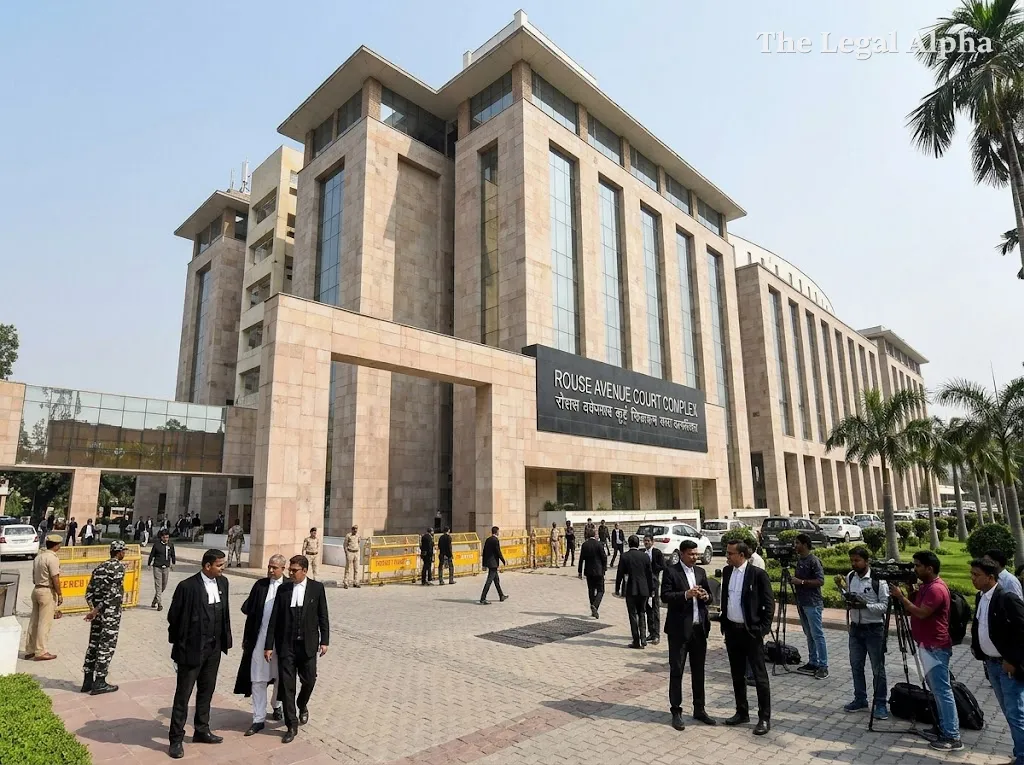
The Rouse Avenue Court in Delhi has initiated proceedings in a criminal defamation complaint filed by Delhi Cabinet Minister Manjinder Singh Sirsa against several senior leaders of the Aam Aadmi Party (AAP). Additional Chief Judicial Magistrate (ACJM) Vinod Joshi issued notices to AAP leader Saurabh Bharadwaj and MLAs Sanjeev Jha and Kuldeep Kumar.
The action follows allegations raised by the AAP leaders during a press conference accusing Sirsa of financial impropriety, including misappropriation of gurdwara donation funds—labelling him a "gullak chor" (donation box thief)—and claiming diversion of subsidised rice valued at thousands of crores. Sirsa approached the court asserting that these allegations were baseless and had severely harmed his and his family's reputation.
Legal Topic
Area of Law: Criminal Law / Defamation
Sub-topic: Pre-Cognisance Inquiry and Summons Procedure in Criminal Defamation
Core Legal Issue
The matter centres on whether public corruption accusations made during political press briefings cross the threshold into criminal defamation under Indian penal law, lacking factual verification or good faith protection.
Procedurally, the court had to evaluate whether the allegations and initial complainant statement justified calling upon the proposed accused at the pre-cognisance stage to hear their side before deciding whether to take formal cognisance and issue summons.
What Did the Court Decide?
ACJM Vinod Joshi of the Rouse Avenue Courts recorded the complainant’s statement and issued notices to the three named AAP leaders—Saurabh Bharadwaj, Sanjeev Jha, and Kuldeep Kumar.
The court granted the proposed accused an opportunity to file their responses to the criminal complaint prior to deciding on taking formal cognisance. The court has not yet ruled on the merits of the allegations, nor has it formally summoned the leaders as accused. The matter has been scheduled for further hearing on November 18.
Key Legal Points
-
Pre-Cognisance Opportunity: The magistrate issued a preliminary notice to afford the proposed respondents an opportunity to be heard before determining whether a prima facie case exists to issue process.
-
Distinction Between Process and Notice: The issuance of a notice at this stage does not amount to framing charges or issuing regular summons; it forms part of the judicial scrutiny of the complaint.
-
Reputational Injury vs. Political Discourse: The complaint tests the boundaries between acceptable political critique and penal liability when accusations invoke religious sensibilities or allege major public fraud without judicial findings.
-
Complainant's Deposition: The court proceeded after recording the complainant’s statement on oath, satisfying the initial procedural mandate under criminal procedure rules for private complaints.
Relevant Law
-
Sections 499 and 500 of the Indian Penal Code, 1860 (or corresponding provisions of the Bharatiya Nyaya Sanhita, 2023): Defines and prescribes punishment for defamation.
-
Section 200 and Section 202 of the Code of Criminal Procedure, 1973 (or corresponding provisions under the Bharatiya Nagarik Suraksha Sanhita, 2023): Governs the examination of the complainant upon taking cognizance and the postponement of process issuance to inquire into the complaint.
Arguments of the Parties
Complainant (Manjinder Singh Sirsa)
Counsel for the complainant argued that the AAP leaders orchestrated a coordinated campaign of defamatory statements during a widely broadcast press conference. Sirsa submitted that the term "gullak chor" carries acute religious gravity given the sanctity of the gurdwara donation box in Sikhism. He further contended that the unverified claims of a ₹22,000-crore subsidised rice diversion to private firms in Haryana were concocted solely to disparage him and damage his family's reputation across the globe.
Proposed Accused (AAP Leaders)
While formal responses are scheduled to be placed on record, the public position maintained by the leaders during the press briefing was that the allegations pertained to matters of public interest and the transparent handling of community funds and government welfare distribution schemes.
Why Does It Matter?
This case reinforces the procedural caution courts exercise when addressing criminal defamation disputes between political figures. By granting a pre-cognisance hearing, magistrates avoid mechanical issuance of summons, ensuring that criminal courts are not routinely leveraged as rapid-fire forums for electoral rhetoric. It also brings renewed attention to how courts treat specific defamatory epithets that intersect with religious institutions and charitable trust governance.
Legal Takeaway
A notice issued by a magistrate at the pre-cognisance stage does not represent an adverse finding or a formal criminal summons; it provides an early forum to assess whether defamatory intent and injury are genuinely substantiated. In political defamation claims, public figures remain exposed to penal action if corruption allegations lack a credible factual basis.
Sources
Primary Source:
-
Court of the Additional Chief Judicial Magistrate (ACJM), Rouse Avenue District Courts, New Delhi (Proceedings dated October 29).
Additional Sources:
-
ANI News Service reports
-
Bar and Bench legal reporting