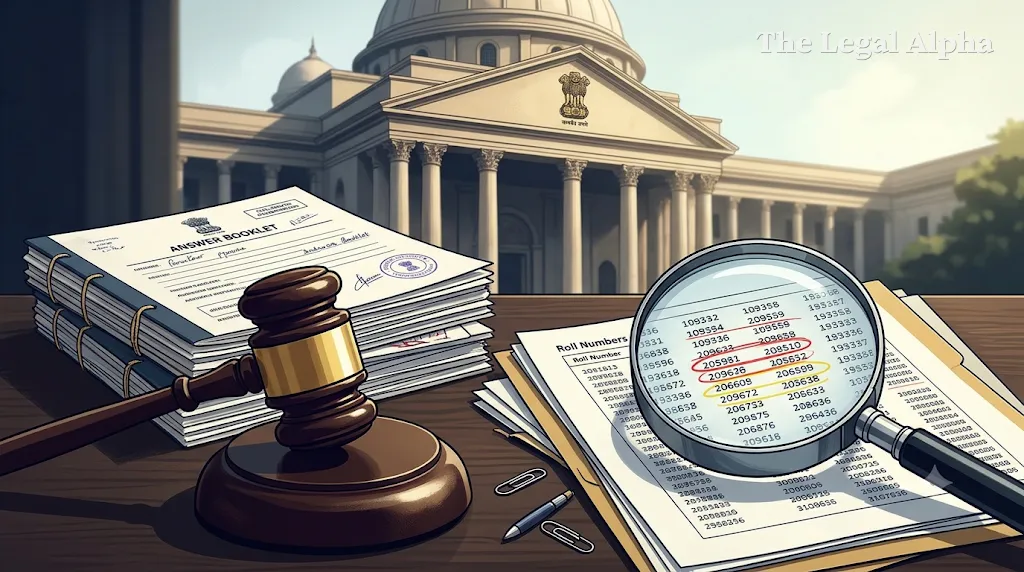
Special UAPA Court Acquits Two Kashmiri Youths After Six Years in Custody, Citing Glaring Contradictions in Police Recovery and Seizure Claims
A Special Court designated under the Unlawful Activities (Prevention) Act in Baramulla has acquitted two men from North Kashmir who spent over six years in prison awaiting trial.
The accused, Huzaif Firdous Bhat of Choora, Sopore, and Ajaz Ahmad Bhat of Kreeri, Baramulla, were arrested in September 2020. Police had alleged that a joint security team intercepted the pair during a vehicle checkpoint operation on the National Highway near Kanispora and seized hand grenades, live ammunition, and promotional literature belonging to a banned militant organisation.
After conducting a full trial, Special Judge Feroz Ahmad Khan ordered their acquittal, ruling that the prosecution's evidence was riddled with foundational contradictions, lacked independent corroboration, and failed to prove conscious possession of the alleged weapons.
Legal Topic
Area of Law: Criminal Law / Anti-Terrorism Jurisprudence
Sub-topic: Search and Seizure Discrepancies / Conscious Possession / Unlawful Activities (Prevention) Act
Core Legal Issue
The central legal question before the court was whether the prosecution had established the factum of search, seizure, and conscious possession beyond reasonable doubt in the absence of independent witnesses.
Specifically, the court examined whether substantial discrepancies among police witnesses regarding who conducted the search, the quantity of ammunition recovered, and the identity of the seized material were fatal to charges framed under the Unlawful Activities (Prevention) Act and the Arms Act.
What Did the Court Decide?
The Special Court acquitted both accused of all charges, concluding that the prosecution’s version of events suffered from material infirmities that rendered it unsafe to base a conviction upon.
The court observed that the foundational claims regarding the checkpoint interception and recovery collapsed under judicial scrutiny. Official witnesses contradicted one another on which officer carried out the search, while other key witnesses conceded during cross-examination that the alleged seizure did not occur in their presence.
Furthermore, the court highlighted that the Investigating Officer could not produce any evidence linking either youth to a known terrorist operative, banned outfit, or specific act of conspiracy. With the recovery itself declared doubtful, the court held that statutory offences alleging terror aid and illegal possession of arms could not stand.
Key Legal Points
-
Material contradictions going to the root of a case cannot be excused as minor memory lapses or effects of elapsed time, especially when they undermine the very occurrence and seizure.
-
Charges under Sections 18 and 23 of the UAPA require concrete proof of conscious possession and an established link to unlawful or terrorist activity; a failed seizure fundamentally dismantles the prosecution's case.
-
Failure to associate independent public witnesses during vehicle searches on a major highway, coupled with conflicting testimony from police personnel, weakens the credibility of recovery memos.
-
Presumptions under special criminal statutes cannot replace foundational proof, and the evidentiary threshold for the prosecution remains proof beyond reasonable doubt.
Relevant Law
-
Sections 18, 23, and 39 of the Unlawful Activities (Prevention) Act, 1967 (conspiracy, aiding terrorism, and extending support to a terrorist organisation)
-
Sections 7 and 25 of the Arms Act, 1959 (unauthorised possession and carrying of prohibited arms or ammunition)
-
Section 100(4) of the Code of Criminal Procedure, 1973 (requirement for independent and respectable witnesses during searches and seizures)
-
Indian Evidence Act, 1872 (now Bharatiya Sakshya Adhiniyam, 2023) regarding the appreciation of official witness depositions, burden of proof, and evidentiary contradictions
Arguments of the Parties
The Accused / Defence
Counsels appearing for the accused argued that the two men had been picked up from their respective residences during nighttime raids rather than intercepted at a highway checkpoint. The defence contended that the weapons and posters were planted, highlighting that not a single independent civilian witness was joined during the daytime operation on a busy highway. They further demonstrated through cross-examination that the prosecution witnesses gave conflicting statements on fundamental facts, including the search procedure, the exact ammunition counts, and the type of materials allegedly recovered.
The State / Prosecution
The Additional Public Prosecutor contended that security forces, including the Jammu & Kashmir Police, the Army's 52 Rashtriya Rifles, and the CRPF's 53rd Battalion, acted on operational intelligence while establishing the checkpoint. The State submitted that two grenades, live ammunition, and promotional pamphlets were recovered directly from the conscious control of the accused. The prosecution argued that minor differences in witness statements were natural outcomes of the passage of time and did not vitiate the integrity of the seizure.
Why Does It Matter?
This ruling underscores the necessity of strict procedural compliance in anti-terror prosecutions, where statutory bail restrictions often subject the accused to prolonged pre-trial incarceration.
The decision sends a clear message to investigating agencies that the severity of allegations under the UAPA does not lower the burden of proof required at trial. By refusing to overlook major contradictions in official testimony, the court reaffirmed that forensic integrity, credible seizure chains, and reliable witness evidence remain essential safeguards against arbitrary arrests and flawed prosecutions.
Legal Takeaway
An acquittal under special anti-terror enactments underscores that severe allegations cannot substitute for credible, uncompromised evidence. When recovery procedures lack independent verification and police testimony contradicts itself on the core facts of seizure, the foundation of the charge fails, entitling the accused to an outright acquittal.
Sources
Primary Source:
-
State v. Huzaif Firdous Bhat & Anr., Special Court (UAPA), Baramulla, Jammu & Kashmir (Judgment dated November 5, 2026, Presided by Special Judge Feroz Ahmad Khan).
Additional Sources:
-
High Court of Jammu & Kashmir and Ladakh trial court records and prosecution filings under FIR registered at Police Station Baramulla.
-
Media reporting on trial proceedings, The Indian Express (November 9, 2026).