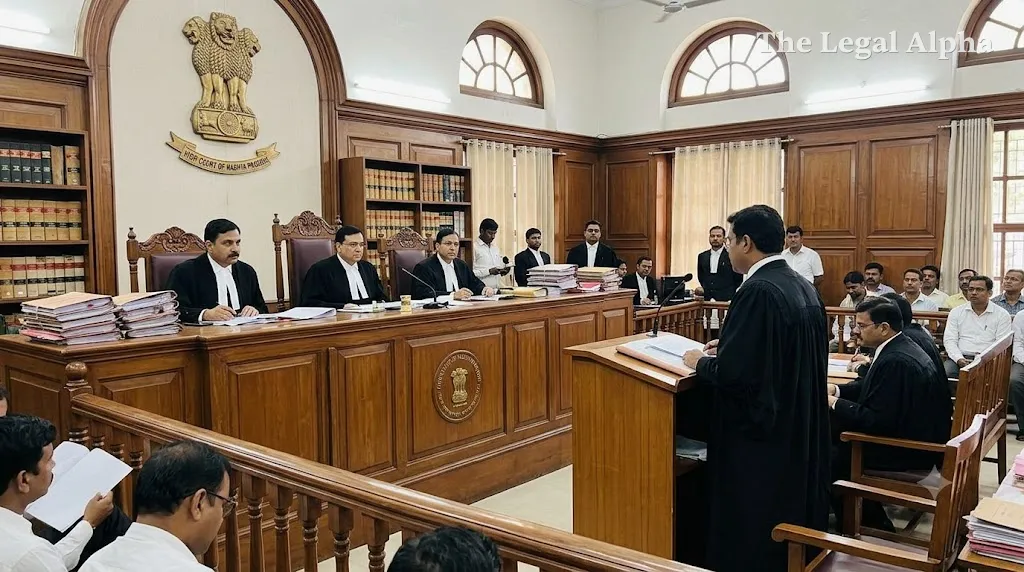
Special Court Directs Trial to Proceed Against Yasin Malik and Co-Accused Under PMLA in Hawala Terror-Financing Probe

A Special Court at Patiala House Courts in New Delhi has cleared the way for a full criminal trial by ordering the framing of charges under the Prevention of Money Laundering Act (PMLA) against jailed separatist leader Mohammad Yasin Malik, Baramulla Member of Parliament Sheikh Abdul Rashid (popularly known as Engineer Rashid), businessman Zahoor Ahmad Shah Watali, and four others.
The proceedings stem from a prosecution complaint lodged by the Enforcement Directorate (ED), tracking the alleged movement and absorption of illicit funds channeled through hawala networks and cross-border conduits from Pakistan. The decision formally concludes the pre-trial discharge stage, transitioning the long-running probe into the trial phase.
Legal Topic
Area of Law: Criminal Law / Economic Offences & Anti-Money Laundering
Sub-topic: Framing of Charges / Prevention of Money Laundering Act (PMLA) / Terrorist Financing via Hawala Networks
Core Legal Issue
The primary legal question before the Special Court was whether the prosecution had placed on record sufficient prima facie evidence to give rise to a "strong suspicion" that the accused were knowingly involved in any process or activity connected with the "proceeds of crime" under Section 3 of the PMLA.
Rather than adjudicating the ultimate question of criminal guilt, the court had to evaluate whether financial transactions—allegedly running through foreign entities, cash couriers, and front businesses—could be legally mapped to the predicate offences registered under the Indian Penal Code and the Unlawful Activities (Prevention) Act (UAPA).
What Did the Court Decide?
The Special Court ruled that sufficient grounds exist to frame charges against all accused individuals and associated corporate entities under Sections 3 and 4 of the PMLA.
Key aspects of the order include:
-
Dismissal of Pre-Trial Discharge: The court rejected the defence’s push for discharge, holding that the investigative record establishes a prima facie nexus between the accused and the alleged financial network.
-
Distinction of Status: The court noted that these findings represent only a preliminary evaluation for the purpose of framing charges and do not constitute a final pronouncement of guilt.
-
Next Procedural Steps: The matter has been scheduled for formal framing and reading of charges, followed by the recording of prosecution evidence and witness examination.
Key Legal Points
-
Threshold at Charge Framing: At the stage of framing charges under the Code of Criminal Procedure / PMLA, the court is not required to establish guilt beyond a reasonable doubt; the presence of a "strong suspicion" founded on objective record material suffices.
-
Corporate Entity Culpability: Framing charges against corporate entities (such as M/s Trison Farms and Constructions Pvt. Ltd.) alongside individual accused underscores that corporate legal vehicles allegedly used to camouflage tainted funds can be held directly liable as co-accused under PMLA.
-
Independence of Predicate and Laundering Trials: While money laundering requires an underlying scheduled offence to generate "proceeds of crime," PMLA proceedings operate as an independent trial regarding the laundering, possession, transfer, or integration of those funds.
-
Hawala and Informal Value Transfer Systems: The court recognized that informal, undocumented capital flows can legally form the basis of a money-laundering charge when tied to proceeds emerging from unlawful and subversive activities.
Relevant Law
-
Prevention of Money Laundering Act, 2002 (PMLA): Section 3 (Offence of money laundering) and Section 4 (Punishment for money laundering).
-
Unlawful Activities (Prevention) Act, 1967 (UAPA): Sections 13, 16, 17, 18, 20, 38, 39, and 40 (predicate offences concerning terror acts, fund-raising, and unlawful associations).
-
Code of Criminal Procedure, 1973 (CrPC): Provisions governing the consideration of police reports/complaints and the judicial threshold for discharge versus framing of charges.
Arguments of the Parties
Enforcement Directorate (Prosecution)
The Enforcement Directorate submitted that the accused formed part of a coordinated network designed to funnel over ₹8.9 crore in illicit capital into Jammu and Kashmir. The agency argued that funds were routed through Pakistani establishments, hawala intermediaries, and local entities to sustain unlawful and subversive activities, thereby constituting identifiable proceeds of crime under the PMLA.
Defence (Accused Persons & Entities)
Counsel representing the accused contended that the prosecution's allegations relied on conjecture and circumstantial assertions that failed to satisfy the legal test for money laundering. They argued that legitimate business dealings, local property transactions, and commercial operations were being conflated with proceeds of crime, maintaining that no demonstrable connection existed between their regular economic activity and scheduled offences.
Why Does It Matter?
This order demonstrates the operational autonomy of PMLA proceedings from earlier NIA trials. Even where individuals are already convicted or serving sentences in underlying predicate cases, the state continues to enforce separate statutory accountability for the financial infrastructure that allegedly facilitated those actions.
Furthermore, the decision highlights that commercial entities and high-profile political figures are subjected to the uniform evidentiary threshold of "strong suspicion" at the charge-framing stage, reaffirming judicial scrutiny over complex informal value transfer systems (hawala) within the framework of economic offences.
Legal Takeaway
At the stage of framing charges under the PMLA, the court only looks for a strong, prima facie suspicion connecting the accused to the handling or laundering of proceeds from scheduled crimes, not conclusive proof. Legitimate commercial appearances will not avert a full trial if the prosecution shows a viable paper or transaction trail linking those finances to unlawful activities.
Sources
Primary Source:
-
Order on Charge in Enforcement Directorate v. Zahoor Ahmad Shah Watali & Others, Court of the Special Judge (NIA / PMLA), Patiala House Courts, New Delhi.
Additional Sources:
-
Enforcement Directorate Prosecution Complaint records and related proceedings arising from the 2017 NIA terror-funding investigation.
-
The Prevention of Money Laundering Act, 2002.