Fresh Scrutiny Ordered as High Court Quashes Procedural Irregularity in Public Employment Claim
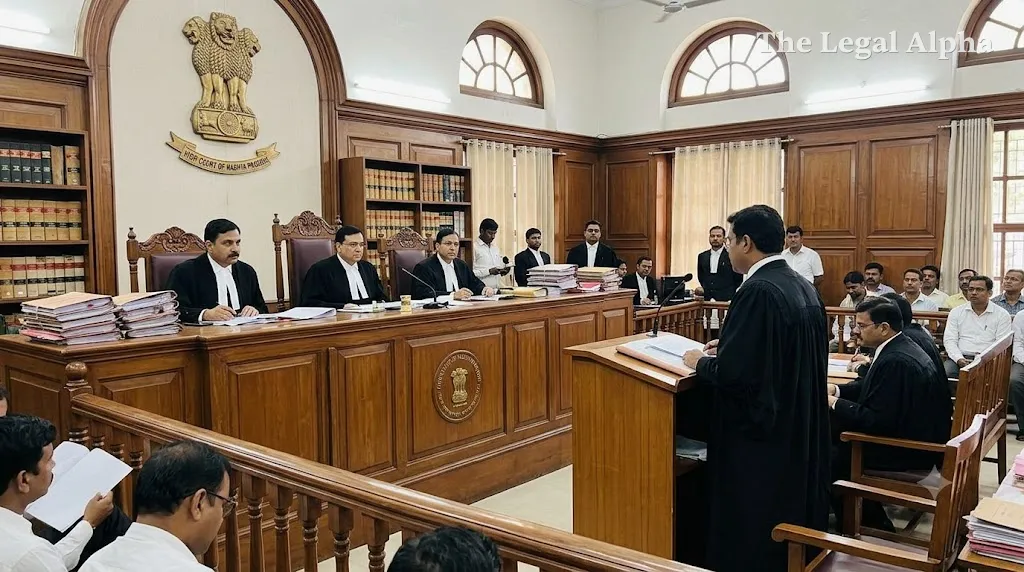
The Madhya Pradesh High Court at Jabalpur has intervened in a dispute concerning public service qualifications and procedural fairness, ruling that statutory authorities and government departments cannot act arbitrarily or bypass domain findings when assessing an employee's service claims. The High Court emphasized that administrative decisions affecting employment must adhere strictly to fair procedure and objective consideration of qualifications rather than mechanical rejection.
Legal Topic
Area of Law: Service Law / Constitutional Law
Sub-topic: Contractual & Public Employment / Arbitrary Termination / Judicial Review of Administrative Action
Core Legal Issue
The primary controversy before the High Court centered on whether public authorities can disregard domain recommendations and candidate qualifications to terminate services or deny entitlement under the garb of contractual flexibility, without affording adequate opportunity or demonstrating non-arbitrariness.
The Court was called upon to determine whether the State's administrative mechanism violated Article 14 of the Constitution by failing to accord a reasoned and non-discriminatory consideration to an employee who substantively possessed the requisite domain background for the role.
What Did the Court Decide?
The High Court held that the action taken against the petitioner could not be sustained due to substantial procedural lapses and an arbitrary failure to appreciate relevant materials.
The Court ruled that even in public appointments executed under contractual or temporary terms, the State cannot discard its constitutional mandate of fairness, reasonableness, and natural justice. Finding the rejection orders to have been passed mechanically without providing a meaningful hearing, the Court remitted the matter back to the competent authorities with directions to reconsider the petitioner's claim within a time-bound period and grant consequential relief if found eligible upon objective assessment.
Key Legal Points
-
Constitutional Standards Apply to State Contracts: When the State or an instrumentality acts in a contractual capacity, it does not shed its constitutional obligation of non-arbitrariness and fairness under Article 14 of the Constitution of India.
-
Obligation to Consider Expert Appraisals: When competent domain authorities or internal scrutiny committees affirm that an employee’s coursework and academic records substantively satisfy the job specifications, executive bodies cannot overlook those findings without cogent, recorded reasons.
-
Prohibition Against Discrimination: Where other individuals with comparable academic credentials continue in employment, singling out one employee on a hyper-technical basis violates equality before the law and cannot be justified by mere executive prerogative.
-
Breach of Natural Justice Vitiates Orders: Passing an adverse order impacting tenure or livelihoods without granting an effective personal hearing or a right to place explanatory documents on record invalidates the resulting administrative action.
Relevant Law
-
Constitution of India: Article 14 (Equality before law and protection against arbitrary state action) and Article 226 (Power of High Courts to issue prerogative writs).
-
Principles of Administrative Law: Doctrine of non-arbitrariness, duty to give reasons, and principles of natural justice (audi alteram partem).
Arguments of the Parties
Petitioner
The petitioner submitted that all prescribed qualifications were fully satisfied in substance, supported by the curriculum and mark-sheets on record. It was further contended that the adverse administrative orders were passed behind the petitioner's back in violation of natural justice, and that the authorities had arbitrarily discriminated by retaining other similarly placed personnel while terminating the petitioner's services.
Respondents
The respondents contended that the prescribed qualification in the advertisement was clear and that the petitioner did not strictly meet the specific nomenclature required by the recruitment norms. The State also argued that temporary or contractual tenure does not confer an indefeasible right to continuation, and judicial review cannot be used to sit in appeal over the employer's prerogative in public appointments.
Why Does It Matter?
This decision reinforces the protective shield of judicial review in public employment disputes across Madhya Pradesh and other jurisdictions. By refusing to let authorities take refuge behind narrow contract clauses or cosmetic procedural hearings, the High Court signals that public employers must act with transparency, intellectual honesty, and procedural decency. For thousands of employees serving under government missions and public sector contracts, the ruling affirms that the State cannot act capriciously or create arbitrary distinctions among similarly qualified personnel.
Legal Takeaway
Contractual employment with the State does not grant authorities absolute immunity from constitutional checks. Whenever public bodies make determinations on qualification or termination, they must follow fair procedure, respect expert domain findings, and adhere strictly to the non-arbitrariness mandate of Article 14.
Sources
Primary Source:
-
High Court of Madhya Pradesh at Jabalpur, Writ Petition / Service Law Jurisdiction.
Additional Sources:
-
The Constitution of India (Articles 14 & 226).
-
Authoritative service jurisprudence on non-arbitrariness in public contracts and natural justice.