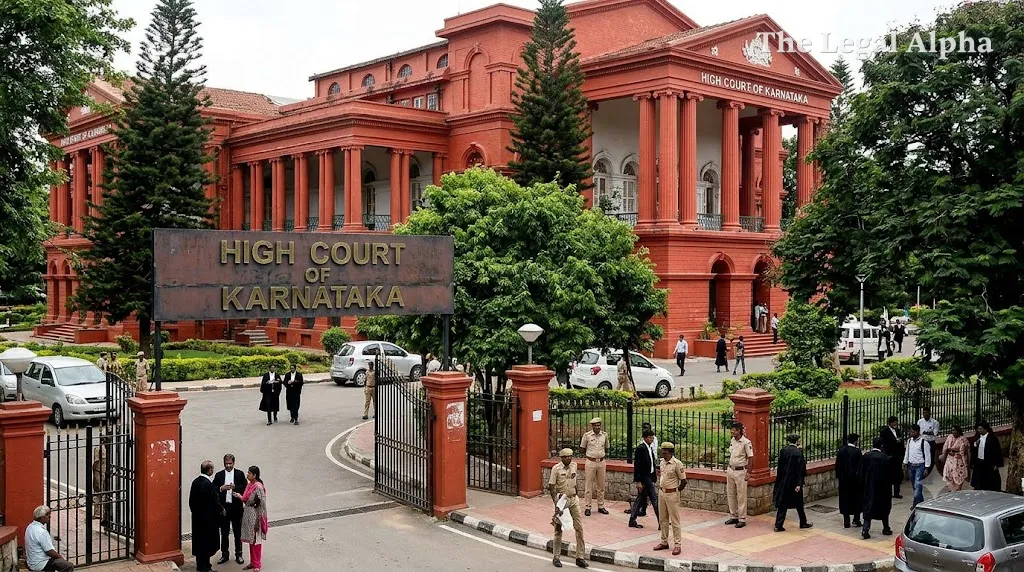
Delhi High Court Quashes Multi-Crore Tax Assessment Against Low-Income Worker After Finding Rampant Identity Theft and Lack of Independent Probe

The Delhi High Court set aside an income tax reassessment order and demand of nearly ₹4 crore levied against a contractual worker whose Permanent Account Number (PAN) had been fraudulently misused to report over ₹24 crore in high-value commercial transactions.
The petitioner, Lalit, earned modest wages well below the taxable threshold working as a contractual cook and security guard at state-run venues in Delhi. He discovered that a packaging firm had credited massive cash sales against his PAN, reflecting in his Form 26AS. Despite the petitioner lodging formal complaints with the Delhi Police Cyber Cell and alerting the tax department about the identity theft, the Assessing Officer proceeded with the assessment and raised the massive tax demand. A Division Bench comprising Justice Dinesh Mehta and Justice Aditi Choudhary intervened, holding that tax authorities cannot mechanically confirm additions solely based on third-party portal data while ignoring clear assertions of identity fraud.
Legal Topic
Area of Law: Taxation Law
Sub-topic: Income Tax Reassessment / Natural Justice & PAN Identity Theft
Core Legal Issue
The dispute centered on whether an Assessing Officer can complete an assessment and raise tax demands based solely on automated third-party transaction data in Form 26AS without conducting independent inquiries or verifying the nexus between the taxpayer and the underlying commercial entities, especially when the assessee provides credible claims and police complaints of identity theft.
What Did the Court Decide?
The Division Bench allowed the writ petition and quashed the assessment order, consequential demand notices, and penalty proceedings issued against the petitioner.
The High Court ruled that the assessing authority committed a grave breach of the principles of natural justice by refusing to examine the petitioner's bank records, ignoring his criminal complaints regarding identity theft, and failing to serve notice or record statements from the entity reporting the transactions. The Bench observed that requiring a daily wage worker of extremely modest means to pursue protracted statutory appeals or pre-deposit requirements was an ineffective remedy when fundamental fairness was disregarded. The Court clarified that the Revenue retains liberty to initiate fresh proceedings only if independent, cogent evidence directly connects the petitioner to taxable transactions within the prescribed period of limitation.
Key Legal Points
-
Form 26AS data is merely informational and cannot substitute for substantive evidence when a taxpayer disputes the validity of the reported transactions.
-
The assessing officer has an affirmative duty under Section 133(6) of the Income-tax Act to summon records and examine counterparties when identity theft or bogus billing is alleged.
-
Mechanical additions without independent corroboration violate Article 14 of the Constitution by treating genuine low-wage taxpayers arbitrarily.
-
Double-counting gross and net figures of identical transactions demonstrates non-application of mind, rendering the assessment perverse.
-
The High Court may exercise extraordinary writ jurisdiction under Article 226 of the Constitution, bypassing statutory appellate remedies, where natural justice is violated and pre-deposit conditions would cause severe hardship to an indigent citizen.
Relevant Law
-
Income-tax Act, 1961: Section 144, Section 147, Section 148 (reassessment), Section 133(6) (power to call for information), and Section 246A (statutory appeal).
-
Constitution of India: Article 226 (writ jurisdiction) and Article 14 (equality and non-arbitrariness).
Arguments of the Parties
Petitioner
The petitioner argued that he was an employee earning below taxable thresholds who had fallen victim to identity fraud and misuse of his PAN credentials. He submitted that he maintained no business relations with the packaging company, had immediately registered formal criminal complaints with the police upon discovering the entries, and was denied copies of the underlying transaction slips or an opportunity to cross-examine the counterparty.
Respondent
The Revenue submitted that the petitioner failed to satisfy the department with audited accounts reconciling the extensive turnover reflected on the national tax portal and Form 26AS. The department maintained that the assessing officer acted strictly within jurisdiction on the basis of credible systemic information indicating escaped income, and argued that the petitioner ought to have filed a regular statutory appeal before the Commissioner of Income Tax (Appeals).
Why Does It Matter?
This ruling addresses the increasing vulnerability of low-income workers and unorganized laborers whose PAN and Aadhaar credentials are appropriated by unscrupulous operators for fictitious billing and tax evasion. By establishing that tax authorities cannot treat Form 26AS as unimpeachable proof of liability, the High Court curtails the administrative practice of passing automated, unverified reassessment orders.
The judgment also reinforces that High Courts will readily dispense with the rule of exhaustion of alternative statutory remedies when an unrepresented or low-income individual faces coercive, ruinous demands arising from institutional inaction and blatant disregard of natural justice.
Legal Takeaway
Tax authorities cannot rely purely on automated Form 26AS entries to fasten tax liability on an individual who alleges identity misuse. Where a taxpayer provides reasonable explanations supported by criminal complaints, the assessing officer must conduct an independent inquiry under the law before confirming any additions.
Sources
Primary Source:
-
Judgment of the Delhi High Court in Lalit v. Union of India & Ors. [W.P.(C) 9365/2025, decided October 6, 2026, Bench of Justice Dinesh Mehta and Justice Aditi Choudhary].
Additional Sources:
-
High Court Cause Lists and Case Status Information System, High Court of Delhi.
-
Income-tax Act, 1961 statutory provisions governing reassessment and third-party inquiries.