Retaliatory Killing After Bawana Shooting Raises Questions of Private Defence and Grave Provocation Under BNS
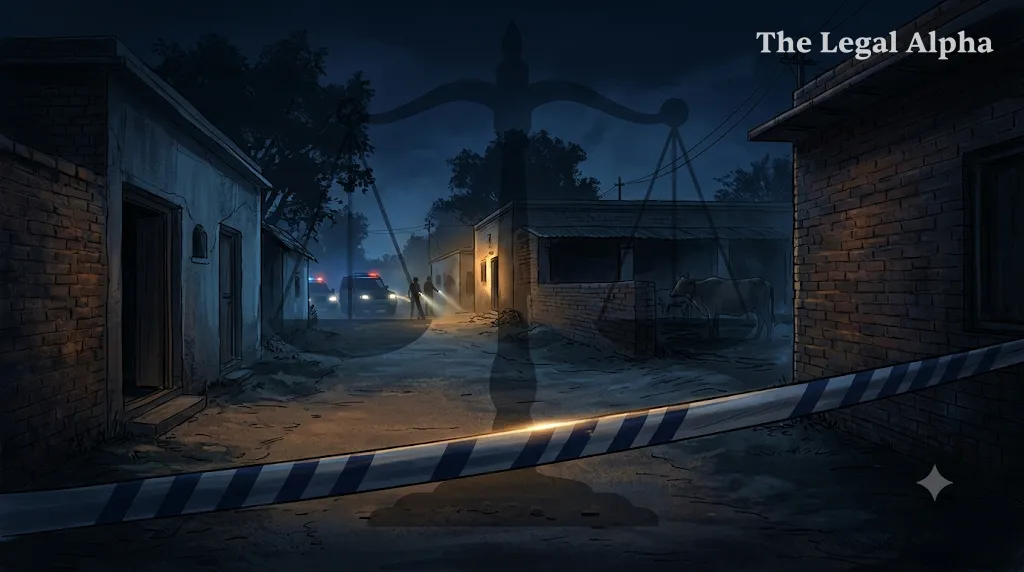
A midnight altercation in Delhi’s Bawana area escalated into a fatal double homicide, leading to the apprehension of a local resident by the Delhi Police. Around midnight on November 15, 2026, officials at the Bawana Police Station received information regarding a shooting incident. Upon reaching Maharshi Valmiki (MV) Hospital, officers found 27-year-old Sachin, a resident of Pooth Khurd village, declared dead from a gunshot wound to the chest.
An inspection of the primary crime scene—a cowshed owned by Sachin’s family—yielded bloodstains and three empty cartridge cases. While combing the surrounding area, investigators discovered a second body roughly 100 metres away in an adjoining lane. The second deceased was identified as Sonu alias Pradeep, who also resided in Pooth Khurd. Based on preliminary scrutiny of CCTV footage and statements from local residents, police allege that Sonu shot Sachin dead following an argument, after which Sachin’s brother, Naresh, caught hold of Sonu and killed him. Delhi Police have apprehended Naresh and are investigating the underlying motive behind the initial dispute.
Legal Topic
Area of Law: Criminal Law
Sub-topic: Culpable Homicide, Murder, Right of Private Defence, and Grave and Sudden Provocation under the Bharatiya Nyaya Sanhita, 2023
Core Legal Issue
When a person kills an assailant immediately after witnessing the fatal shooting of a close relative, does the act constitute murder, or can the accused claim legal protection under the right of private defence or seek mitigation under the exception of grave and sudden provocation?
Investigators and, subsequently, the trial court will have to examine the precise sequence and timing of events captured on CCTV and established through forensic evidence. Specifically, the legal inquiry centers on whether the threat to life had already ended when Naresh pursued and killed Sonu roughly 100 metres from the initial scene, or whether the killing occurred in the heat of passion without premeditation.
What Did the Court / Authority Decide?
No court has ruled on the matter yet, as the case is at the initial stage of police investigation.
-
Police Action: Bawana Police Station has initiated criminal proceedings, recovered physical evidence including three empty cartridges from the scene, and apprehended the surviving suspect, Naresh.
-
Pending Proceedings: Law enforcement officials are currently examining CCTV footage, awaiting post-mortem and ballistic reports, and questioning witnesses to establish the exact motive and sequence of events before filing a formal chargesheet before the jurisdictional Magistrate.
Key Legal Points
-
Cessation of the Right of Private Defence: Under Indian criminal law, the right to defend one’s own body or the body of another person extends only as long as a reasonable apprehension of danger to the body continues. Once an assailant retreats or the immediate threat ceases, pursuing and killing the attacker transitions from self-defence into unlawful retaliation.
-
Grave and Sudden Provocation: Witnessing the sudden, fatal shooting of a brother can legally constitute "grave and sudden provocation." If established, this exception reduces the offence from murder to culpable homicide not amounting to murder, provided the accused acted while deprived of the power of self-control and before there was time for passion to cool.
-
Distance and Time as Evidentiary Factors: The discovery of the second body approximately 100 metres away in an adjacent lane will be a critical factor in determining whether the fatal blow was part of a continuous, spontaneous reaction or an act of deliberate vengeance.
-
Abatement of Criminal Liability: Because the alleged initial shooter, Sonu, is deceased, any criminal prosecution against him for the murder of Sachin abates upon verification of his death, leaving Naresh as the sole surviving accused facing trial for the second homicide.
Relevant Law
-
Bharatiya Nyaya Sanhita, 2023 (BNS), Section 100 & Section 101: Defines culpable homicide and murder, along with the statutory exceptions to murder—specifically Exception 1, which applies when an offender is deprived of the power of self-control by grave and sudden provocation.
-
Bharatiya Nyaya Sanhita, 2023 (BNS), Section 103: Prescribes the punishment for murder.
-
Bharatiya Nyaya Sanhita, 2023 (BNS), Section 105: Prescribes the punishment for culpable homicide not amounting to murder.
-
Bharatiya Nyaya Sanhita, 2023 (BNS), Sections 34 to 44: Governs the right of private defence of the body, including Section 38 (when the right extends to causing death) and Section 40 (commencement and continuance of the right of private defence of the body).
-
Arms Act, 1959: Relevant to the unlawful possession and use of the firearm recovered or linked to the three empty cartridges found at the scene.
Arguments of the Parties
Because the matter is currently under police investigation and has not yet reached trial, formal legal pleadings have not been filed. However, based on the preliminary police statement, the emerging positions are as follows:
-
Investigating Agency / Prosecution: According to the Delhi Police’s preliminary findings based on CCTV footage and local inquiries, Sonu allegedly shot Sachin following a quarrel, and Naresh subsequently caught hold of Sonu and killed him in a retaliatory attack.
-
Defence Position: Naresh has been apprehended for questioning, and no formal defence statement has been placed on public record. Any future defence strategy will depend on whether forensic and video evidence supports a plea of sudden provocation or ongoing threat.
Why Does It Matter?
Cases involving immediate retaliatory violence test the fine boundary in criminal jurisprudence between excusable human reaction and unlawful vigilantism. While the law recognizes that extreme emotional shock—such as seeing a family member fatally shot—can impair rational self-control, it strictly prohibits private individuals from acting as judge and executioner once an immediate danger has passed. How investigators reconstruct the gap between the shooting at the cowshed and the killing 100 metres away will determine whether the case is prosecuted as a straightforward murder or contested under statutory exceptions that carry significantly lower sentencing thresholds.
Legal Takeaway
Under the Bharatiya Nyaya Sanhita, killing an attacker after the immediate danger has ended is not protected as private defence, even if the attacker just committed a fatal crime. However, if evidence proves the act was an immediate, uncontrolled reaction to the shock of witnessing a brother’s murder, the law may treat the offence as culpable homicide rather than murder.
Sources
Primary Source
Official statement issued by the Delhi Police (Bawana Police Station) on November 15, 2026, regarding the double homicide at Village Pooth Khurd.
Additional Sources
-
The Times of India, "Delhi double murder: Man shoots 27-year-old dead after quarrel, is then killed by victim's brother" (November 15, 2026).
-
Asian News International (ANI), "Delhi Double Murder: Man kills 27-yr-old, gets killed by victim's brother in Bawana" (November 15, 2026).