Religious Freedom Subject to Public Order and Civic Frameworks: Bombay High Court Denies Urgent Nod for Chhath Puja at Girgaon Chowpatty
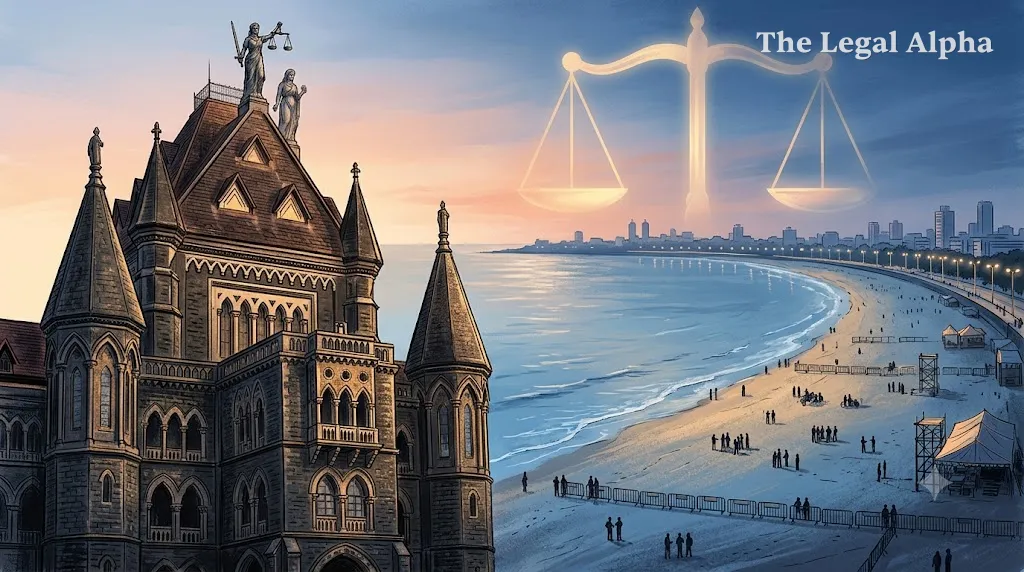
The Bombay High Court declined to grant urgent interim permission to an organiser seeking to host Chhath Puja festivities at south Mumbai's Girgaon Chowpatty. A vacation bench took up the matter after the senior inspector of the local D.B. Marg police station raised objections against erecting temporary structures and platforms on the beach for the festival. The judges noted that the organisers had failed to engage or obtain sanction from the High Court–appointed monitoring committee, which oversees events and public usage on the shoreline under a binding 2018 judicial order. Consequently, the bench refused to intervene on an emergency basis or issue directions assigning an alternative venue.
Legal Topic
-
Area of Law: Constitutional Law / Administrative & Municipal Law
-
Sub-topic: Religious Freedom Restrictions (Article 25) / Public Space Regulation & Civic Compliance
Core Legal Issue
The matter required the court to decide whether the fundamental right to practice and celebrate religious rituals under Article 25 of the Constitution permits an organisation to erect temporary event infrastructure on a heavily regulated public beach without first complying with court-mandated administrative oversight frameworks.
At its core, the bench evaluated whether judicial discretion under extraordinary writ jurisdiction can be exercised to override established procedural safeguards, crowd safety protocols, and the role of specialized monitoring committees created to protect urban public spaces.
What Did the Court / Authority Decide?
-
Urgent Relief Refused: The vacation bench declined to grant ad-interim relief permitting celebrations and stage setups at Girgaon Chowpatty for the festival dates.
-
Failure to Satisfy Checks: The court observed that the petitioner was unable to demonstrate compliance with the 2018 High Court directive governing events on the beach, nor had it impleaded the mandatory court-appointed monitoring committee.
-
Alternative Venue Request Declined: The bench turned down the petitioner's plea to judicially direct authorities to allocate an alternative site, stating that the organisers remain at liberty to pursue appropriate legal remedies before administrative authorities.
-
Next Steps: The petition was directed to be listed before the regular bench upon the reopening of the High Court.
Key Legal Points
-
Constitutional Balance: The right to profess, practice, and propagate religion guaranteed under Article 25 is not absolute; it is expressly circumscribed by public order, morality, and health.
-
Integrity of Precedents: Judicial guidelines regulating environmentally sensitive and high-density civic areas—such as the 2018 division bench directions for Girgaon Chowpatty—cannot be circumvented for short-notice festival arrangements.
-
Role of Monitoring Committees: Where high courts establish specialized oversight panels to regulate public coastal spaces, event organisers cannot bypass scrutiny or exclude the committee from subsequent legal proceedings.
-
Limits of Vacation Jurisdiction: Emergency vacation benches will generally decline to exercise discretionary powers to grant ad-hoc exemptions when foundational statutory and procedural clearances are absent.
Relevant Law
-
Article 25(1) of the Constitution of India: Confers the freedom of conscience and the right freely to profess, practice, and propagate religion, subject expressly to public order, morality, and health.
-
High Court Precedent (2018 Order in Adarsh Chowpatty Pragati Mandal Matter): Lays down the regulatory framework restricting and capping permissible public events to a demarcated 4,180-square-metre patch on Girgaon Chowpatty and mandates the involvement of a court-appointed monitoring committee.
Arguments of the Parties
Petitioner Counsel for the organiser submitted that the association had approached civic and executive authorities well in advance to seek permission to perform traditional Chhath Puja rituals at Girgaon Chowpatty. The petitioner argued that a formal representation dated October 7 had been lodged with the Chief Minister's office and remained pending without a timely decision. Seeking urgent intervention, counsel stressed the devotional significance of the festival and urged the court either to grant conditional access or to direct the municipal authorities to provide a viable alternative venue in Mumbai.
Respondent / State The State submitted that event clearances on Girgaon Chowpatty are strictly bound by the High Court's 2018 directions, which established a specialized monitoring panel to prevent congestion and enforce shoreline safety. The State highlighted that the local police had formally opposed the proposed construction of stages and temporary holding areas spanning extended daytime and overnight hours due to crowd-control and public safety hazards. Furthermore, the State argued that the petitioner had neither obtained prior approval from the court-mandated monitoring committee nor made the committee a party to the writ proceedings, rendering the petition procedurally non-compliant.
Why Does It Matter?
The decision serves as an important clarification on the practical intersection between constitutional religious rights and civic management in India’s densest metropolitan hubs. It reiterates that urban waterfronts, beaches, and promenades cannot be allocated for large gatherings purely through executive representations or last-minute judicial pleas.
By demanding adherence to the 2018 monitoring guidelines, the court sent an unmistakable message to cultural and religious organisations: administrative checks, early venue audits, and court-mandated civic committee clearances are mandatory prerequisites, not optional paperwork. For municipal administrators and law enforcement, the ruling reinforces their duty to prioritize public order, crowd dynamics, and environmental zoning rules even during major cultural festivities.
Legal Takeaway
Religious practice under Article 25 remains subject to constitutional restrictions of public order and health, meaning faith-based events must strictly adhere to local civic safety frameworks. Organisers intending to host mass gatherings in public spaces cannot bypass court-mandated regulatory committees or rely on eleventh-hour emergency pleas to circumvent statutory clearances.
Sources
-
Primary Source: Order of the Vacation Bench of the High Court of Judicature at Bombay, in the writ petition filed by Mithila Chhath Puja Sangh (heard alongside the regulatory framework laid down in the Adarsh Chowpatty Pragati Mandal matter, 2018).
-
Additional Sources: Filings and notices issued by D.B. Marg Police Station (September 2026); administrative representations submitted to the Government of Maharashtra.