Real-Time Legal Reporting Evolves as LiveLaw Rolls Out Dedicated Breaking News Alerts System
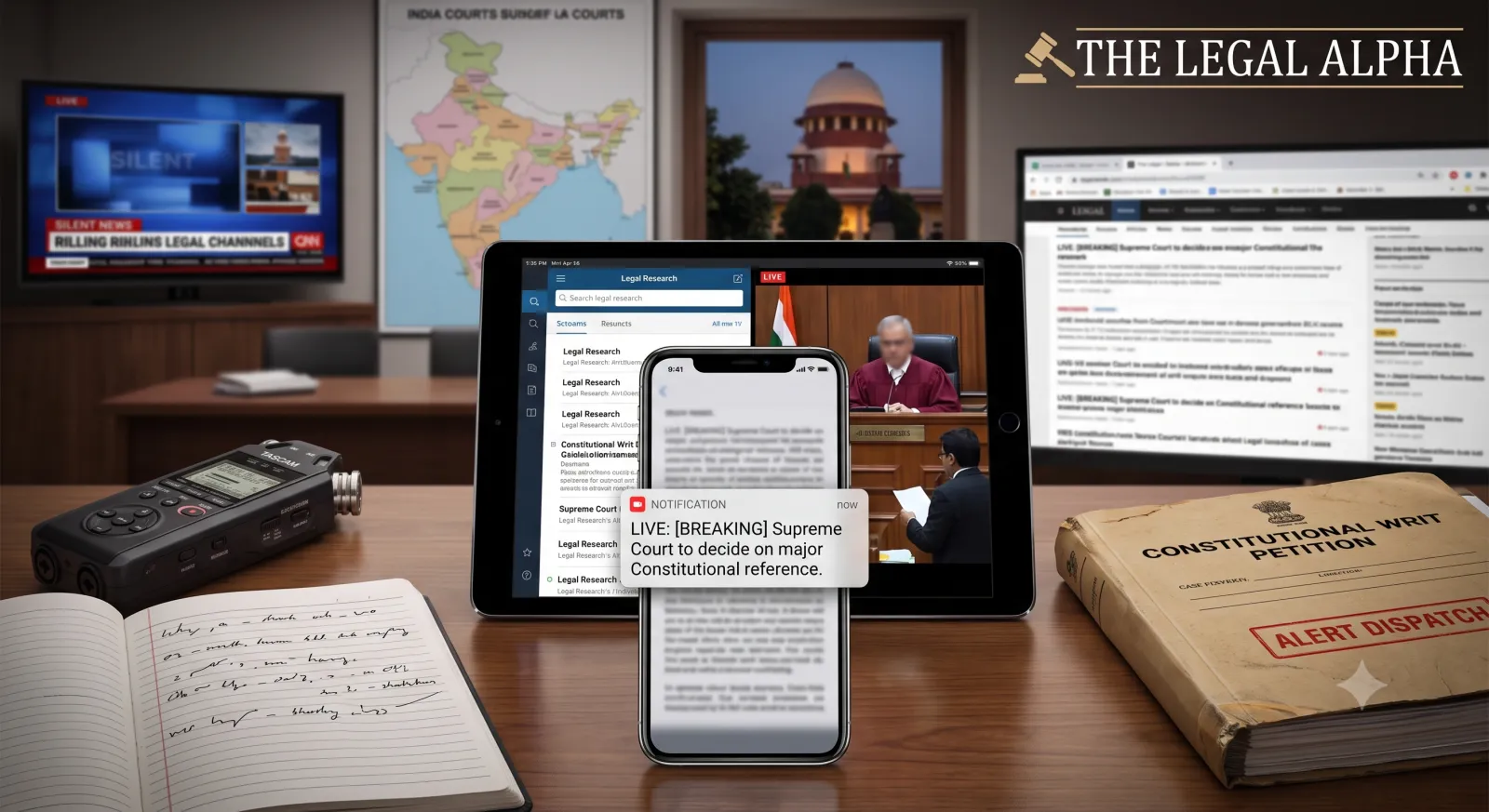
Legal journalism platform LiveLaw has introduced a new dedicated feature titled "Breaking News Alerts" to deliver instant updates on significant judicial proceedings across India. The initiative is built to provide rapid, real-time dispatches on urgent rulings, interim orders, and major pronouncements emerging directly from the Supreme Court of India and various High Courts. Operating directly through the portal's interface, the service aims to bridge the time lag between bench pronouncements and comprehensive legal reporting for practitioners, researchers, and court watchers.
Legal Topic
Area of Law: Media and Information Technology Law
Sub-topic: Open Justice / Court Reporting and Digital Media Dissemination
Core Legal Issue
The primary development concerns the practical execution of the "open justice" principle in the digital era. As appellate courts increasingly handle matters of urgent public interest, the operational question is how digital legal publishers can balance instant, authoritative coverage of oral bench observations and fast-moving interim orders without compromising legal precision or generating misleading reporting before formal orders are signed.
What Did the Court / Authority Decide?
This development is an institutional media launch rather than a judicial decision. LiveLaw announced that the alerts will feature concise, verified operational updates on urgent listings, key bench directions, and substantive disposals. The feature is now active on the platform, focusing on high-velocity reporting from constitutional benches and appellate registries across the country.
Key Legal Points
-
Expedited Dissemination: Enhances the accessibility of oral rulings and bench remarks in real time, reflecting the wider push toward transparency in judicial proceedings.
-
Distinction in Stages of Orders: Distinguishes rapid, flash updates from comprehensive analytical reportage, giving readers immediate clarity while formal judgments remain under drafting.
-
Coverage of Constitutional Courts: Prioritises critical interim protections and jurisdictional orders from the Supreme Court and High Courts where immediate enforcement or compliance is at stake.
Relevant Law
-
Article 19(1)(a) of the Constitution of India: Freedom of speech and expression, encompassing the public right to know and the press's right to report on judicial proceedings.
-
Swapnil Tripathi v. Supreme Court of India (2018): Landmark precedent affirming the open-court principle and the importance of technology in facilitating public access to courtrooms.
Arguments of the Parties
-
Media & Information Disseminators: Advocates of real-time digital court updates point out that timely reporting prevents misinformation, provides immediate market and regulatory clarity, and keeps litigants and lawyers informed before certified copies are uploaded.
-
Judicial & Regulatory Concerns: Courts have periodically cautioned that real-time reportage must strictly reflect the official record, noting that uncontextualised live snippets can occasionally lead to premature interpretation before a signed bench order is formally released.
Why Does It Matter?
In an increasingly fast-moving legal ecosystem, an order passed at 10:30 AM can alter corporate compliance, personal liberty, or regulatory mandates within minutes. Dedicated alert channels enable advocates, in-house counsel, and regulatory compliance teams to react without having to wait for end-of-day digest summaries. For the public, it reinforces judicial transparency by lowering the barriers between bench rooms and public observation.
Legal Takeaway
Rapid courtroom reporting strengthens the open justice framework by making judicial developments immediately accessible. However, practitioners and observers must consistently cross-reference breaking digital alerts with the final signed orders of the court once uploaded to the official registry.
Sources
-
Primary Source: Official Platform Product Announcement, LiveLaw Breaking News Alerts (Published October 5, 2026).
-
Additional Sources: Supreme Court of India jurisprudence on courtroom transparency and the open justice doctrine (Swapnil Tripathi, 2018).