Manipur High Court Pauses Census Operations Till April 2027, Directs Centre to Decide on NRC Demands
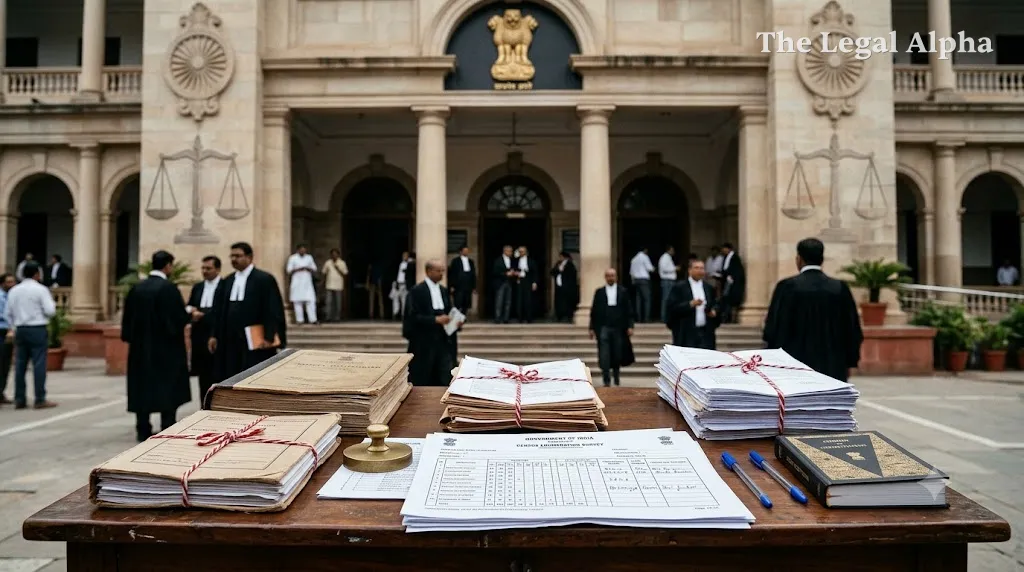
The High Court of Manipur has directed Union authorities to hold all house-listing operations for the upcoming Census in abeyance across the state until April 30, 2027. A Division Bench comprising Chief Justice M. Sundar and Justice Aribam Guneshwar Sharma issued the directive while disposing of a public interest litigation (PIL) and an associated writ petition. The court mandated that the Registrar General and Census Commissioner of India formally adjudicate pending representations by civil society organisations that demand an update to the National Register of Citizens (NRC) before any demographic enumeration begins.
Legal Topic
-
Area of Law: Constitutional & Administrative Law
-
Sub-topic: Census Administration / Citizenship & Public Interest Litigation
Core Legal Issue
The controversy centres on whether the executive can proceed with decennial census operations under the Census Act, 1948, when local demographic baselines are actively challenged as distorted due to suspected illegal immigration and demographic shifts.
The court was called upon to determine whether the Registrar General of India is administratively obligated to evaluate stakeholder representations demanding an updated NRC register based on the 1951 baseline prior to rolling out nationwide house-listing and population counts.
What Did the Court Decide?
The Division Bench disposed of the petitions with specific directions governing both the timeline of the Census and administrative decision-making:
-
Suspension of Enumeration: All Census house-listing activities in Manipur must remain on hold until April 30, 2027.
-
Mandated Speaking Order: The Registrar General and Census Commissioner of India must evaluate seven existing representations from civil society bodies and pass a consolidated, reasoned order on or before April 30, 2027.
-
Window for Fresh Submissions: The Bench permitted petitioners, civil society groups, and the public to file supplementary representations within a strict three-week window closing on November 25, 2026, after which no further filings will be entertained.
-
Final Disposal: The court refrained from issuing a writ of mandamus directly altering statutory census policy, leaving the substantive administrative assessment to the designated Central statutory authority while maintaining status quo on the ground.
Key Legal Points
-
Doctrine of Reasoned Administrative Disposal: Rather than supplanting executive discretion under census legislation, the High Court invoked writ jurisdiction to compel statutory authorities to apply their minds and render a reasoned determination on public objections.
-
Interim Freeze to Prevent Irreversible Data Bias: Halting the house-listing exercise safeguards against recording demographic data that petitioners argue could prejudice delimitation, state resource allocation, and local representation.
-
Time-Bound Public Hearing Window: By imposing a cut-off date of November 25, 2026, for fresh submissions, the court balanced participatory stakeholder input with administrative finality.
Relevant Law
-
The Census Act, 1948: Sections 3 and 4, empowering the Central Government to declare its intention to take a census and appoint census staff.
-
The Citizenship Act, 1955: Section 14A, governing the compulsory registration of citizens and maintenance of the National Register of Indian Citizens.
-
The Citizenship (Registration of Citizens and Issue of National Identity Cards) Rules, 2003: Prescribing procedures for population registers and citizenship verification.
-
Article 226 of the Constitution of India: Conferring extraordinary writ jurisdiction on High Courts to enforce statutory duties and issue directions to authorities.
Arguments of the Parties
Petitioners The petitions—brought by the Kangleipak Students’ Association, International Peace and Social Advancement, a consortium of 14 civil society groups, and the Joint Committee Opposing Delimitation Exercise in Manipur—contended that decennial census returns between 1971 and 2011 reflect unnatural, anomalous population surges across hill districts. They submitted that proceeding with fresh enumeration in the absence of an updated 1951-based National Register of Citizens would institutionalise fraudulent voter bases and compromise indigenous safeguards.
The Respondents / Central Authorities While statutory authorities maintain that decennial census operations are constitutional, nationwide demographic exercises distinct from citizenship verification under the Citizenship Act, the Union acknowledged receipt of earlier stakeholder representations. The Union authorities submitted to judicial directives ensuring administrative disposal of the objections within a specified regulatory framework.
Why Does It Matter?
The order highlights the intersection between statistical data collection and sensitive regional demographics in border states. Census figures directly govern parliamentary and assembly constituency delimitation, the distribution of centrally sponsored welfare schemes, and reservations under constitutional schedules. Conducting census operations in conflict-impacted or demographically contentious zones risks escalating ethnic tensions and generating contested figures. By ordering a pause until April 2027 and setting a definitive date for an official determination, the ruling provides a legal mechanism to address underlying NRC demands without allowing administrative ambiguity to derail statutory processes indefinitely.
Legal Takeaway
High Courts will not ordinarily rewrite executive enumeration policies, but under Article 226, they can suspend nationwide administrative exercises locally to ensure statutory authorities systematically hear and resolve foundational citizenship and demographic grievances via a reasoned order.
Sources
-
Primary Source: High Court of Manipur, Division Bench Order dated November 4, 2026, in PIL and Writ Petition matters concerning Census and NRC representations (Chief Justice M. Sundar & Justice Aribam Guneshwar Sharma).
-
Additional Sources: Filings and representations by the Kangleipak Students’ Association and Joint Committee Opposing Delimitation Exercise; statutory notifications under the Census Act, 1948, and Citizenship Rules, 2003.