Mangaluru Police Apprehend Accused After Two-Decade Absence from 2005 Rioting Trials
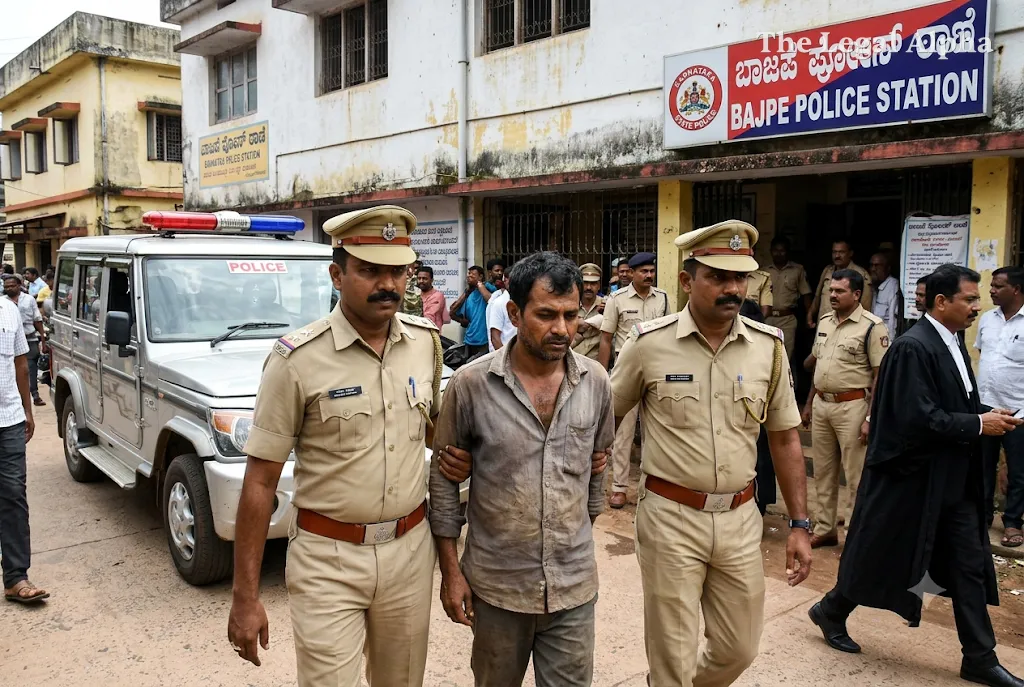
Law enforcement officers in Mangaluru have arrested a 44-year-old man, Manoj, who had evaded trial proceedings for nearly two decades in connection with two criminal cases dating back to 2005. A crime team operating under the Assistant Commissioner of Police (ACP), Mangaluru North sub-division, tracked down and detained the accused on November 14, 2026.
The cases stem from violent disturbances that broke out during the 2005 funeral procession of Polali Ananthu, who was killed during communal clashes in the region. Following the registration of the cases at the Bajpe police station and the subsequent filing of chargesheets before the 3rd Judicial Magistrate First Class (JMFC) Court in Mangaluru, the accused reportedly travelled overseas in 2007. Upon his return to India, he relocated to Kaudoor village in Udupi district's Karkala taluk, failing to appear for his scheduled court hearings. After years of non-appearance, the magistrate's court classified the matters as Long Pending Cases (LPC) in 2016 and issued standing arrest warrants. Following his arrest, the accused was handed over to the Bajpe police for production before the court.
Legal Topic
Area of Law: Criminal Law
Sub-topic: Criminal Procedure / Execution of Warrants and Absconding Accused
Core Legal Issue
The procedural issue at the center of this development involves the enforcement of judicial attendance and the mechanism Indian criminal courts use to prevent trial stagnation when an accused person deliberately absconds. Specifically, it highlights the transition of stalled criminal trials onto the Long Pending Case (LPC) register and the continued validity of non-bailable warrants over extended periods until the accused is physically brought before the court to face trial.
What Did the Court / Authority Decide?
The 3rd JMFC Court in Mangaluru had previously transferred both criminal matters to its Long Pending Case register in 2016 (numbered LPC No. 26/2016 and LPC No. 50/2016) and issued standing warrants after ordinary processes failed to secure the accused's presence.
Acting on those active judicial warrants, the police executed the arrest on November 14, 2026. The underlying criminal trials—concerning allegations of unlawful assembly, rioting, criminal trespass, and damage to public and private property—remain pending and will now resume before the magistrate's court once the accused is formally produced.
Key Legal Points
-
Indefinite Survival of Criminal Liability: Unlike certain civil claims, serious criminal prosecutions in India do not lapse merely because an accused person successfully evades law enforcement for years or relocates to another district or country.
-
Long Pending Case (LPC) Mechanism: When an accused remains untraceable despite repeated summons and warrants, trial courts transfer the file to the LPC register—after recording evidence in the accused's absence where permissible—so that the court's active docket is not indefinitely blocked while keeping the arrest warrant alive.
-
Unlawful Assembly and Vicarious Liability: Both 2005 cases invoke Section 149 of the Indian Penal Code (IPC), meaning every member of an unlawful assembly can be held legally responsible for offences committed by any member of that group in pursuit of their common object.
-
Statutory Protection of Property: Alongside general penal provisions for mischief, the prosecution in the first case invoked the Karnataka Prevention of Destruction and Loss of Property Act, 1981, which imposes stricter bail and compensation standards when property is damaged during riots or public disturbances.
Relevant Law
-
Indian Penal Code, 1860 (IPC): * Sections 143, 147, and 148: Define and penalise membership in an unlawful assembly, rioting, and rioting while armed with deadly weapons.
-
Section 149: Establishes constructive criminal liability for every member of an unlawful assembly.
-
Sections 447 and 448: Penalise criminal trespass and house-trespass.
-
Section 427: Penalises mischief causing damage to property.
-
-
Karnataka Prevention of Destruction and Loss of Property Act, 1981 (KPDLP Act): * Section 2(1)(a): Addresses acts of mischief resulting in the destruction or loss of property during public commotions.
-
Code of Criminal Procedure, 1973 (CrPC) / Bharatiya Nagarik Suraksha Sanhita, 2023 (BNSS): * Provisions governing the issuance of non-bailable warrants (Sections 70–73 CrPC) and recording of evidence in the absence of an absconding accused (Section 299 CrPC), alongside Karnataka Criminal Rules of Practice governing Long Pending Cases. (Note: Because the cases originated in 2005 and 2007, substantive charges remain governed by the IPC.)
Arguments of the Parties
-
Prosecution / Police: Law enforcement authorities maintain that the accused was directly involved in the 2005 disturbances at Bajpe (registered as Crime Nos. 101/2005 and 104/2005) and deliberately evaded the judicial process by travelling abroad in 2007 and subsequently concealing his whereabouts in Udupi district despite active warrants.
-
Accused: As the accused was apprehended on November 14, 2026, and handed over to the Bajpe police, his formal defence regarding his absence and his plea on the underlying 2005 allegations have not yet been placed on the judicial record.
Why Does It Matter?
This arrest underscores how district police units utilize dedicated warrant-execution drives to clear decades-old Long Pending Cases from judicial dockets. For individuals facing criminal charges, the case serves as a reminder that relocating or leaving the country without seeking formal court exemption does not extinguish criminal proceedings; instead, it triggers standing warrants that can result in arrest years later. For the justice system, however, reviving a 21-year-old trial presents practical evidentiary challenges, as prosecutors must reassemble witnesses and physical records from 2005 to prove guilt beyond a reasonable doubt.
Legal Takeaway
Absconding from court hearings does not erase criminal charges—it simply freezes the trial while keeping a standing arrest warrant active indefinitely. Anyone facing a criminal summons must appear before the court or seek legal exemption through counsel, as failing to do so converts a bailable or manageable trial into an open-ended risk of arrest.
Sources
Primary Source:
-
Warrants and Case Records in Crime Nos. 101/2005 and 104/2005 (CC Nos. 4048/2007 and 4049/2007; LPC Nos. 26/2016 and 50/2016), 3rd Judicial Magistrate First Class (JMFC) Court, Mangaluru.
Additional Sources:
-
Official police arrest briefing reported via regional news outlets covering Mangaluru North Sub-Division and Bajpe Police Station (November 14–15, 2026).