Malayalam Actor Sreejith Ravi Sentenced to One Year Rigorous Imprisonment in POCSO Case
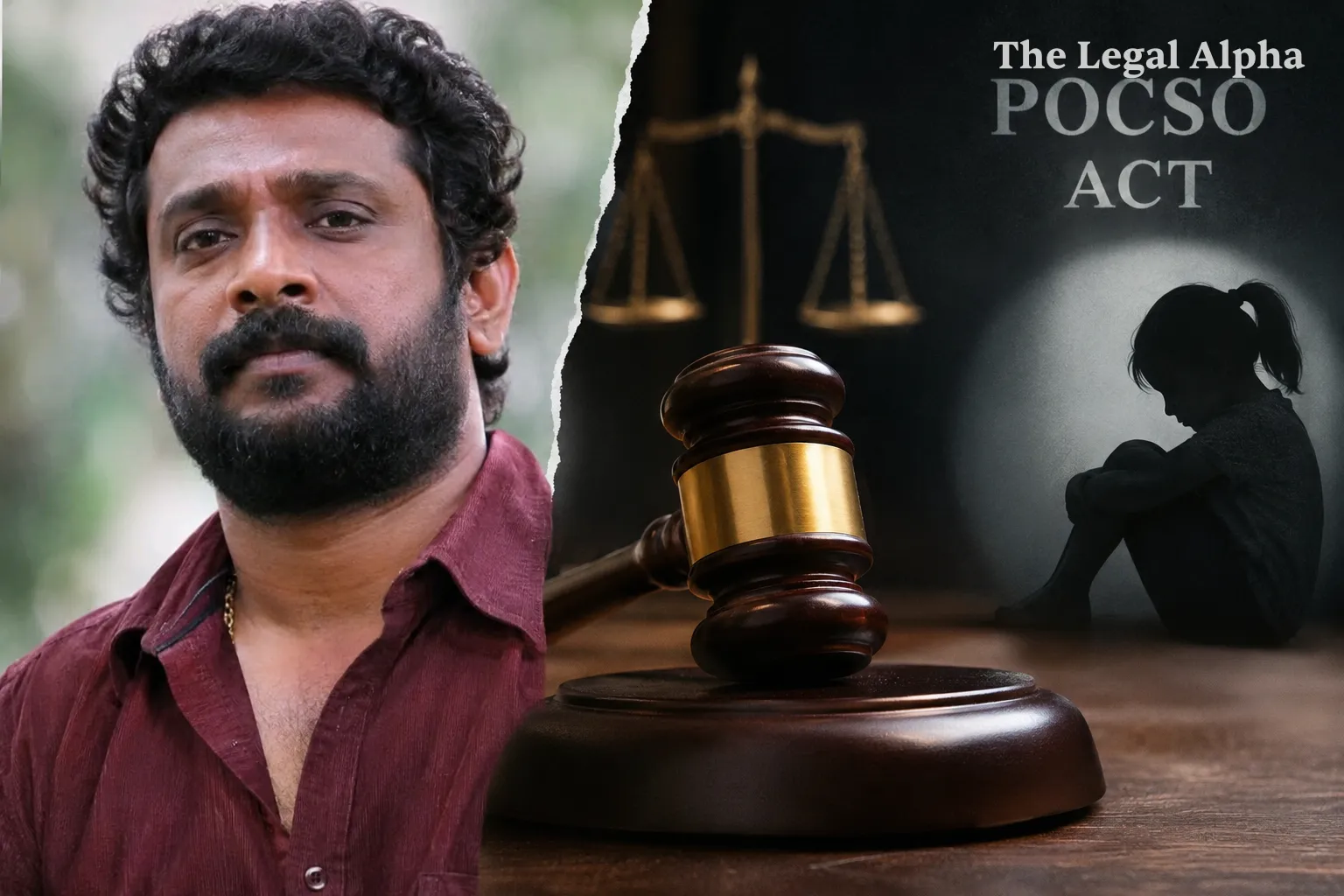
A Fast Track Special Court in Thrissur, Kerala, has sentenced Malayalam actor Sreejith Ravi to one year of rigorous imprisonment in a case registered under the Protection of Children from Sexual Offences (POCSO) Act, 2012.
The court also imposed a fine of ₹50,000 after finding him guilty in connection with an incident involving two minor girls in July 2022. The judgment was delivered by Special Judge Remya Menon of the Fast Track Special Court-II, Thrissur, on November 23, 2026.
Legal Topic
Area of Law: Criminal Law
Sub-topic: Child Protection – Sexual Harassment under the POCSO Act
Background of the Case
The prosecution case arose from an incident dated July 4, 2022, when two minor girls were returning home from school to their apartment complex in Thrissur.
According to the prosecution, Ravi allegedly followed the children in his car and exposed himself while engaging in an obscene act in their presence. The incident led to a police complaint and subsequent criminal proceedings.
The prosecution relied substantially on the testimonies of the two girls, who were aged 14 and 10 at the time of the incident. During the trial, the defence questioned their identification of the accused, but the court found their evidence credible.
Core Legal Issue
The central legal question was whether the prosecution had established beyond reasonable doubt that the accused had committed sexual harassment against the minor girls within the meaning of Section 11(i) of the POCSO Act.
The court also had to examine whether the children's identification and testimony were sufficiently reliable to sustain a conviction, notwithstanding the defence's objections and shortcomings in the police investigation.
What Did the Court Decide?
The Fast Track Special Court-II convicted Sreejith Ravi under Section 11(i) read with Section 12 of the POCSO Act and Section 509 of the Indian Penal Code, 1860.
The court imposed the following punishment:
-
One year of rigorous imprisonment under the POCSO Act.
-
A fine of ₹50,000.
-
An additional one month of rigorous imprisonment in default of payment of the fine.
The court also directed that the fine, if recovered, be distributed equally between the two survivors as compensation.
However, after Ravi expressed his intention to challenge the conviction before the Kerala High Court, the court suspended the sentence for one month and granted him bail on a bond of ₹50,000 with two sureties. He was directed to appear before the trial court on December 23, 2026.
Key Legal Points
-
Child testimony: The court accepted the consistent and credible testimonies of the two minor survivors as sufficient evidence to establish the prosecution's case.
-
Identification of the accused: The court held that the children's failure to identify Ravi by his name did not undermine their identification or credibility.
-
Investigative shortcomings: The court acknowledged that the police had failed to collect CCTV footage but concluded that this lapse did not invalidate otherwise reliable evidence.
-
Sentencing considerations: The court declined to grant leniency merely because the accused had no criminal antecedents and claimed that the proceedings had affected his acting career.
-
Compensation to survivors: The court directed that the ₹50,000 fine, if recovered, be equally distributed between the two survivors.
Relevant Legal Provisions
Protection of Children from Sexual Offences Act, 2012
-
Section 11(i): Defines sexual harassment of a child, including acts involving showing sexual organs to a child or making a child exhibit their body.
-
Section 12: Prescribes punishment for sexual harassment, which may extend to three years of imprisonment and fine.
Indian Penal Code, 1860
- Section 509: Deals with words, gestures or acts intended to insult the modesty of a woman.
The court convicted Ravi under Section 11(i) read with Section 12 of the POCSO Act and Section 509 of the IPC.
Arguments of the Parties
Defence
The defence questioned the reliability of the children's identification of the accused, arguing that they had not identified him by name despite his public profile as a film actor.
During sentencing, the defence also sought leniency on the grounds that Ravi had no criminal antecedents and that the case had adversely affected his professional career.
Prosecution
The prosecution relied on the testimonies of the two minor girls and maintained that their evidence established the accused's involvement beyond reasonable doubt.
The Special Public Prosecutor, Sunitha K.A., appeared on behalf of the State.
Why Does It Matter?
The conviction highlights the importance of credible child testimony in prosecutions under the POCSO Act. It also demonstrates that investigative deficiencies, such as failure to collect available CCTV footage, do not automatically defeat a prosecution when the remaining evidence is found reliable.
The decision also draws attention to the sentencing responsibility of courts in cases involving sexual offences against children. By directing that the fine be distributed between the survivors, the court has incorporated a compensatory element into its sentencing order.
Legal Takeaway
The case reinforces that credible and consistent testimony from child survivors can form the basis of a conviction under the POCSO Act. It also illustrates that shortcomings in an investigation do not necessarily undermine a prosecution when the court finds the substantive evidence trustworthy.
Sources
Primary Source: Judgment in State of Kerala v. Sreejith TR, Fast Track Special Court-II, Thrissur (judgment attachment referenced in the court report).
Additional Sources: