Madras High Court Questions Tamil Nadu Government’s Delay in Acting on Harassment Allegations Against TVK MLA
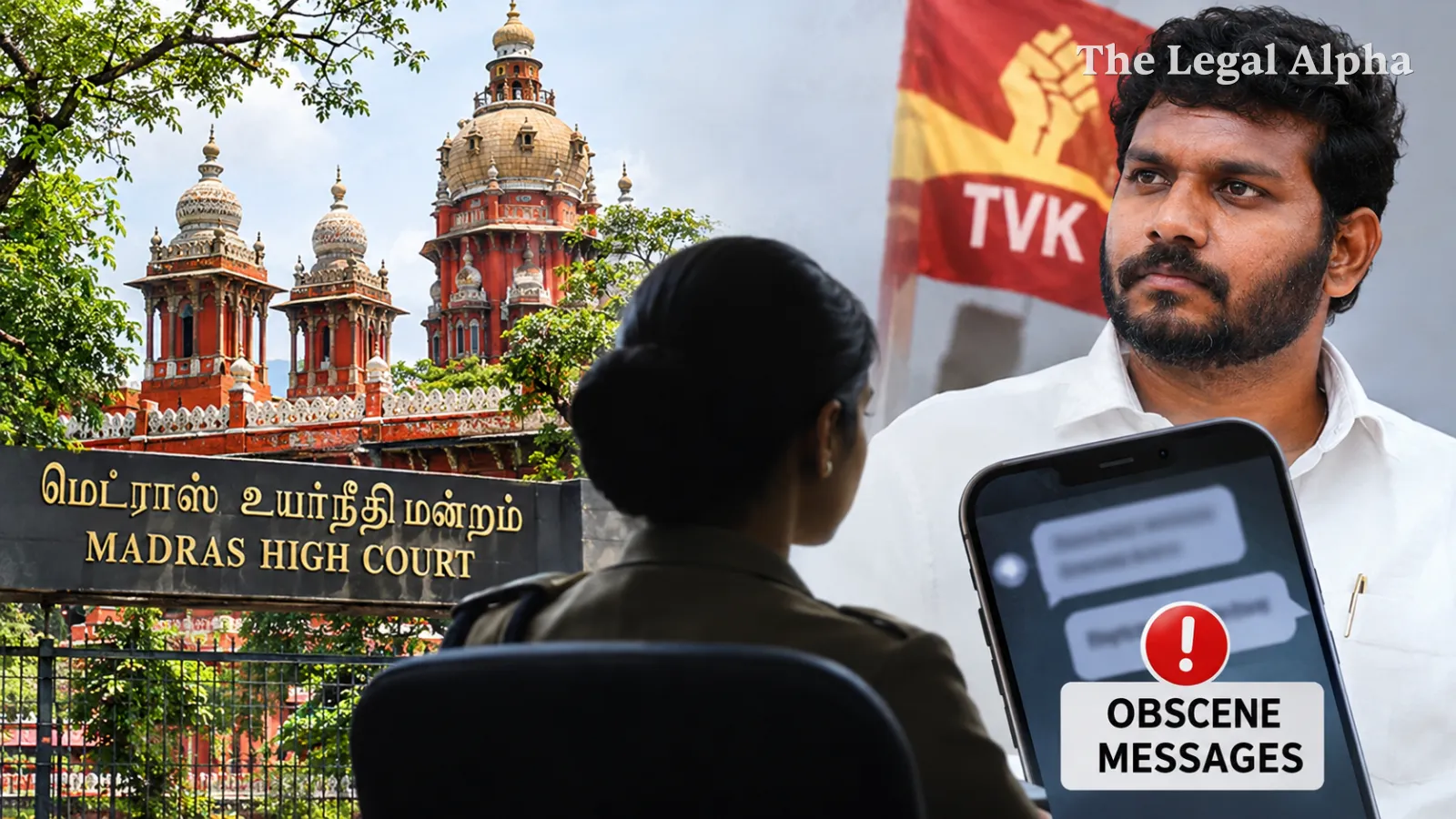
The Madras High Court has questioned the Tamil Nadu government over its handling of allegations of sexual harassment against Tamilaga Vettri Kazhagam (TVK) MLA C Arul Vignesh, who represents Kallakurichi.
On November 24, 2026, Justice V. Lakshminarayanan expressed concern over the administration's failure to take timely action after the allegations were reportedly brought to its attention on July 31. The Court questioned whether the government was protecting the legislator and why it had not independently addressed the allegations.
The controversy concerns allegations that the MLA sent sexually inappropriate WhatsApp messages to the Kallakurichi District Collector and made unwelcome advances towards her. He has denied the allegations, describing them as baseless and politically motivated.
During the hearing, the State Public Prosecutor informed the Court that an FIR had been registered on Tuesday. The Court also directed the government to constitute a committee to examine the matter and raised concerns about the circulation of the complainant's identifying information on social media.
Legal Topic
Area of Law: Criminal Law and Employment Law
Sub-topic: Workplace Sexual Harassment, Protection of Women and Criminal Investigation
Core Legal Issue
The principal legal question concerns the responsibility of the State administration and law enforcement authorities to respond promptly and impartially when allegations of sexual harassment are raised against an elected public representative.
The proceedings also raise questions about the protection of women public officials, the handling of complaints involving persons holding political office, the independence of criminal investigations and the obligation to safeguard the identity of complainants.
Another important issue is whether the authorities took appropriate steps to protect the complainant and preserve relevant evidence after receiving information about the alleged misconduct.
What Did the Court Decide?
Justice V. Lakshminarayanan questioned the State government's response and directed it to constitute a committee to examine the allegations.
The Court made several important observations during the proceedings:
-
Government accountability: The Court questioned whether the administration was shielding anyone and sought an explanation for the absence of timely action after the allegations were brought to its attention on July 31.
-
Registration of FIR: The State Public Prosecutor submitted a written note informing the Court that an FIR had been registered on November 24.
-
Constitution of a committee: The Court directed the State government to constitute a committee to examine the allegations.
-
Independent investigation: After being informed that the District Collector had named the district Superintendent of Police in her complaint, the Court indicated that the investigation should be entrusted to an officer senior to the district SP.
-
Protection of complainant's identity: The Court expressed displeasure over the circulation of identifying information about the complainant on social media, despite an earlier direction against disclosure.
The Court also emphasised that every woman must receive protection against workplace sexual harassment, irrespective of her position in the administrative hierarchy.
The proceedings concern the handling and investigation of the allegations. They do not amount to a finding that the MLA is guilty of the alleged misconduct.
Key Legal Points
-
Public authorities are expected to respond promptly and fairly to complaints involving allegations of sexual harassment.
-
Women public officials are entitled to protection against workplace harassment irrespective of their seniority or administrative position.
-
Investigations involving allegations against elected representatives must be conducted impartially and without political interference.
-
The confidentiality and identity of complainants in sexual harassment proceedings require appropriate protection.
-
The Court can examine the conduct of public authorities and issue appropriate directions to ensure that legal procedures are followed.
Relevant Law
Sexual Harassment of Women at Workplace (Prevention, Prohibition and Redressal) Act, 2013
The POSH Act provides a statutory framework for preventing and addressing sexual harassment at workplaces. It requires employers to establish appropriate complaint-redressal mechanisms and provides for Internal Committees and Local Committees.
Bharatiya Nyaya Sanhita, 2023
Section 75 of the BNS deals with sexual harassment. It includes conduct such as making sexually coloured remarks and other specified forms of unwelcome sexual behaviour.
The applicability of particular criminal provisions will depend on the evidence and the allegations investigated by the authorities.
Bharatiya Nagarik Suraksha Sanhita, 2023
Section 173 deals with information relating to cognisable offences and the procedure for recording such information by the police.
Constitution of India
Article 14 guarantees equality before the law, while Article 21 protects life and personal liberty. These constitutional guarantees are relevant to the fair treatment, dignity and protection of individuals.
Arguments of the Parties
Petitioner / Complainant's Position
The proceedings arose from allegations that the MLA had sent sexually inappropriate messages and made unwelcome advances towards the District Collector.
The petitioner sought judicial intervention to ensure an appropriate investigation and action by the police authorities. Concerns were also raised about the delay in responding to the allegations and the need for an impartial investigation.
State Government's Position
The State Public Prosecutor informed the Court that an FIR had been registered on November 24. The government was also questioned about the steps taken to investigate the allegations and protect the complainant.
MLA's Position
C Arul Vignesh has denied the allegations, describing them as politically motivated and baseless. No finding of criminal liability against him has been established in the proceedings.
Why Does It Matter?
The proceedings highlight the importance of ensuring that workplace sexual harassment complaints are addressed through effective institutional mechanisms, particularly when the accused holds political influence.
Public officials, including district-level administrative officers, must be able to perform their duties without facing intimidation, harassment or unwelcome conduct.
The Court's observations also underline the importance of protecting complainants from public exposure. Circulation of identifying information on social media can cause further harm and undermine the confidentiality expected in sensitive proceedings.
The indication that an officer senior to the district Superintendent of Police should handle the investigation is also significant. It reflects the need to address possible concerns about impartiality when complaints involve individuals with influence over local administrative or political structures.
The proceedings further reinforce that political office does not place an individual beyond the reach of ordinary legal processes. Allegations must be investigated on their merits, and accountability must follow established legal procedures.
Legal Takeaway
The Madras High Court's intervention reinforces the responsibility of State authorities to respond promptly and impartially to allegations of workplace sexual harassment. The protection of complainants, independent investigation and equal application of the law remain essential, regardless of the position held by the person accused.
Sources
Primary Source:
Madras High Court proceedings before Justice V. Lakshminarayanan, November 24, 2026. The full judicial order was not independently available for verification at the time of writing.
Additional Sources:
-
India Today – Reporting on the Madras High Court proceedings dated November 24, 2026.
-
The Indian Express – Reporting on the District Collector's complaint against the TVK MLA dated November 24, 2026.
-
LiveLaw – Reporting on the earlier High Court proceedings dated November 23, 2026.