Income Tax Return Filing in India: Understanding Deadlines, Late Returns and Correction of Errors
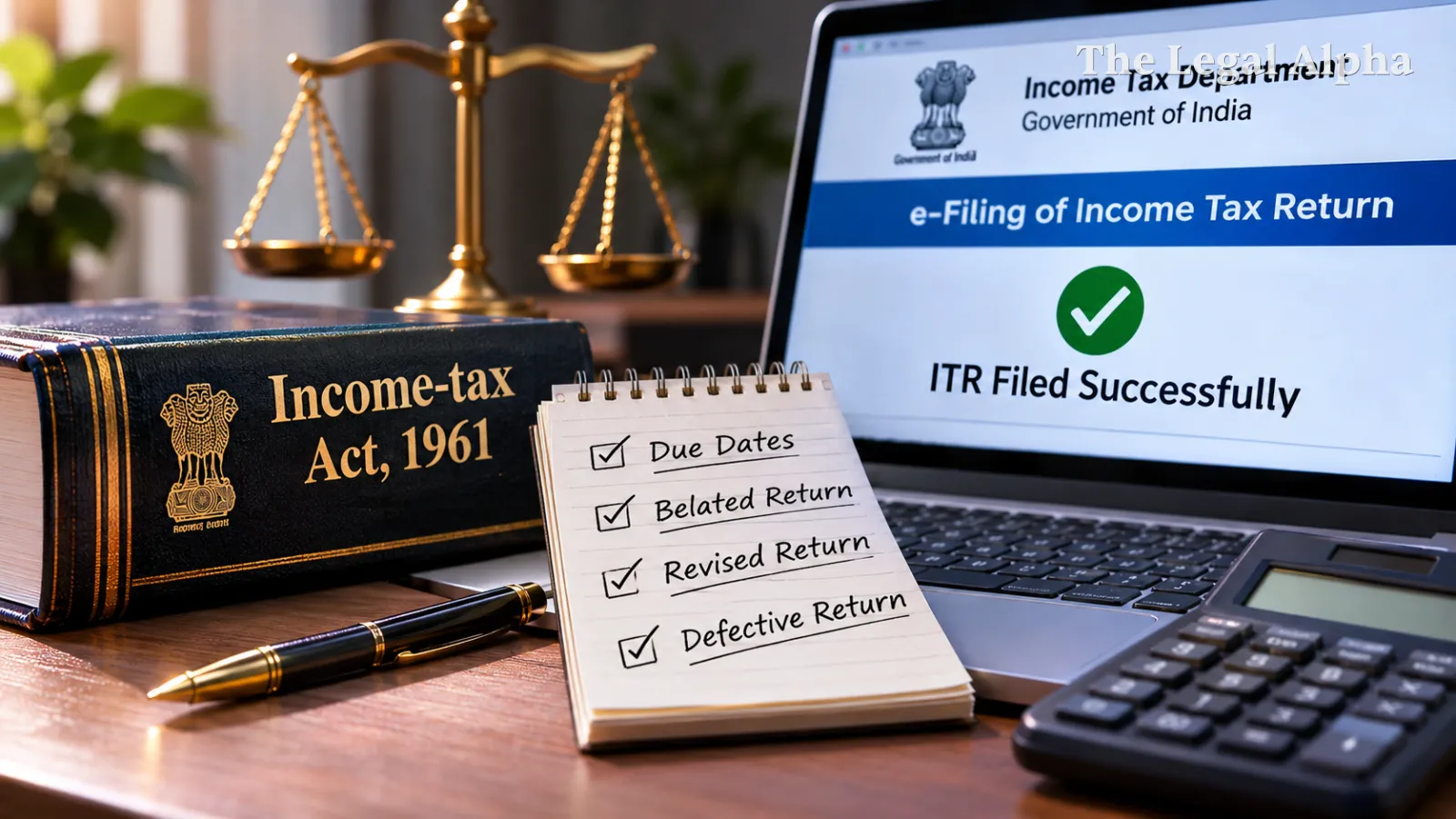
India's income tax return filing system is not simply about declaring annual earnings. It also establishes legal responsibilities, reporting deadlines and procedures for correcting mistakes. Understanding these requirements is important for salaried employees, professionals, business owners and other taxpayers.
Section 139 of the Income-tax Act, 1961 established the framework for filing returns, including original returns, belated returns, revised returns and defective returns. Although the Income-tax Act, 2025 came into force on April 1, 2026, the earlier legislation remains relevant to tax years governed by it.
For taxpayers, the central question is not merely whether a return can be filed, but when it must be submitted, what happens if the deadline is missed and how errors can be corrected without creating further compliance problems.
Legal Topic
Area of Law: Taxation Law
Sub-topic: Income Tax Compliance, Return Filing, Statutory Deadlines and Rectification of Defects
Understanding the Legal Framework for Income Tax Returns
Section 139 of the Income-tax Act, 1961 regulated the submission of income tax returns and prescribed different procedures depending on the taxpayer's circumstances.
The provision distinguished between taxpayers filing within the prescribed period, those submitting returns after the deadline and those seeking to correct information already furnished.
It also empowered the tax authorities to identify defective returns and provide taxpayers an opportunity to rectify deficiencies.
These distinctions matter because different types of returns carry different legal consequences, including restrictions on revision, possible fees and interest, and limitations on certain tax benefits.
Who Is Required to File an Income Tax Return?
Under Section 139(1) of the 1961 Act, companies and firms were generally required to furnish income tax returns irrespective of whether they earned taxable profits.
Individuals and other taxpayers were ordinarily required to file when their income exceeded the applicable basic exemption threshold, subject to additional statutory conditions.
Certain transactions and financial circumstances could also trigger mandatory filing requirements even where income remained below the ordinary threshold.
Consequently, the absence of a final tax liability did not necessarily mean that a taxpayer was exempt from filing a return.
What Happens When a Taxpayer Misses the Filing Deadline?
A return filed after the original due date but within the legally permitted extended filing period is commonly described as a belated return.
Under Section 139(4), taxpayers could submit such returns subject to the statutory deadline.
However, late filing could result in consequences including a fee under Section 234F, interest where applicable and restrictions on carrying forward certain losses.
A belated return therefore offered an opportunity to comply after missing the original deadline, but it did not automatically eliminate the consequences of delay.
Can an Income Tax Return Be Corrected After Filing?
Section 139(5) provided a mechanism for revising a return when the taxpayer discovered an omission or an incorrect statement.
For example, a taxpayer might have failed to report interest income, entered incorrect financial information or omitted a relevant detail.
A revised return allowed eligible taxpayers to correct such errors within the statutory period.
The distinction between a belated return and a revised return is significant. A belated return addresses delayed filing, whereas a revised return addresses mistakes or omissions in a return already submitted.
What Is a Defective Income Tax Return?
A defective return is different from a return containing an ordinary factual mistake.
Under Section 139(9), a return could be treated as defective if it failed to satisfy prescribed requirements relating to the completeness or validity of the filing.
Where the assessing authority identified such defects, the taxpayer was ordinarily given an opportunity to rectify them within 15 days of receiving the intimation, subject to any extension permitted by the authority.
Failure to correct the defect within the permitted period could result in the return being treated as invalid, subject to the statutory provisions concerning subsequent rectification.
This mechanism was intended to ensure that tax returns contained the information necessary for proper assessment.
Updated Returns and Voluntary Disclosure of Income
Section 139(8A) introduced a separate facility for eligible taxpayers to furnish updated returns.
This mechanism was designed to encourage voluntary disclosure of income that had not been properly reported earlier.
However, an updated return was not an unrestricted opportunity to change previous filings. Statutory exclusions, time limits and additional tax requirements applied.
Taxpayers therefore needed to distinguish between correcting an existing return through revision and making a later disclosure through the updated-return mechanism.
How the Supreme Court Has Interpreted Filing Deadlines
Indian courts have repeatedly considered whether subsequent compliance can overcome an earlier failure to satisfy statutory requirements.
In Prakash Nath Khanna v. Commissioner of Income Tax (2004), the Supreme Court held that the availability of belated filing under Section 139(4) did not displace the original deadline for the purposes of prosecution under Section 276CC.
In Goetze (India) Ltd. v. Commissioner of Income Tax (2006), the Court addressed the procedure for raising a fresh deduction claim before an Assessing Officer. It held that the claim could not be entertained otherwise than through a revised return in the circumstances of that case, while expressly preserving the powers of appellate authorities.
In M/s. Shriram Investments v. Commissioner of Income Tax (2024), the Supreme Court reinforced the importance of limitation periods by declining to permit a claim through a revised return filed outside the statutory period.
These decisions demonstrate that the availability of corrective procedures does not make statutory deadlines optional.
Key Legal Points for Taxpayers
-
Original returns: Filing obligations depend on income, taxpayer classification and other statutory conditions.
-
Belated returns: Late filing may be permitted, but consequences of missing the original deadline can remain.
-
Revised returns: Errors and omissions may be corrected only through the applicable procedure and within the permitted period.
-
Defective returns: Taxpayers should respond promptly to notices identifying deficiencies.
-
Updated returns: Voluntary disclosure is subject to eligibility restrictions and additional tax obligations.
Why These Rules Matter for Individuals and Businesses
The practical significance of income tax filing rules extends beyond the payment of tax.
For individuals, properly filed returns may support financial documentation, refund claims and verification of declared income.
For businesses, timely compliance can affect tax administration, loss carry-forward claims and the ability to substantiate financial disclosures.
Professionals and taxpayers claiming deductions must also pay attention to statutory filing requirements. A valid deduction or exemption may be subject to procedural conditions that cannot always be satisfied retrospectively.
The Supreme Court's decision in Principal Commissioner of Income Tax v. Wipro Ltd. (2022) illustrates the importance of meeting mandatory deadlines attached to particular tax benefits.
Legal Takeaway
The central lesson from Section 139 and the related judicial decisions is that income tax compliance involves both accurate disclosure and adherence to prescribed procedures.
Taxpayers should identify the legislation applicable to their tax year, file within the relevant deadline and correct mistakes using the legally available mechanism. A late or corrected return may resolve certain compliance issues, but it does not necessarily erase an earlier statutory default.
Sources
Primary Source: Income Tax Department, Government of India — Income-tax Act, 1961, Section 139 and related statutory provisions.
Judicial Authorities: Prakash Nath Khanna v. CIT (2004); Goetze (India) Ltd. v. CIT (2006); PCIT v. Wipro Ltd. (2022); M/s. Shriram Investments v. CIT (2024).
Additional Source: Legal Service India — Section 139 legal explainer.