Hospital's Duty of Care Extends to Inter-Facility Transport: Delhi Consumer Commission Penalises Metro Hospital for Emergency Ambulance Lapse
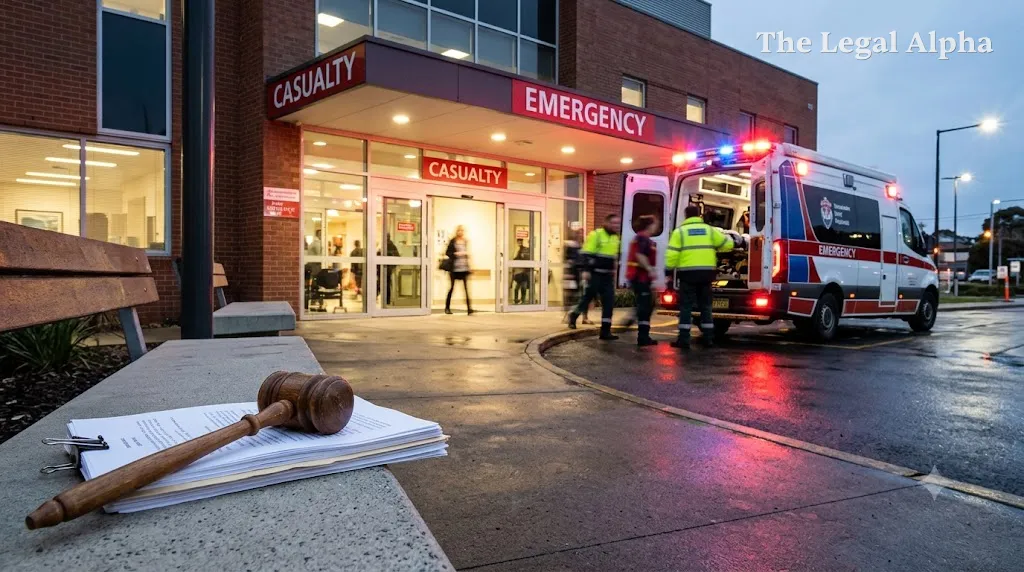
The Delhi State Consumer Disputes Redressal Commission ruled that a healthcare provider’s legal duty of care extends beyond treatment rooms to encompass the safe, medically supervised transfer of critically ill patients.
A Bench comprising Justice Sangita Dhingra Sehgal (President) and Judicial Member Pinki directed Metro Hospital & Heart Institute, Lajpat Nagar, to pay ₹15 lakh in compensation alongside ₹50,000 in litigation expenses. The dispute stemmed from a consumer complaint initiated by Suresh Kumar, a cardiac patient with a history of dual heart valve replacement who suffered a stroke while hospitalised. Following the neurological deterioration, the hospital recommended an immediate transfer to Vimhans Hospital for specialised intervention. However, the facility failed to coordinate a life-support ambulance or provide attending medical staff, compelling the family to spend nearly five hours securing private transport on their own.
Legal Topic
Area of Law: Consumer Protection / Medical Law
Sub-topic: Medical Negligence / Institutional Deficiency in Service / Emergency Patient Transfer
Core Legal Issue
The primary legal question before the Commission was whether the institutional duty of care owed by a hospital ceases once in-house therapeutic procedures conclude, or whether it includes an affirmative obligation to organise safe, life-support transit during an emergency inter-facility referral.
The Commission examined whether an institution can escape liability when its actual clinical procedures comply with standard medical protocols, yet the facility fails to provide requisite logistics and medical oversight to execute an urgent transfer advised by its own doctors.
What Did the Court Decide?
The Commission held Metro Hospital liable for deficiency in service, ordering it to pay ₹15 lakh for mental distress, agony, and endangering the patient's life, as well as ₹50,000 towards litigation costs.
The Bench ruled that:
-
The failure to provide a life-support ambulance for a stroke patient in critical condition constituted a breach of elementary standards of medical responsibility, rather than a minor administrative slip.
-
The direct medical treatment was not negligent, aligning with expert evaluations from G.B. Pant Hospital, the Delhi Medical Council, and the Medical Council of India.
-
The hospital must remit the full award by January 6, 2027; failure to meet the deadline will attract interest at 9% per annum calculated from the complaint's filing date until actual payment.
-
The complaint against the individual treating doctor, who was proceeded against ex parte in 2016, resulted in institutional liability resting on the hospital for infrastructural shortcomings.
Key Legal Points
-
Continuity of Care: A hospital's legal duty does not terminate at its exit doors; it encompasses ensuring seamless transitional care and secure transportation when recommending an emergency transfer for tertiary management.
-
Separation of Clinical and Operational Negligence: Clearance by medical statutory boards regarding clinical decisions does not shield an institution from liability for ancillary and infrastructural lapses under consumer law.
-
Transferring the Logistical Burden: Forcing a patient's relatives to locate life-support equipment and transport during a medical emergency is contrary to reasonable standards of institutional care.
-
Time-Critical Responsibility: In time-sensitive conditions such as strokes, causing avoidable delays due to a lack of transport facilities constitutes an actionable deficiency in service.
Relevant Law
-
Consumer Protection Act, 1986: Section 2(1)(g) (Deficiency in service) and Section 14 (Award of compensation for loss or injury).
-
Supreme Court Precedent on Medical Standards: Martin F. D’Souza v. Mohd. Ishfaq (defining boundaries of clinical negligence and requirements for medical expert review).
-
Article 21 of the Constitution of India: Right to Health and Emergency Medical Care, as interpreted in apex court jurisprudence concerning trauma management and institutional duties.
Arguments of the Parties
The Complainant
Counsel for the complainant argued that the hospital abandoned the patient at a critical juncture. Despite the patient suffering an acute stroke requiring rapid neuro-specialised care, the hospital failed to provide an ambulance equipped with life-support apparatus or assign a medical attendant. The complainant contended that losing nearly five critical hours while making emergency transport arrangements independently endangered the patient's survival and caused severe trauma.
The Hospital
Counsel for Metro Hospital contended that its medical staff adhered strictly to accepted diagnostic and clinical regimens, a position validated by multiple expert inquiries. The hospital maintained that there was no negligence in the actual treatment administered and argued that operational constraints around transfer should not be treated as professional malpractice.
Why Does It Matter?
This decision clarifies the scope of institutional liability for private healthcare establishments. Medical negligence claims are frequently dismissed once statutory medical boards clear the treating doctors of direct clinical error. This ruling demonstrates that hospitals maintain an independent, institutional duty to ensure medical safety around logistics and transfer infrastructure.
For healthcare providers charging commercial tariffs, the judgment establishes that life-support transport is not a secondary, optional service. Facilities referring unstable patients must ensure medical continuity throughout the transit phase, establishing that leaving families to arrange transport during critical emergencies exposes hospitals to substantial compensation awards.
Legal Takeaway
A hospital’s legal accountability under consumer protection law encompasses operational transfer safety alongside clinical treatment. Even when clinical care satisfies professional standards, an institution commits a compensable deficiency in service if it fails to ensure life-support transit during an emergency inter-facility transfer.
Sources
Primary Source:
Delhi State Consumer Disputes Redressal Commission order in Suresh Kumar v. Metro Hospital & Heart Institute & Ors. (Pronounced on November 6, 2026; Coram: Justice Sangita Dhingra Sehgal, President, and Pinki, Judicial Member).
Additional Sources:
-
Supreme Court of India precedent: Martin F. D'Souza v. Mohd. Ishfaq (2009).
-
Expert opinions on record from G.B. Pant Hospital, Delhi Medical Council, and Medical Council of India.