Ghaziabad Court Convicts Woman in Rs 1.6 Crore Dishonour Case, Rules Bare Denials Cannot Rebut Statutory Presumption Under NI Act
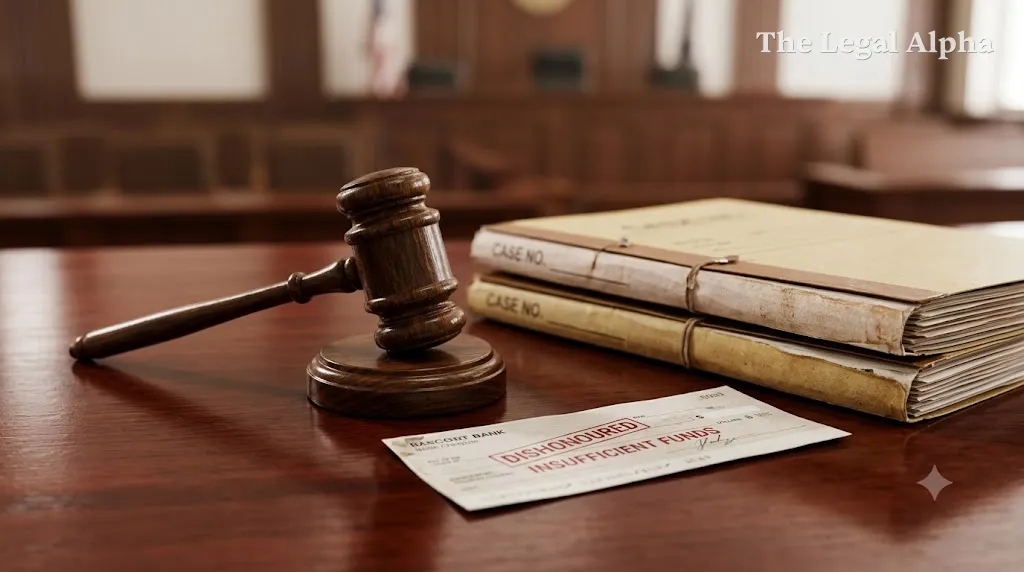
An Additional District Court in Ghaziabad sentenced a 55-year-old woman, Kesar Jahan, to one year of imprisonment after finding her guilty of issuing a dishonoured cheque in a property transaction.
The dispute arose out of an agreement executed in March 2017 to purchase an ancestral property from one Jamirullah Khan. As part of the sale consideration, Jahan issued a cheque amounting to Rs 87.5 lakh drawn on Oriental Bank of Commerce. Following the execution and registration of the sale deed in her favour, Khan presented the instrument for clearance at Central Bank of India in January 2020. The bank subsequently returned the cheque unpaid with the remark citing insufficient funds.
Although Khan issued a formal statutory demand notice in February 2020 within the prescribed limitation period, Jahan failed to clear the dues or issue a reply, prompting Khan to initiate criminal proceedings. While Khan passed away during the pendency of the trial, the litigation was actively carried forward by his legal heirs. Concluding the trial, the court rejected the accused’s blanket denial of liability and directed substantial financial restitution.
Legal Topic
-
Area of Law: Banking and Commercial Law / Criminal Jurisprudence
-
Sub-topic: Negotiable Instruments / Statutory Presumptions and Cheque Dishonour
Core Legal Issue
The fundamental legal question before the court was whether an accused can successfully rebut the reverse burden of proof under Sections 118(a) and 139 of the Negotiable Instruments Act through a bare, uncorroborated denial of signatures and transaction liability, without adducing credible documentary or rebuttal evidence.
The court had to determine whether the complainant had established all necessary statutory ingredients under Section 138—namely the issuance of the cheque, presentation within validity, dishonour, and service of statutory notice—and whether the accused fulfilled the evidentiary threshold required to displace the presumption that the cheque was issued in discharge of a legally enforceable debt.
What Did the Court Decide?
Judge Rampratap Singh convicted Kesar Jahan under Section 138 of the Negotiable Instruments Act.
-
The court awarded a sentence of one year of imprisonment alongside a total financial penalty of Rs 1.6 crore.
-
Out of the imposed fine, Rs 1.58 crore was directed to be paid to the legal heirs of the deceased complainant as compensation, while the balance of Rs 2 lakh was ordered to be deposited into the state exchequer.
-
In default of paying the penalty, the convict faces an additional two months of simple imprisonment, with periods already spent in custody being adjusted against the substantive sentence.
Key Legal Points
-
Operation of Reverse Onus: Once the signature on a cheque and its presentation within the validity period are shown, the court is statutorily mandated under Section 139 to presume that the instrument was drawn towards an existing debt or liability.
-
Insufficiency of Mere Denial: A general plea claiming that signatures are unverified or that no underlying commercial transaction took place does not constitute a plausible defense unless substantiated by affirmative evidence.
-
Compensatory Focus: Reaffirming the restorative objective embedded in commercial offences, the court levied a fine nearing double the original cheque amount to realistically compensate the complainant’s estate for protracted delays.
-
Continuity by Legal Heirs: The demise of an original complainant does not abrogate or abate proceedings under Section 138, permitting legal representatives to step in and pursue the matter to judgment.
Relevant Law
-
Section 138, Negotiable Instruments Act, 1881: Penalises the dishonour of cheques issued in discharge of a whole or partial debt due to insufficiency of funds or exceeding arrangements.
-
Section 118(a), Negotiable Instruments Act, 1881: Creates a statutory presumption that every negotiable instrument was made or drawn for consideration.
-
Section 139, Negotiable Instruments Act, 1881: Establishes a rebuttable presumption that the holder of a cheque received it for the discharge of a legally enforceable liability.
-
Section 357(1)(b), Code of Criminal Procedure, 1973: Empowers the court to apply fines imposed upon conviction toward compensating any loss or injury caused by the offence.
Arguments of the Parties
Complainant / Legal Heirs
The complainant contended that the accused was an explicit party to a formal agreement executed in March 2017 regarding the transfer of property. Counsel argued that the instrument for Rs 87.5 lakh had been voluntarily delivered towards the agreed consideration, directly facilitating the formal execution of the sale deed. It was submitted that subsequent dishonour, paired with complete non-compliance despite prompt service of a statutory demand notice, squarely constituted a completed offence under Section 138.
Accused / Defence
The defence maintained that the accused owed no financial obligation to the vendor and had not participated in any financial transaction with him. During her statement recorded in March 2025, Jahan denied having ever handed over the instrument, questioned how the complainant obtained possession of the cheque, and disputed that the signature appearing on the cheque belonged to her.
Why Does It Matter?
This judgment serves as a practical reminder of the evidentiary hurdles confronting drawers in summary commercial prosecutions under Chapter XVII of the Negotiable Instruments Act. In property and commercial disputes, parties frequently attempt to evade criminal liability by entering uncorroborated pleas of stolen leaves or forged signatures.
The decision underscores that an accused must introduce plausible, circumstantial, or forensic material—such as handwriting expert testimony, contemporaneous police complaints of stolen leaves, or formal stop-payment instructions prior to presentation—to successfully create reasonable doubt against statutory presumptions. Furthermore, awarding substantial compensatory relief reinforces that courts view dishonour proceedings not merely as punitive measures, but as critical instruments to preserve commercial faith in title transfers and monetary settlements.
Legal Takeaway
A drawer cannot defeat statutory presumptions under the Negotiable Instruments Act by merely asserting a denial of signatures or liability. To avoid conviction and steep compensatory penalties, an accused must affirmatively introduce credible evidence showing that the cheque was not issued against a legally enforceable obligation.
Sources
-
Primary Source: Judgment and Order dated October 30, 2026, delivered by the Court of Additional District Judge Rampratap Singh, Ghaziabad District Court.
-
Additional Sources: Certified trial court reportage and case proceedings documented in official legal registry reports.