Gauhati High Court Asks CRPF to Reconsider Constable’s Transfer Citing Wife’s Serious Kidney Condition
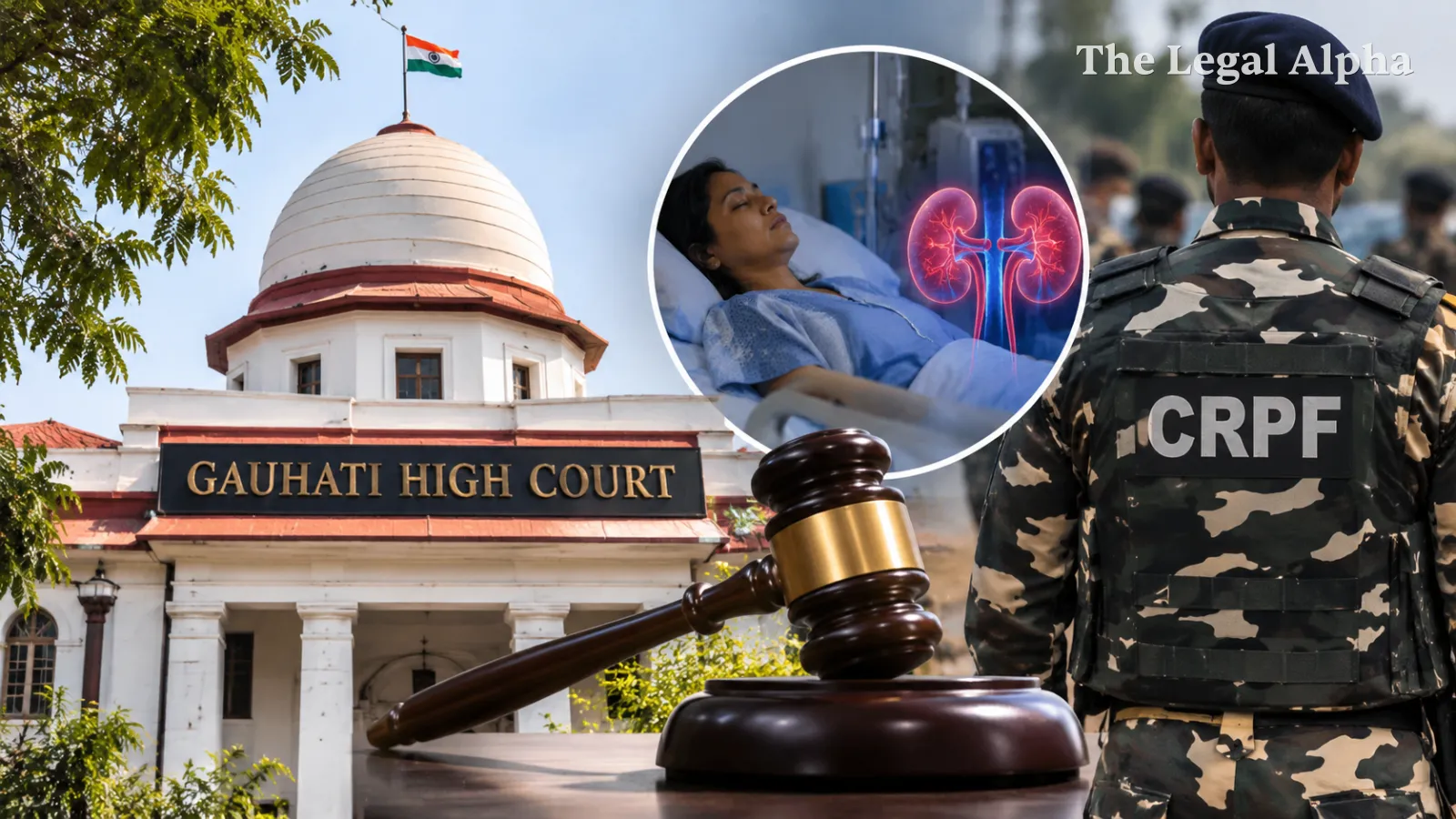
The Gauhati High Court has directed the Central Reserve Police Force (CRPF) to reconsider the transfer of a constable from Assam to Karnataka after he raised concerns about his wife's serious kidney-related illness.
Justice Nelson Sailo passed the direction on November 17, 2026, while hearing the constable's plea challenging his transfer. His wife is undergoing treatment in Guwahati for Systemic Lupus Erythematosus (SLE) with Lupus Nephritis, a condition affecting the kidneys.
The constable submitted that his wife's medical condition requires continuous supervision and that relocating to Karnataka would create considerable difficulties for his family, including their minor son.
Area of Law and Sub-topic
Area of Law: Service Law
Sub-topic: Government Employees' Transfer Policy – Medical Grounds and Compassionate Considerations
Core Legal Issue
The central legal question before the High Court was whether the CRPF authorities had adequately considered an employee's family medical circumstances while deciding his transfer request.
The matter also involved balancing an employee's request for a posting based on a spouse's serious medical condition against the administrative requirements and transfer policies applicable to personnel of a central police organisation.
What Did the Gauhati High Court Decide?
The High Court directed the CRPF authorities to reconsider the constable's representation, taking into account the medical circumstances of his wife.
The Court observed that the applicable transfer policy contains provisions for considering requests based on the medical requirements of employees, their spouses and children.
It also noted that the rejection of the constable's representation in February did not establish that the medical documents submitted by him had received proper consideration.
However, the Court clarified that transfer is an ordinary feature of government service. Employees, particularly those serving in central police organisations, cannot claim a permanent posting at a particular location as a matter of legal right.
The Court therefore directed reconsideration rather than ordering the authorities to cancel the transfer or guarantee the constable's continued posting in Assam.
Key Legal Points
-
Medical circumstances involving an employee's spouse or children can be relevant considerations under an applicable government transfer policy.
-
Administrative authorities must properly examine supporting medical documents when deciding representations based on medical hardship.
-
Transfer is generally an incident of service, and employees cannot automatically claim a right to remain posted at a particular location.
-
Courts can require administrative authorities to reconsider decisions where relevant circumstances may not have received proper consideration.
-
Compassionate considerations must be balanced against applicable service conditions and administrative requirements.
Relevant Law
CRPF Transfer Policy: The Court referred to the provisions permitting consideration of transfer requests on medical grounds, including the medical conditions of spouses and children.
CRPF Standing Order of April 2022: The State relied on the standing order concerning home-state postings and the mandatory six-year cooling-off period before subsequent posting in the home state.
The reported proceedings do not identify a specific statutory provision as the basis of the Court's direction.
Arguments of the Parties
Petitioner – CRPF Constable
The constable argued that his wife had been diagnosed with Systemic Lupus Erythematosus (SLE) with Lupus Nephritis in 2023 and required regular medical observation.
He submitted that she was receiving treatment at Nemcare Hospital and Apollo Clinic in Guwahati. He also highlighted the responsibility of caring for their approximately 11-year-old son, who studies in Class 4.
His counsel, T Wapangla, relied on the transfer policy's medical provisions and argued that his circumstances deserved consideration.
Respondent – CRPF Authorities / State
Deputy Solicitor General P S Lahkar submitted that the constable had already served eight years in his home state of Assam out of his total 14 years of service.
Relying on the April 2022 standing order, the State argued that he had not completed the mandatory six-year cooling-off period required for another home-state posting.
It maintained that his representation had been rejected after considering the relevant circumstances.
Why Does It Matter?
The decision highlights the importance of considering genuine family medical emergencies in administrative transfer decisions, particularly where employees serve in central forces and may be required to work in different parts of the country.
For government employees, the ruling reinforces that transfer policies should not be applied mechanically when relevant medical circumstances have been brought to the authorities' attention.
At the same time, the judgment maintains an important distinction: medical hardship does not automatically create an enforceable right to a particular posting. The authorities retain administrative discretion, but relevant policy provisions and supporting documents must receive proper consideration.
Legal Takeaway
The Gauhati High Court's direction reinforces that administrative transfer decisions should take relevant medical circumstances of an employee's immediate family into account where the applicable policy provides for such consideration. However, compassionate grounds do not automatically give an employee a legal right to remain posted at a preferred location.
Sources
Primary Source: Gauhati High Court order dated November 17, 2026. The full order and case number were not available in the reference material.
Additional Source: The Indian Express – Wife’s kidney ailment: Gauhati High Court asks CRPF to reconsider constable’s transfer.