Franchise Cannot Be Diluted: Justice Ujjal Bhuyan Warns That Mass Exclusion of Voters Strikes at Constitutional Foundations
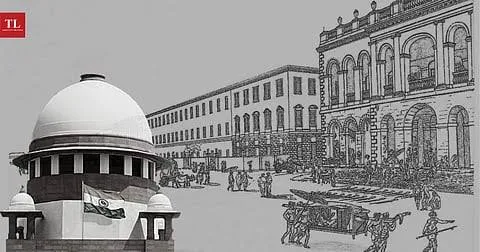
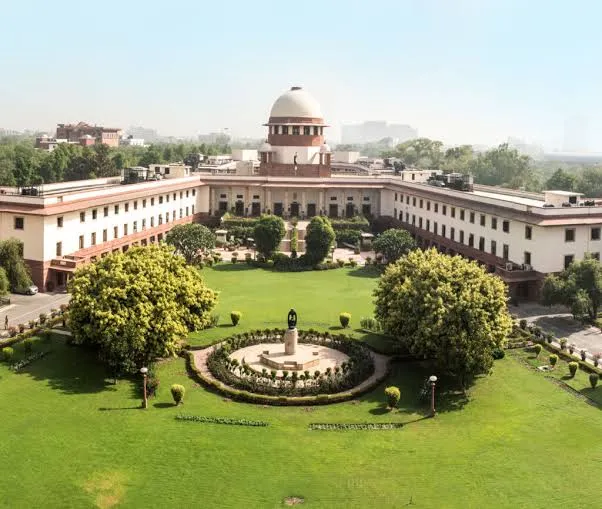
Supreme Court judge Justice Ujjal Bhuyan delivered a sharp critique of administrative measures that result in large-scale voter exclusion, emphasizing that the franchise is a bedrock constitutional guarantee rather than a secondary administrative privilege. Speaking at an academic address at NALSAR University of Law, Justice Bhuyan observed that any bureaucratic process depriving millions of eligible citizens of their right to vote is intrinsically arbitrary, constitutionally impermissible, and indefensible in a constitutional democracy.
The remarks come amid nationwide debate and multiple petitions filed before the apex court challenging the Election Commission of India's Special Intensive Revision (SIR) exercises, which have drawn scrutiny over the summary deletion of extensive numbers of electors from voting rolls across several states.
Legal Topic
-
Area of Law: Constitutional Law & Election Law
-
Sub-topic: Universal Adult Suffrage / Arbitrary Administrative Action / Deletion of Electoral Rolls
Core Legal Issue
The central legal question addresses the constitutional nature of the right to vote in India: whether franchise rights can be treated as purely statutory and subjected to summary administrative pruning, or whether universal adult suffrage under Article 326—read alongside the equality mandate of Article 14—imposes a positive constitutional duty preventing public authorities from carrying out widespread voter disenfranchisement without strict procedural fairness and individualized notice.
What Did the Authority Decide?
While addressing the audience in a public lecture rather than delivering a bench order, Justice Bhuyan articulated clear constitutional boundaries regarding state action and electoral administration:
-
Constitutional Inviolability: Stated that Article 326 cannot be tinkered with by any public authority, noting that no court can condone a system that strips millions of citizens of their voting status.
-
Rejection of Justifications: Observed that no procedural rationale or administrative "whataboutery" can legally validate mass voter deletions.
-
Prohibition on Summary Deletions: Stressed that removing registered voters without due notice, individual inquiry, and a fair opportunity of hearing violates fundamental principles of natural justice and constitutional equality under Article 14.
Key Legal Points
-
Franchise as a Freedom Hard-Won: The right of citizens to vote is inextricably bound to India's historical struggle against colonial subjugation and represents the tangible manifestation of constitutional sovereignty.
-
Constitutional Anchor of Adult Suffrage: Voting and elector eligibility cannot be reduced to subordinate statutory concessions governed exclusively by parliamentary enactments like the Representation of the People Act, 1950 and 1951; they flow directly from Article 326.
-
Arbitrariness as Unconstitutionality: Wholesale administrative purging that creates a class of "citizens without voting rights" constitutes manifest arbitrariness, which fails the test of Article 14.
-
Judicial Accountability: Public institutions remain strictly subordinate to constitutional supremacy, and courts retain an affirmative obligation to protect the electorate against unlawful disenfranchisement.
Relevant Law
-
Article 326 of the Constitution of India: Mandates that elections to the House of the People and State Legislative Assemblies shall be based on adult suffrage.
-
Article 14 of the Constitution of India: Guarantees equality before the law and prohibits arbitrary state action.
-
Representation of the People Act, 1950 & Registration of Electors Rules, 1960: Statutory mechanisms governing the preparation, revision, and correction of electoral rolls.
Arguments of the Parties
Civil Rights Groups and Petitioners Advocates and petitioners challenging recent revision drives contend that the mass deletion of names from voter rolls under fast-tracked administrative drives violates principles of natural justice. They argue that eligible electors are struck off registers without sufficient verification, physical spot checks, or reasonable opportunity to contest proposed deletions.
Election Administration and Authorities Electoral authorities maintain that periodic revision exercises, such as the Special Intensive Revision, are statutory mandates required to sanitize electoral rolls by removing duplicate records, deceased individuals, and electors who have permanently relocated, thereby ensuring electoral integrity.
Why Does It Matter?
Justice Bhuyan’s observations re-center judicial attention on the high constitutional thresholds governing electoral roll revisions. Historically, legal analysis often viewed voting as merely a statutory right subject to legislative convenience. By framing wholesale voter deletion as an existential threat to democratic citizenship and an infringement of Article 326, these remarks reinforce arguments pending before constitutional courts that procedural shortcuts during electoral revisions cannot override an eligible citizen’s fundamental franchise.
Legal Takeaway
Administrative convenience can never justify the mass removal of eligible voters from electoral rolls. The right to adult suffrage is an indelible constitutional safeguard anchored in Article 326, and any state action resulting in widespread disenfranchisement without rigorous due process fails the test of constitutional validity.
Sources
-
Primary Source: Public address by Justice Ujjal Bhuyan at NALSAR University of Law, Hyderabad (October 4, 2026).
-
Additional Sources: The Constitution of India (Articles 14 and 326); Representation of the People Act, 1950.