Failure to Control Son Cannot Be Branded as Matrimonial Cruelty: Supreme Court Shields Mother-in-Law From Section 498A IPC Charges
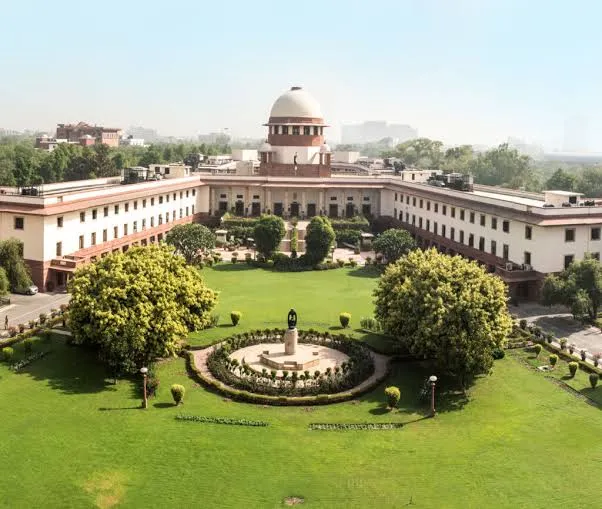
The Supreme Court of India set aside criminal proceedings against an elderly mother-in-law who had been roped into a matrimonial dispute involving charges of cruelty, assault, and intentional insult.
The case originated from a criminal complaint registered at Mahila Police Station, Saran, Bihar, where the complainant levelled omnibus allegations against her husband and his immediate family members. While the Patna High Court had earlier quashed proceedings against the other family members, it left the mother-in-law to stand trial without articulating any specific basis for her prosecution. Taking up her appeal, a division bench of Justice Satish Chandra Sharma and Justice Nongmeikapam Kotiswar Singh ruled that vague grievances—including the assertion that a mother failed to prevent her adult son's actions—cannot legally sustain a charge of cruelty or joint criminal liability under the Indian Penal Code.
Legal Topic
Area of Law: Criminal Law / Family Jurisprudence
Sub-topic: Matrimonial Cruelty / Quashing of Criminal Proceedings Against In-Laws
Core Legal Issue
The Supreme Court had to determine whether generic, uncorroborated allegations of domestic taunting, coupled with a mother-in-law's failure to restrain her son, satisfy the statutory thresholds of cruelty under Section 498A and common intention under Section 34 of the Indian Penal Code.
At the heart of the matter was whether a trial court or High Court can permit a prosecution to continue against an accused relative in the absence of specific, differentiated overt acts establishing wilful conduct or unlawful dowry demands.
What Did the Court / Authority Decide?
The Supreme Court allowed the appeal in part, setting aside the Patna High Court's order to the extent that it refused to quash the criminal case against the mother-in-law.
The bench observed that the High Court gave no distinct reasons for denying relief to the mother-in-law while simultaneously quashing identical proceedings against the remaining in-laws. Scrutinising the record, the apex court found that the allegations against her were general, vague, and failed to disclose the essential ingredients of the charged offences. The Court clarified that the husband's trial will proceed independently on its own merits, but dragging the mother-in-law through a criminal trial would amount to an abuse of the judicial process.
Key Legal Points
-
Omission Does Not Equal Cruelty: A parent's inability or failure to prevent an adult child's alleged marital wrongdoing does not constitute wilful conduct or harassment under Section 498A IPC.
-
Vicarious Liability Requires Factual Foundation: Common intention under Section 34 cannot be presumed or invoked mechanically to fill factual gaps where primary substantive offences are not disclosed.
-
Bar on Omnibus Implication: Generalized accusations of domestic strife, taunting, or dissatisfaction do not meet the high evidentiary bar required to drag distant or aged relatives into protracted criminal trials.
-
Judicial Duty to Differentiate: High Courts exercising inherent quashing powers under Section 482 CrPC must provide clear, reasoned distinctions if they choose to exonerate certain family members while leaving others to face trial.
Relevant Law
-
Section 498A, Indian Penal Code, 1860: Cruelty by a husband or relative of the husband.
-
Section 34, Indian Penal Code, 1860: Acts done by several persons in furtherance of common intention.
-
Sections 323, 341, and 504, Indian Penal Code, 1860: Punishments for voluntarily causing hurt, wrongful restraint, and intentional insult to provoke a breach of the peace.
-
Section 482, Code of Criminal Procedure, 1973: Inherent powers of the High Court to prevent abuse of the process of any court.
-
Judicial Precedents: State of Haryana v. Bhajan Lal (1992) and Kahkashan Kausar alias Sonam v. State of Bihar (2022), reaffirming strict safeguards against the over-implication of in-laws in matrimonial complaints.
Arguments of the Parties
Appellant (Mother-in-Law)
Counsel for the appellant argued that the chargesheet and the underlying First Information Report were completely devoid of specific overt acts or individual dowry demands attributable to her. It was submitted that the complainant had made indiscriminate, collective allegations against the entire household and that the High Court erred by denying her parity after quashing identical proceedings against the co-accused relatives.
Respondents (State of Bihar & Complainant)
The respondents contended that the First Information Report and subsequent police investigation detailed continuous domestic mistreatment, verbal abuse, assault, and attempts to deprive the complainant of her jewellery. They argued that these collective assertions disclosed sufficient prima facie material to warrant putting the mother-in-law on trial, leaving the veracity of the claims to be evaluated during evidence.
Why Does It Matter?
This decision reinforces crucial procedural and substantive firewalls against the persistent trend of over-implication in matrimonial litigation. Matrimonial friction often triggers broad-spectrum criminal complaints designed to exert pressure on husbands by entangling their elderly parents and siblings in arduous criminal proceedings.
By reiterating that criminal liability is individual and cannot rest on nebulous omissions—such as failing to control an adult son—the apex court has given lower courts and High Courts a clear directive: allegations against matrimonial relatives must demonstrate specific, actionable wrongdoing rather than sweeping household grievances before an individual is forced to stand trial.
Legal Takeaway
A relative of a husband cannot be prosecuted under Section 498A of the IPC based on sweeping, collective allegations or a mere passive failure to prevent marital discord. Criminal courts must weed out omnibus claims against in-laws unless the record reveals distinct, individual acts that satisfy the statutory ingredients of cruelty.
Sources
Primary Source
-
Supreme Court of India: Prabha Devi v. The State of Bihar & Ors. [Criminal Appeal arising out of SLP (Crl.) No. 3845 of 2026], Bench comprising Justice Satish Chandra Sharma and Justice Nongmeikapam Kotiswar Singh.
Additional Sources
-
High Court of Judicature at Patna: Order dated November 10, 2025 in Criminal Miscellaneous Jurisdiction.
-
First Information Report No. 20 of 2024, Mahila Police Station, Saran, Bihar.