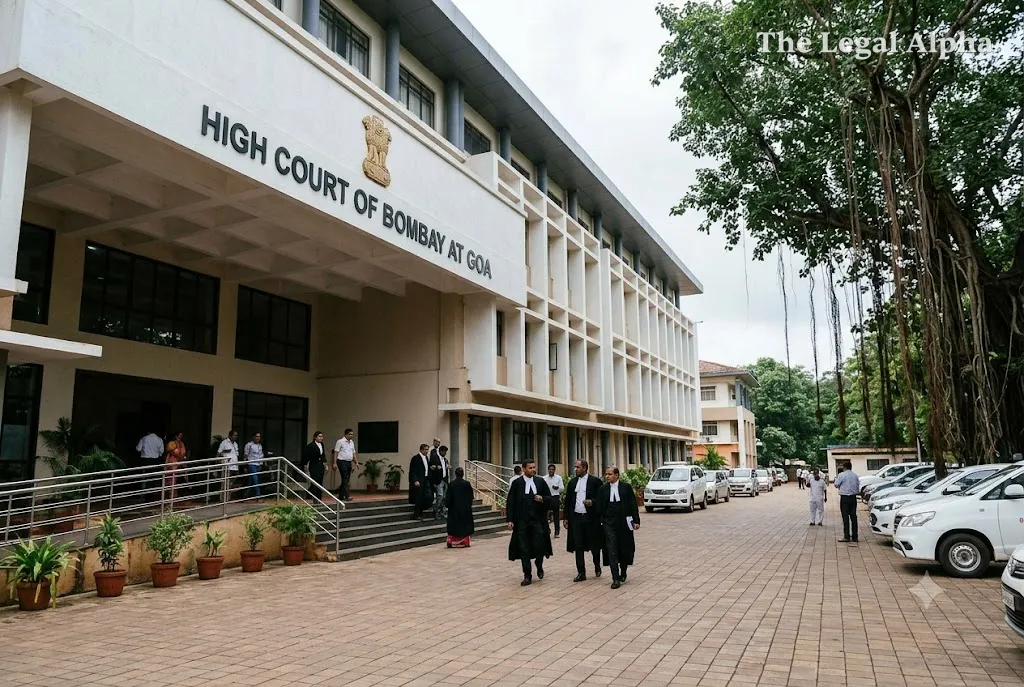
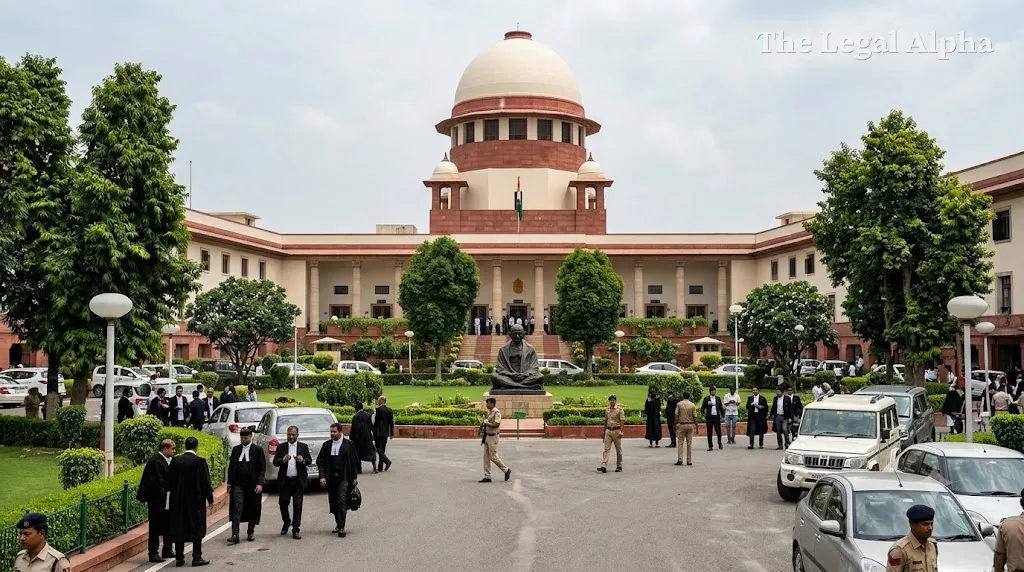
Four-Month Meat Ban Crumbles in Gujarat High Court as Radhanpur Civic Body Backtracks Over Compensation Questions
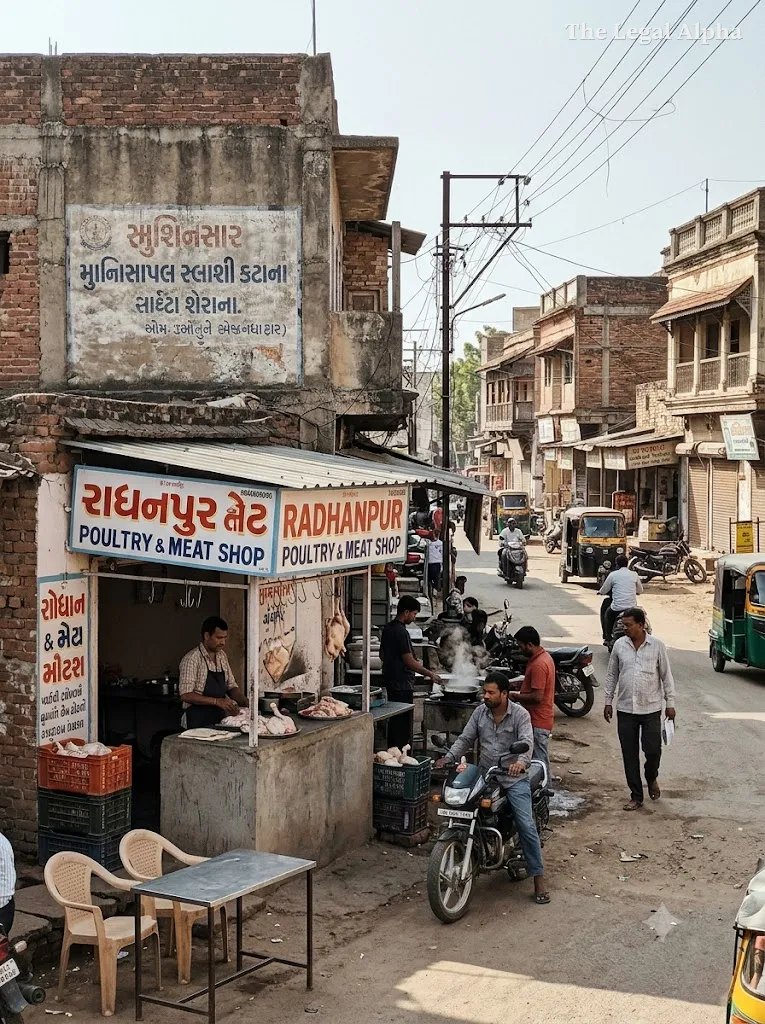
The Radhanpur Municipality in Gujarat backed down from an executive directive that ordered the shutdown of around 30 slaughterhouses, meat and poultry shops, and non-vegetarian eateries for four continuous months. The civic administration initially issued the blanket closure order citing the arrival of three Jain monks observing Chaturmas in the town after a gap of six decades, claiming the measure was necessary to respect religious sentiments.
Aggrieved shopkeepers challenged the prohibition before the Gujarat High Court, terming it arbitrary, unauthorized, and fatal to their daily livelihoods. Facing sharp questioning from the bench regarding the statutory authority for such an extended prohibition and the issue of monetary compensation for affected shopkeepers, the municipal body informed the court that the businesses were permitted to reopen, leading to the withdrawal of the petition.
Legal Topic
Area of Law: Constitutional Law / Administrative Law
Sub-topic: Freedom of Trade / Municipal Regulatory Powers / Doctrine of Proportionality
Core Legal Issue
The fundamental legal question before the court was whether a municipal authority possesses the legal power to impose a multi-month trade closure on licensed food businesses purely on grounds of cultural or religious observances.
Under constitutional jurisprudence, the court examined whether an executive ban of this duration breaches the fundamental right to carry on trade and occupation under Article 19(1)(g) of the Constitution, or whether it can be justified as a "reasonable restriction" under Article 19(6).
What Did the Court / Authority Decide?
Justice Nirzar S. Kariel of the Gujarat High Court subjected the municipality's directive to strict scrutiny, demanding that the Chief Officer appear personally to explain how the civic body proposed to compensate affected business owners for forcing their establishments shut for months.
Rather than defending the order on merits, the municipality informed the bench that it would not pursue or enforce the closure notices and that no punitive actions would be taken against the shop owners. Counsel for the municipality submitted photographs and an official panchnama confirming that the meat shops were functional again. Following these formal assurances, the High Court permitted the shopkeepers to withdraw their writ petition, leaving the four-month ban devoid of legal effect without issuing an adverse judgment.
Key Legal Points
-
Blanket prohibitions on lawful commercial operations require clear statutory authorization and cannot be issued through unbridled executive discretion.
-
Temporary curbs on meat shops during limited religious observances (such as the Supreme Court-recognized nine-day Paryushan window) do not justify disproportionate, multi-month shutdowns.
-
Administrative authorities issuing orders that impair fundamental trade rights face potential exposure to claims for financial restitution and compensation.
-
Restrictions imposed under Article 19(6) of the Constitution must pass the test of reasonableness and proportionality; preserving religious sentiments cannot entirely eliminate a citizen's source of livelihood.
Relevant Law
-
Article 19(1)(g) of the Constitution of India: Guarantees citizens the right to practice any profession, or to carry on any occupation, trade, or business.
-
Article 19(6) of the Constitution of India: Governs the state's power to impose reasonable restrictions on trade in the interest of the general public.
-
Article 21 of the Constitution of India: Protects the right to life and personal liberty, which includes the right to earn a livelihood.
-
Gujarat Municipalities Act, 1963: Delineates the statutory powers of chief officers and municipal councils to regulate public health, markets, and slaughterhouses.
-
Hinsa Virodhak Sangh v. Mirzapur Moti Kuresh Jamat (2008): Supreme Court precedent permitting brief, temporary closures of slaughterhouses for a nine-day period during Paryushan, while emphasizing that prolonged bans infringe constitutional guarantees.
Arguments of the Parties
Petitioner / Applicant / Appellant
The affected meat traders and shop owners contended that the municipal order was issued without any statutory authority, rendering it ultra vires and high-handed. They pointed out that while they routinely comply with short nine-day closures during the annual festival of Paryushan in accordance with Supreme Court directives, a four-month ban under the pretext of Chaturmas was excessive, unreasonable, and an assault on their basic right to earn a livelihood. Their counsel also raised the demand for compensation for the approximately two months during which their businesses remained shuttered under civic coercion.
Respondent / State / Opposing Party
The Radhanpur Municipality initially defended the directive on grounds of communal harmony and public sentiment, arguing that the visit of Jain monks after 60 years was expected to attract large congregations of devotees. However, when pressed on the statutory authority behind the four-month duration and the question of compensating the vendors, the municipality conceded, confirming that the notices had been rendered ineffective, all shops were permitted to operate, and no adverse action would be pursued against the traders.
Why Does It Matter?
This development reinforces an essential boundary between legitimate civic regulation and executive overreach. While municipal bodies frequently attempt to issue discretionary orders to placate religious or cultural groups, the proceedings before the Gujarat High Court demonstrate that the judiciary will not treat indefinite or protracted bans as routine administrative measures.
The court’s focus on financial compensation for forced closures introduces an important accountability checkpoint: local bodies cannot arbitrarily halt commercial activity without facing serious questions about the financial damage inflicted on licensed traders. For small enterprises, street vendors, and food operators, the case provides a crucial precedent against municipal overreach, confirming that short-term festival accommodations cannot be stretched into prolonged prohibitions.
Legal Takeaway
Civic authorities cannot invoke religious or cultural observances to impose extended commercial bans that wipe out an individual's livelihood. Any restriction on lawful trade must strictly satisfy the constitutional test of proportionality, and administrative bodies that force businesses to close without clear statutory backing risk judicial intervention and liability for business losses.
Sources
Primary Source:
-
Gujarat High Court, Special Civil Application challenging closure notices by Radhanpur Municipality (Proceedings before Justice Nirzar S. Kariel, October 2026).
Additional Sources:
-
The Gujarat Municipalities Act, 1963.
-
Hinsa Virodhak Sangh v. Mirzapur Moti Kuresh Jamat & Ors. (2008) 5 SCC 33.