Can Litigants Bypass the Sessions Court for Anticipatory Bail? Supreme Court Weighs Forum Choice Against Judicial Hierarchy
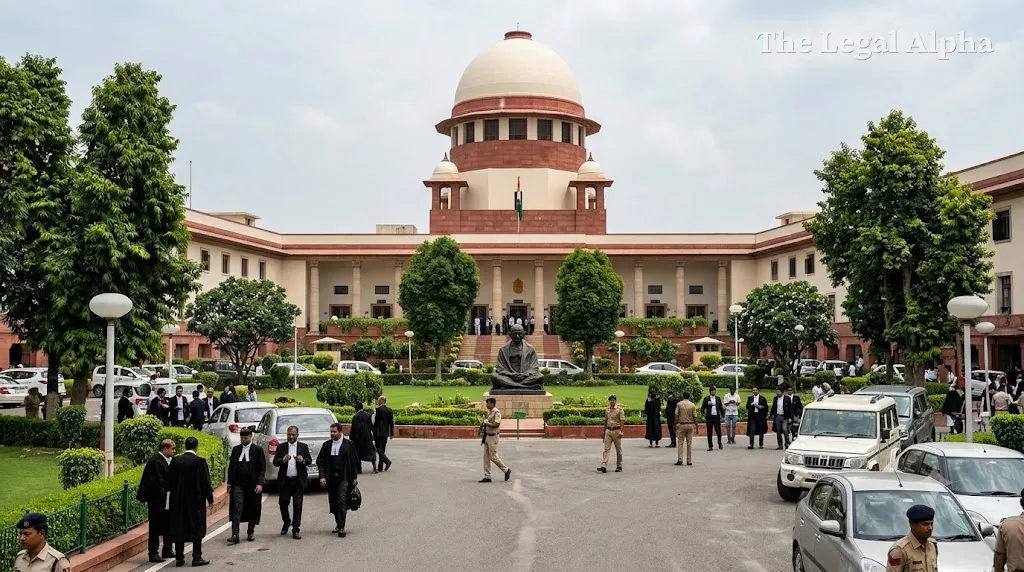
A three-judge bench of the Supreme Court of India has reserved judgment on whether an individual apprehending arrest must first approach a Sessions Court before moving the High Court for anticipatory bail.
The matter arises from Mohammed Rasal C. & Anr. v. State of Kerala & Anr., where conflicting lines of authority prompted a reference to a larger bench. While statutory provisions grant concurrent powers to both the Sessions Court and the High Court to afford pre-arrest protection, judicial practice varies considerably across states. Several High Courts routinely accept direct anticipatory bail applications, whereas others relegate applicants to the local Sessions Court. The Supreme Court is now poised to settle whether bypassing the lower court is permissible as a matter of right or if direct recourse must remain confined to exceptional situations.
Legal Topic
-
Area of Law: Criminal Procedure / Constitutional Law
-
Sub-topic: Pre-Arrest Protection / Concurrent Jurisdiction under Criminal Codes
Core Legal Issue
The fundamental legal question before the Court is whether the concurrent jurisdiction to grant anticipatory bail allows a petitioner unfettered freedom of forum selection, or whether the principle of judicial hierarchy dictates that the court of first instance must be exhausted before invoking High Court jurisdiction.
Specifically, the Court must reconcile the immediate protection of personal liberty under Article 21 of the Constitution with institutional discipline and docket administration across high and subordinate courts.
What Did the Court Decide?
The Supreme Court bench comprising Justices Vikram Nath, Sandeep Mehta, and Aparesh Kumar Singh heard comprehensive submissions and formally reserved its verdict.
No final ruling has been pronounced yet. The bench had previously called upon amicus curiae and stakeholders to examine data regarding filing patterns across states, identifying heavy concentrations of direct pre-arrest bail filings before particular High Courts. The reference remains pending final adjudication.
Key Legal Points
-
Statutory Parity vs. Procedural Propriety: Section 438 of the Code of Criminal Procedure, 1973 (and its successor Section 482 of the Bharatiya Nagarik Suraksha Sanhita, 2023) vests identical statutory authority in the Court of Session and the High Court without enacting an express sequence.
-
Divergent Supreme Court Rulings: In past decisions such as Manjeet Singh v. State of Uttar Pradesh, the top court held that an anticipatory bail application cannot be thrown out simply because the litigant approached the High Court first. Conversely, in rulings like Jagdeo Prasad v. State of Bihar, benches have observed that direct petitions should be discouraged to prevent High Courts from turning into courts of first instance.
-
Balancing Forum Exhaustion with Personal Liberty: Anticipatory bail directly guards against immediate deprivation of personal liberty; forcing an applicant to litigate sequentially through multiple tiers can lead to arrest while procedural questions are argued.
Relevant Law
-
Section 438 of the Code of Criminal Procedure, 1973 (CrPC) / Section 482 of the Bharatiya Nagarik Suraksha Sanhita, 2023 (BNSS): Direction for grant of bail to persons apprehending arrest.
-
Article 21 of the Constitution of India: Protection of life and personal liberty.
-
Relevant Precedents: Mohammed Rasal C. & Anr. v. State of Kerala & Anr. (SLP (Crl.) No. 6588/2025); Manjeet Singh v. State of Uttar Pradesh (2025); Jagdeo Prasad v. State of Bihar (2025).
Arguments of the Parties
-
Proponents of Direct Access: Advocates supporting unrestricted access contend that when the legislature creates concurrent jurisdiction without express qualification, judges cannot read an implied hierarchy into the provision. They argue that pre-arrest relief demands speed; forcing applicants to navigate the Sessions Court first—especially in politically charged matters or where local bias is apprehended—risks untimely arrest and frustrates constitutional safeguards.
-
Proponents of the Sessions-First Rule: Conversely, supporters of a mandatory sequential rule argue that direct filings inundate High Courts with routine bail matters, weakening judicial efficiency and trial court authority. It was submitted that bypassing the Sessions Court deprives the High Court of the trial court’s factual assessment and encourages forum-shopping, and that direct intervention should be reserved for demonstrated emergencies or exceptional circumstances.
Why Does It Matter?
This ruling will establish an all-India precedent governing how pre-arrest bail petitions are processed across every district and state.
If the Supreme Court mandates exhaustion of the Sessions Court, litigants across India will no longer have the discretion to skip local courts, altering criminal defence strategies and reducing initial filing loads in High Courts. Conversely, if the Court formalises a rule allowing direct High Court filings only under narrow, defined exceptions, it will end the longstanding discrepancy where some High Courts entertain direct pleas routinely while others dismiss them in limine.
Legal Takeaway
Concurrent statutory jurisdiction does not automatically guarantee unfettered procedural choice. The impending judgment will clarify whether institutional hierarchy can qualify statutory access to the High Court when a citizen's personal liberty is on the line.
Sources
-
Primary Source: Supreme Court of India, Mohammed Rasal C. & Anr. v. State of Kerala & Anr. (Special Leave Petition (Criminal) No. 6588/2025, Reference Order & Reserved Judgment Proceedings).
-
Additional Sources: The Code of Criminal Procedure, 1973 (Section 438); The Bharatiya Nagarik Suraksha Sanhita, 2023 (Section 482); Manjeet Singh v. State of Uttar Pradesh (2025); Jagdeo Prasad v. State of Bihar (2025).