Bombay High Court Puts Goa Scheduled Tribe Population Notification on Hold
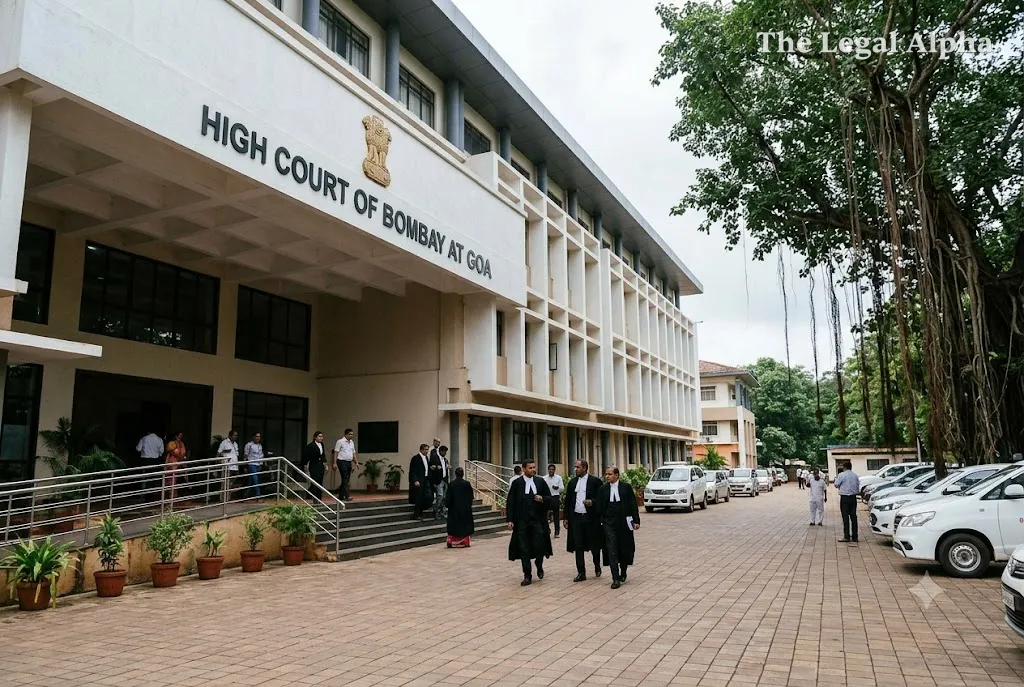
The High Court of Bombay at Goa has temporarily halted the Census Commissioner from publishing or notifying estimated Scheduled Tribe population figures for Goa.
The interim order arose from a writ petition challenging the constitutional validity of the Readjustment of Representation of Scheduled Tribes in Assembly Constituencies of the State of Goa Act, 2025. The Union Parliament passed the legislation to enable constituency readjustment and facilitate reserved Assembly seats for Scheduled Tribes in Goa. However, by staying the population figure notification—the foundational step required before any seat delimitation can begin—the High Court has effectively frozen the process pending a final constitutional ruling.
Legal Topic
Area of Law: Constitutional Law
Sub-topic: Delimitation / Legislative Representation & Reservation
Core Legal Issue
The primary legal controversy centers on whether Parliament can constitutionally authorise the Census Commissioner to estimate tribal populations for constituency readjustment ahead of the mandated post-2026 decennial Census.
Specifically, the court must resolve whether Section 3 of the 2025 Act violates the freeze imposed under the provisos to Article 170(3) and Article 332 of the Constitution of India, which restrict the readjustment of legislative constituencies until demographic figures from the first Census conducted after 2026 are published. A related question is whether conferring powers to notify unverified or estimated figures—while declaring them unchallengeable—amounts to arbitrary statutory delegation.
What Did the Court Decide?
The High Court issued Rule in the petition and granted interim relief restraining the Census Commissioner from notifying or gazetting Goa's estimated Scheduled Tribe population on any basis other than the first census conducted after 2026.
The bench observed that the petitioner demonstrated a strong prima facie case and that the balance of convenience favoured interim protection. The court noted that there was "absolutely no basis" for arbitrarily presuming that the tribal population continues to stand at 9.9% of Goa's total population. It highlighted that while the Census Commissioner’s office acknowledged an inability to determine current figures from existing records, it nevertheless presumed the older proportion remained unchanged.
Pleadings are directed to be completed by November 19, 2026, with the matter listed for further hearing on November 25, 2026.
Key Legal Points
-
Constitutional Freeze on Delimitation: Articles 170(3) and 332 of the Constitution set an express embargo on seat readjustments until relevant figures from the first post-2026 Census are officially released.
-
Arbitrary Demographic Presumptions: An estimation mechanism that simply perpetuates decades-old demographic ratios without empirical data fails rational scrutiny under administrative and constitutional law.
-
Interim Restraint on Statutory Triggers: Because downstream actions such as delimitation and seat allocation hinge entirely on the Section 3 notification, restraining publication halts the entire exercise without immediately invalidating the parent Act.
-
Ouster Clauses Under Judicial Review: Statutory clauses seeking to make administrative notifications final and immune from court scrutiny remain subject to judicial review under Articles 226 and 32.
Relevant Law
-
Constitution of India:
-
Article 170(3) (Provisos barring readjustment of assembly seats until post-2026 census)
-
Article 332 (Reservation of seats for Scheduled Castes and Scheduled Tribes in State Legislative Assemblies)
-
Article 226 (Writ jurisdiction of the High Court)
-
-
Readjustment of Representation of Scheduled Tribes in Assembly Constituencies of the State of Goa Act, 2025:
-
Section 3 (Power of the Census Commissioner to ascertain and notify estimated Scheduled Tribe population figures)
-
-
Judicial Precedents Cited:
-
Prasad Gaonkar v. Election Commission of India (2022)
-
K. Purushottam Reddy v. Union of India (2025)
-
Arguments of the Parties
Petitioner
Counsel for petitioner Edwin Fernandes argued that Parliament’s 2025 enactment is fundamentally ultra vires the Constitution. Relying on past rulings of the High Court and Supreme Court, the petitioner submitted that Article 170(3) expressly prevents constituency redrawing prior to the first decennial census after 2026. It was further contended that empowering the Census Commissioner to formulate speculative population figures—and giving those estimates final, unreviewable status—confers uncanalised and arbitrary power.
Respondent / Union of India
Appearing for the central authorities, the Deputy Solicitor General of India submitted that the challenge at this stage only targeted the preliminary demographic notification under Section 3 of the Act rather than actual delimitation orders. The respondents maintained that statutory estimation was a valid legislative tool aimed at addressing long-standing political under-representation of tribal communities in the Goa Assembly.
Why Does It Matter?
This ruling directly affects the timeline for reserving legislative seats for Goa's Scheduled Tribes ahead of future state elections.
Beyond Goa's political landscape, the development carries significant constitutional ramifications for delimitation jurisprudence across India. It re-examines whether special statutes can create ad-hoc estimation bypasses around constitutional freezes on constituency revision. The order affirms that statutory exercises purporting to quantify demographic groups must rest on tangible evidence rather than unsupported administrative assumptions, even when enacted to advance affirmative representation.
Legal Takeaway
Constitutional caps and timelines governing seat readjustment cannot be casually circumvented through ad-hoc administrative estimates. Whenever a statute delegates demographic estimation to an official, the underlying calculation must meet constitutional standards of rationality, or courts will intervene to halt the process before it shapes electoral boundaries.
Sources
Primary Source:
-
High Court of Bombay at Goa, Interim Order in Writ Petition challenging the Readjustment of Representation of Scheduled Tribes in Assembly Constituencies of the State of Goa Act, 2025 (Edwin Fernandes v. Union of India & Ors.).
Additional Sources:
-
The Readjustment of Representation of Scheduled Tribes in Assembly Constituencies of the State of Goa Act, 2025 (Act No. of 2025).
-
Constitution of India, Articles 170(3) and 332.