Domestic Electricity Supply Cannot Be Denied Solely Over Property Title Disputes: Allahabad High Court
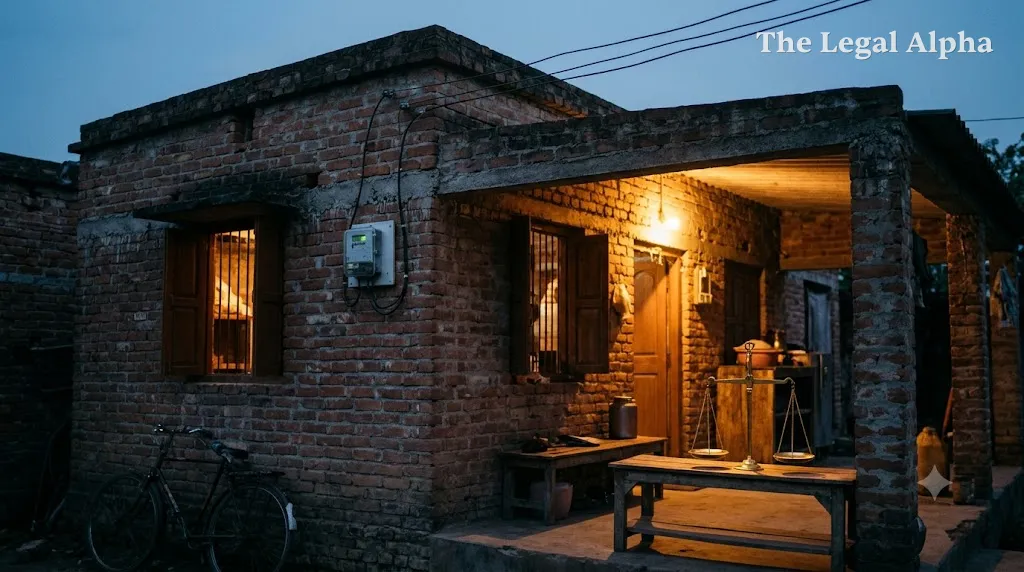
The Lucknow Bench of the Allahabad High Court held that power distribution authorities cannot deny a domestic electricity connection simply because an applicant is embroiled in an ongoing civil property dispute. The ruling came upon a writ petition filed by Rakesh Kumar Mishra, a resident of Kranti Puri on Jail Garden Road in Rae Bareli, Uttar Pradesh.
Mishra’s request for a new household power connection was rejected on July 28, 2026, by the local electricity department on the grounds that he could not produce clear ownership documents while title litigation was pending before a competent civil court. Overturning the department's rejection, the High Court reaffirmed that access to electricity is inextricably tied to human dignity and basic survival under the Constitution.
Legal Topic
Area of Law: Constitutional Law / Energy & Utilities Law
Sub-topic: Fundamental Rights (Article 21) / Distribution Licensee Obligations under the Electricity Act, 2003
Core Legal Issue
The question before the Court was whether a distribution licensee can withhold a basic domestic electricity connection from an occupant merely because ownership of the premises is contested in pending civil litigation, or whether statutory safeguards such as indemnity bonds permit power supply irrespective of unresolved title.
What Did the Court Decide?
A Division Bench comprising Justice Alok Mathur and Justice Abdhesh Kumar Chaudhary allowed the writ petition and set aside the rejection order dated July 28, 2026, terming it arbitrary and unlawful.
The Bench observed that basic power supply is indispensable for daily living, as it directly enables cooking, drinking water access, lighting, healthcare, education, and livelihood. The Court clarified that under Clause 4.4 of the Uttar Pradesh Electricity Supply Code, 2005, an applicant who lacks formal ownership deeds due to ongoing title litigation can furnish an indemnity bond instead.
The matter was remitted to the concerned Executive Engineer with instructions to reconsider the application within 10 days of receiving a certified copy of the order. If the procedural criteria and indemnity requirements are satisfied, the department must release the domestic connection immediately. Crucially, the Court clarified that granting an electricity connection creates no proprietary rights and does not influence the outcome of the pending civil suit.
Key Legal Points
-
Electricity as a Facet of Article 21: Basic electrical power is an essential amenity directly tethered to the constitutional guarantee of a dignified life under Article 21.
-
Indemnity Bond Alternative: Under Clause 4.4 of the Uttar Pradesh Electricity Supply Code, 2005, utility departments cannot demand absolute proof of ownership if the applicant is prepared to furnish the prescribed indemnity bond.
-
No Adjudication of Title: Power utilities are service providers, not civil courts; sanctioning a utility meter does not validate, establish, or prejudice property ownership or tenancy claims.
-
Separation of Civil Discord from Essential Services: Private property disputes between contesting parties cannot be weaponized by administrative bodies to deprive an occupant of basic necessities.
Relevant Law
-
The Constitution of India: Article 21 (Protection of life and personal liberty).
-
The Electricity Act, 2003: Section 43 (Duty of distribution licensee to supply electricity upon application by the owner or occupier of any premises).
-
Uttar Pradesh Electricity Supply Code, 2005: Clause 4.4 (Alternative documentation and indemnity procedures for applicants lacking registered ownership papers).
Arguments of the Parties
The petitioner contended that he resides in the premises and requires power for basic sustenance. His counsel submitted that pendency of a civil suit regarding property rights cannot strip an occupant of access to electricity, particularly when the regulatory code expressly provides for an indemnity mechanism to insulate the electricity department from title liability.
The distribution licensee and private respondent argued that regular service connections require clear verification of proprietary title or express owner consent, maintaining that the department acted strictly within procedural norms by denying the meter while title proceedings remained sub judice.
Why Does It Matter?
This ruling addresses an administrative hurdle frequently encountered across India: utility departments refusing connections or severing lines whenever a family member, landlord, or rival claimant files a property suit or lodges an objection.
By reiterating that an indemnity bond is sufficient to safeguard the licensee, the Allahabad High Court limits the ability of discoms to act as de facto adjudicators of real estate disputes. It reinforces the legal principle that possession and human occupancy, rather than concluded paper ownership, are what govern access to life-sustaining public utilities.
Legal Takeaway
Unresolved civil litigation over title cannot be used as an administrative pretext to deny electricity to an occupant. Under electricity supply regulations, genuine occupants can obtain domestic power connections by submitting the prescribed indemnity bond, ensuring their basic right to life under Article 21 is protected without prejudicing the pending title dispute.
Sources
-
Primary Source: Order of the High Court of Judicature at Allahabad (Lucknow Bench) in Rakesh Kumar Mishra v. State of U.P. and Others (Writ-C No. 9115 of 2026), decided on October 5, 2026.
-
Additional Sources: Uttar Pradesh Electricity Supply Code, 2005; Section 43 of the Electricity Act, 2003; High Court Law Reporting & Lucknow Bench Proceedings.