Disputed Party Funds: Supreme Court Refuses to Intervene in TMC Bank Account Freeze, Directs Calcutta High Court to Fast-Track Hearing
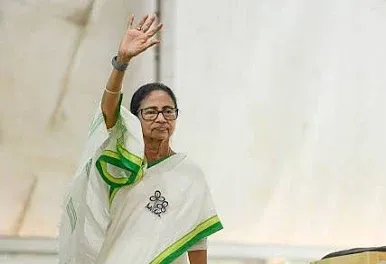
The Supreme Court of India declined to interfere with the debit-freeze imposed on four public sector bank accounts held by the Mamata Banerjee-led faction of the Trinamool Congress (TMC). A Division Bench comprising Justices M.M. Sundresh and P.B. Varale dismissed the party's petition challenging an interim order of the Calcutta High Court, which had previously refused to grant urgent operational access to the funds. The apex court explicitly stated that it would not evaluate the merits of the ongoing investigation under its discretionary jurisdiction, choosing instead to request the Calcutta High Court to expedite the final disposal of the case.
The dispute stems from a debit-freeze placed by the West Bengal Police on four Indian Bank accounts following a complaint filed by a member of a rival faction within the party. Facing upcoming by-elections and routine administrative obligations, the Banerjee-led faction approached the top court seeking immediate relief, claiming that the police action had brought the organization's day-to-day functioning to a virtual standstill.
Legal Topic
Area of Law: Constitutional Law & Criminal Procedure
Sub-topic: Discretionary Appellate Jurisdiction under Article 136 / Freezing of Bank Accounts during Criminal Investigation / Party Asset Disputes
Core Legal Issue
The matter centered on whether the Supreme Court ought to exercise its extraordinary discretionary jurisdiction under Article 136 of the Constitution to grant interim relief and unfreeze organizational bank accounts while substantive proceedings remain pending before the High Court.
At the core of the controversy is whether claims of administrative paralysis in a political entity can override an active police debit-freeze under criminal procedure, particularly when rival factions dispute internal leadership, entitlement to organizational funds is contested, and the Election Commission has frozen the party's official symbol.
What Did the Court Decide?
The Supreme Court dismissed the Special Leave Petition, leaving the Calcutta High Court’s refusal to grant interim relief intact.
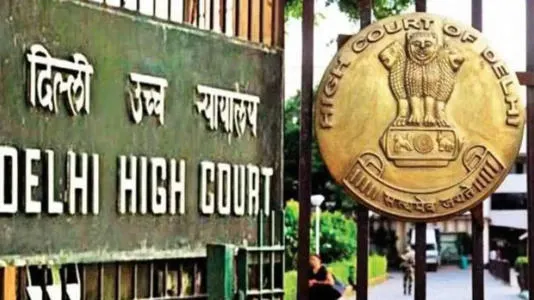
The bench declined to enter into the evidentiary merits or evaluate the legality of the underlying police action. Reaffirming that the High Court is the appropriate forum to examine the legality of the freezing orders, the Supreme Court directed the High Court to expedite its hearing on the matter.
Consequently, the four bank accounts remain frozen for debit transactions. The ultimate determination regarding the validity of the police action and the entitlement of the factions to access the funds remains pending before the Calcutta High Court, alongside parallel dispute proceedings before the Election Commission of India.
Key Legal Points
-
Restraint Under Article 136: The Supreme Court reaffirmed the principle that extraordinary jurisdiction under Article 136 will rarely be used to disrupt interlocutory or interim procedural orders when substantive adjudication is actively underway in the High Court.
-
Preservation of the Primary Forum: The Court deliberately avoided expressing any preliminary view on the merits of the criminal complaint or the police freeze, preserving the Calcutta High Court's authority as the court of first instance.
-
Interplay with Regulatory Proceedings: The bench noted that ongoing regulatory proceedings—specifically the Election Commission's decision to freeze the party symbol amidst a leadership dispute—weigh against granting unilateral financial control at an interim stage.
-
Procedural Expedition Over Interim Remedies: Rather than modifying administrative arrangements or lifting the freeze, the Court opted to resolve institutional paralysis by directing an expedited timeline for final hearings.
Relevant Law
-
Article 136 of the Constitution of India: Special leave to appeal granted at the Supreme Court's discretion against any judgment, decree, determination, sentence, or order from any court or tribunal in India.
-
Section 102 of the Code of Criminal Procedure, 1973 (CrPC) / Section 106 of the Bharatiya Nagarik Suraksha Sanhita, 2023 (BNSS): Police powers to seize or freeze property that creates suspicion of an offense during an ongoing investigation.
-
Paragraph 15 of the Election Symbols (Reservation and Allotment) Order, 1968: The adjudicatory power of the Election Commission of India to resolve disputes between splinter groups or rival sections of a recognized political party.
Arguments of the Parties
Petitioner
Appearing for the Mamata Banerjee-led faction, Senior Advocate Abhishek Manu Singhvi submitted that the debit-freeze on the four Indian Bank accounts had paralyzed the political party's administrative machinery. He argued that audited records demonstrated an essential monthly requirement of ₹12.15 crore merely to sustain routine administrative operations, entirely separate from campaign or political expenses. The petitioner asserted that the police froze the accounts without justifiable cause and contended that pending disputes before the Election Commission concerning the party symbol did not legally justify cutting off access to operational bank accounts.
Respondents and Intervenors
Solicitor General Tushar Mehta, appearing for the investigating authorities and the State, opposed the plea, stating that the freeze was part of an active criminal investigation into alleged financial irregularities. He submitted that inquiries revealed suspicious cash deposits, including ₹35 crore allegedly deposited into party accounts by an aide.
Senior Advocate K. Parameshwar, representing the complainant from the rival faction, argued that earlier judicial orders had already made provisions for basic administrative expenses and that the petitioner was now seeking access to broader funds. He emphasized that because the Election Commission froze the party's official symbol on September 17, 2026, due to an internal rift, the underlying legal right to represent the party and control its treasury remains unresolved.
Why Does It Matter?
The ruling illustrates the strict procedural barriers litigants face when seeking emergency relief from the apex court against interim orders. Even when an organization asserts severe operational paralysis and presents audited operational expenditures, the Supreme Court remains reluctant to bypass the High Court's jurisdiction if the underlying investigation and substantive writ proceedings are still alive.
The decision also highlights how criminal investigations intersect with political factionalism. When internal party rifts trigger proceedings before the Election Commission, courts exercise heightened caution before allowing one faction access to disputed organizational coffers. By refusing to intervene and ordering a fast-track hearing instead, the Supreme Court reinforced institutional hierarchy, signaling that disputes over frozen organizational assets must be resolved through prompt adjudication on the merits rather than through discretionary constitutional appeals.
Legal Takeaway
The Supreme Court will generally refuse to invoke Article 136 to override an interim High Court order concerning frozen bank accounts, even where organizational paralysis is alleged. When the right to control institutional funds is complicated by an internal split and regulatory proceedings, the remedy lies in an expedited hearing before the High Court rather than seeking exceptional interim relief from the apex court.
Sources
Primary Source:
-
Supreme Court of India, Order dated October 1, 2026, in Special Leave Petition regarding the freezing of Trinamool Congress bank accounts (Bench of Justices M.M. Sundresh and P.B. Varale).
Additional Sources:
-
High Court of Calcutta, Interim Proceedings on Bank Account Freezing
-
Election Commission of India, Order dated September 17, 2026 (Symbol Dispute)
-
Bar and Bench, LiveLaw, and The Hindu court reports (October 1, 2026)