Delhi High Court Refuses to Interfere with President’s Life-Without-Remission Condition
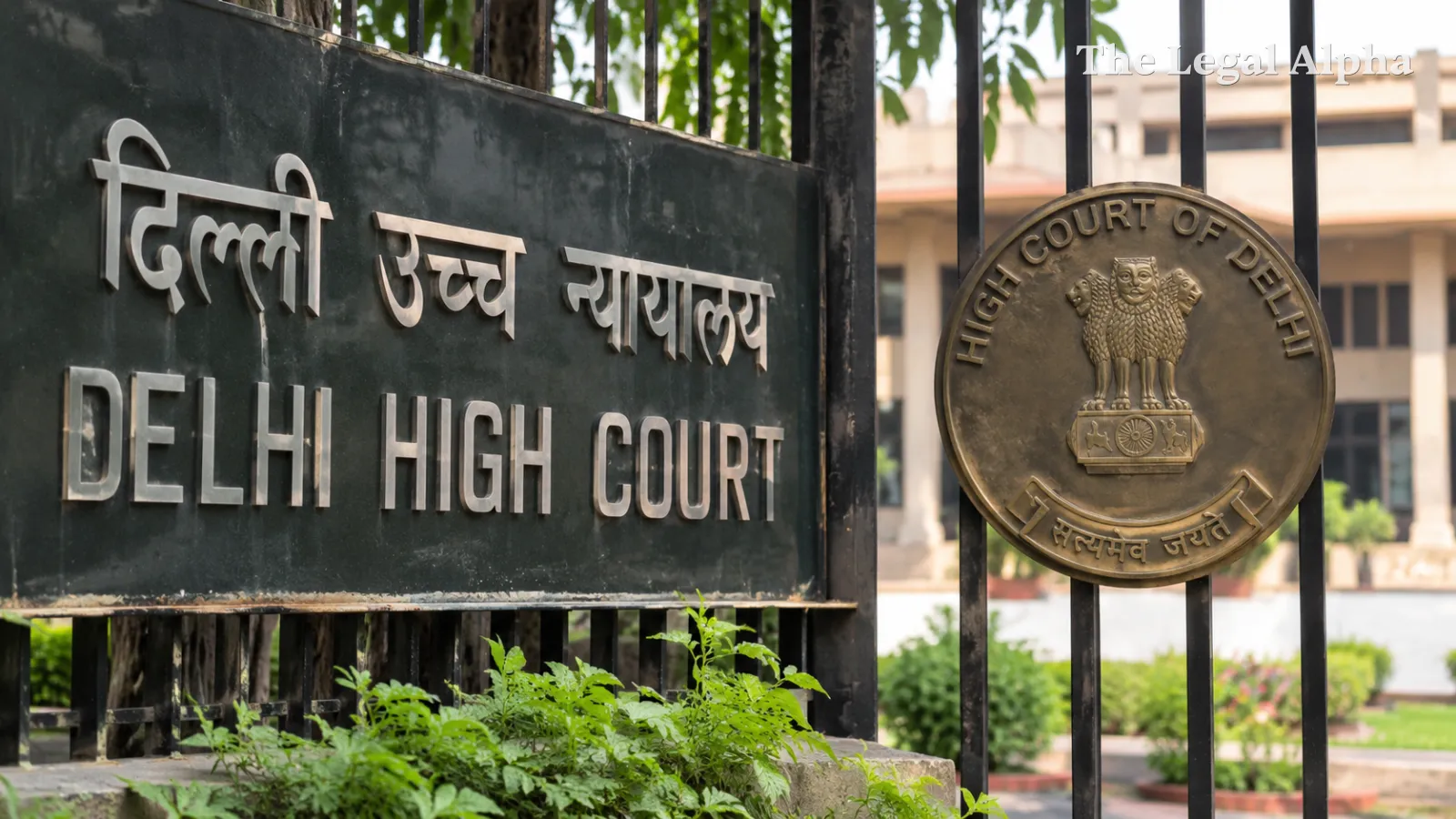
The Delhi High Court dismissed a petition filed by Jitendra alias Jitu Nainsingh Gehlot, who challenged the condition attached to the President’s decision in September 2016 commuting his death sentence to life imprisonment. The condition required him to remain imprisoned for the rest of his natural life, without further remission.
A Division Bench of Justice Navin Chawla and Justice Ravinder Dudeja ruled that the court could not replace the President’s assessment with its own once it found that the relevant material and circumstances had been considered. The judgment was delivered on November 17, 2026, in Jitendra @ Jitu Nainsingh Gehlot v. Union of India & Anr., W.P. (CRL) 3053/2017.
Legal Topic
Area of Law: Constitutional Law and Criminal Law
Sub-topic: Presidential Clemency, Judicial Review and Life Imprisonment Without Remission
Core Legal Issue
The principal issue before the High Court was whether the condition imposed by the President while commuting a death sentence to imprisonment for the remainder of the convict’s natural life, without remission, could be judicially invalidated.
The court also considered the extent to which it could review the exercise of the President’s constitutional clemency powers, particularly where the convict alleged prolonged delay in deciding his mercy petition and deficiencies in the consideration of his personal circumstances.
What Did the Court Decide?
The High Court rejected Gehlot’s challenge and declined to interfere with the presidential commutation order. It held that judicial review is not an appellate exercise and does not permit a court to replace the President’s decision merely because it might have reached a different conclusion.
The Bench found that the President had considered the relevant material, including competing recommendations from the Ministry of Home Affairs and the then Attorney General. The condition requiring imprisonment for the remainder of the convict’s natural life without remission was therefore left undisturbed.
Key Legal Points
-
Judicial review is not an appeal: Courts cannot substitute their own opinion for the President’s decision merely because they would have decided a mercy petition differently.
-
Limited scrutiny of clemency powers: Judicial review examines the legality of the exercise of constitutional power, rather than reassessing the merits as an appellate authority.
-
Life imprisonment without remission: The condition requiring imprisonment for the remainder of the convict’s natural life without remission was upheld in the circumstances of the case.
-
Delay in mercy proceedings: The court acknowledged the prolonged delay in deciding the mercy petition, but found that the President had been made aware of the delay and had considered the relevant advice.
-
Relevant material was considered: The court relied on the fact that the President had received competing views from the Attorney General and the Ministry of Home Affairs before reaching the decision.
Relevant Law
-
Article 72 of the Constitution of India: Grants the President constitutional powers to grant pardons, reprieves, respites or remissions of punishment, and to suspend, remit or commute sentences in specified circumstances, including death sentences.
-
Article 21 of the Constitution of India: The petitioner invoked the protection of life and personal liberty in challenging the prolonged delay in processing his mercy petition.
-
Judicial review of clemency powers: The court referred to principles governing limited judicial scrutiny of constitutional clemency decisions, including grounds such as arbitrariness, mala fides, non-application of mind and consideration of irrelevant material.
-
Union of India v. V. Sriharan: Relevant to the legal validity of sentences involving imprisonment for the remainder of a convict’s natural life without remission.
-
Epuru Sudhakar v. Government of Andhra Pradesh: Relevant to the scope and limits of judicial review over the exercise of clemency powers.
Arguments of the Parties
Petitioner
The petitioner argued that the restriction barring further remission was unconstitutional and unlawful. He relied on the prolonged delay in deciding his mercy petition, his alleged period of solitary confinement, and claims that aspects of his personal background, jail conduct, health and rehabilitation had not been adequately considered.
His counsel also contended that the delay and continued uncertainty surrounding his death sentence violated his fundamental rights and justified further relief.
Respondents
The Union of India defended the presidential decision, arguing that the exercise of clemency powers fell within the constitutional domain of the President. The authorities contended that the commutation had to be accepted as a whole, including the condition restricting further remission.
The government also relied on the material considered during the decision-making process, including the competing advice placed before the President.
Why Does It Matter?
The ruling underscores the distinction between judicial review and appellate review in matters involving the President’s constitutional clemency powers. Courts may examine whether the decision-making process was legally flawed, but they are not expected to reassess the merits of a clemency decision simply because they may have preferred a different outcome.
The decision also illustrates that commutation of a death sentence does not necessarily result in a life sentence subject to ordinary remission. A constitutional commutation may carry a condition requiring imprisonment for the remainder of a convict’s natural life, subject to the constitutional and legal framework governing such decisions.
For prisoners challenging mercy decisions, the ruling highlights the importance of demonstrating a recognised legal defect in the exercise of clemency power, rather than relying solely on disagreement with the outcome.
Legal Takeaway
The Delhi High Court reaffirmed that the judicial review of presidential clemency decisions is limited to examining the legality of the decision-making process and does not permit courts to replace the President’s judgment with their own. Where relevant material has been considered and no recognised ground for judicial interference is established, a condition requiring imprisonment for the remainder of a convict’s natural life without remission may remain in force.
Sources
Primary Source: Jitendra @ Jitu Nainsingh Gehlot v. Union of India & Anr., W.P. (CRL) 3053/2017, Delhi High Court, judgment dated November 17, 2026.
Additional Sources:
-
LiveLaw – Delhi High Court rejects plea against no-remission condition
-
The Indian Express – Delhi High Court's decision